


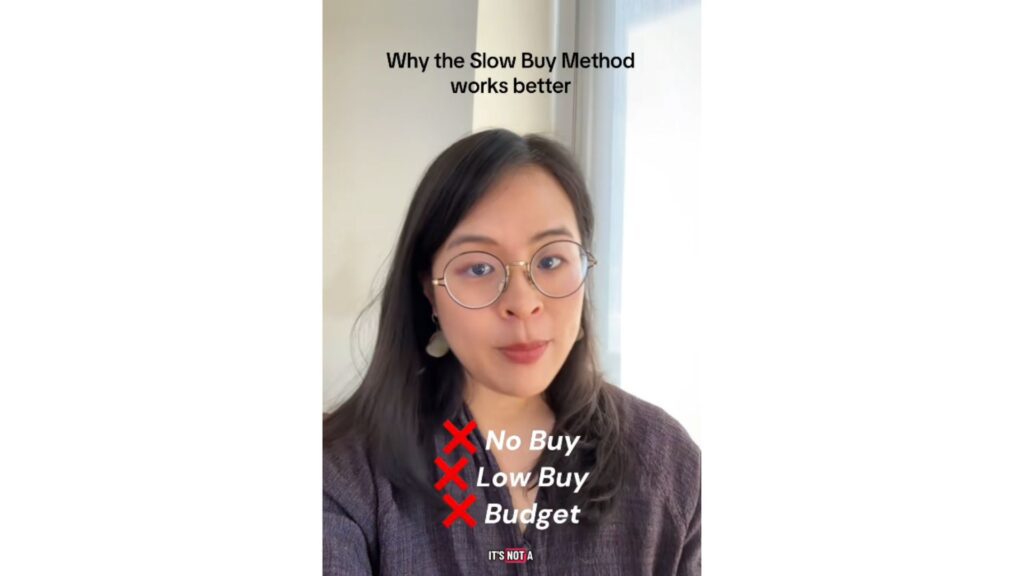
Crystal Chen spent 20 years describing herself as a shopaholic before developing a simple framework to stop impulse purchases before they happen. She shared the method on TikTok as @slowbuyclub, walking through five questions she now asks herself before buying anything that isn’t a planned necessity.
In her video, Chen, who has a background in marketing, explains that understanding how brands are designed to trigger impulse purchases gave her a clearer view of her own buying patterns — and eventually led her to build what she calls the Slow Buy Method. The approach centers on five questions she walks through before completing a purchase, designed to slow down the instinctive urge to buy something in the moment.
According to Chen, the questions include rating how strongly she actually wants the item, checking whether fear of missing out is driving the urge rather than genuine need or desire, and identifying the specific emotional job she’s expecting the purchase to do for her — whether that’s boredom relief, a mood boost, or something else entirely. By naming the emotional function a purchase is meant to serve, Chen says it becomes easier to recognize when an item won’t actually deliver that feeling, or when a non-shopping alternative could meet the same need.
It’s worth being clear about how Chen frames the method: as a personal habit-change tool she developed from her own experience and marketing background, not a clinical treatment for compulsive buying disorder or a substitute for professional support in cases where overspending is tied to a more serious underlying issue. Chen’s video presents the five questions as a practical checkpoint for everyday impulse purchases — the kind of unplanned buy that happens while scrolling a sale or walking through a store — rather than a comprehensive solution for shopping behavior that significantly disrupts someone’s finances or daily life.
That framing matters because overspending exists on a spectrum, from occasional impulse buys most people can relate to, to patterns serious enough to warrant professional financial or mental health support. Chen’s method is aimed squarely at the more common, everyday end of that spectrum, and her own account describes it as a tool that worked for her specific situation after two decades of self-identified impulse shopping, rather than a universal fix for every person who struggles with overspending.
What has resonated about Chen’s video is the specificity of the method itself: rather than offering vague advice like “budget better” or “think before you buy,” she gives a concrete, repeatable sequence of questions that someone can actually run through in the moment of temptation, drawing on her own marketing background to explain why certain purchases feel more urgent than they actually are.
The Takeaway
A structured pause before buying, like the five-question method Chen describes, can be a genuinely useful tool for reining in everyday impulse purchases, precisely because it interrupts the automatic urge-to-buy moment with a few seconds of actual reflection. If you want to try something similar, keep the questions short enough that you’ll actually use them mid-scroll or mid-checkout rather than skipping the exercise entirely: rate your desire, check for FOMO, and name what emotional job you expect the purchase to do. For anyone whose spending patterns feel more serious than the occasional impulse buy, though, it’s worth looking beyond a self-help framework toward a financial counselor or mental health professional who can address the underlying causes directly rather than relying on a checklist alone.