


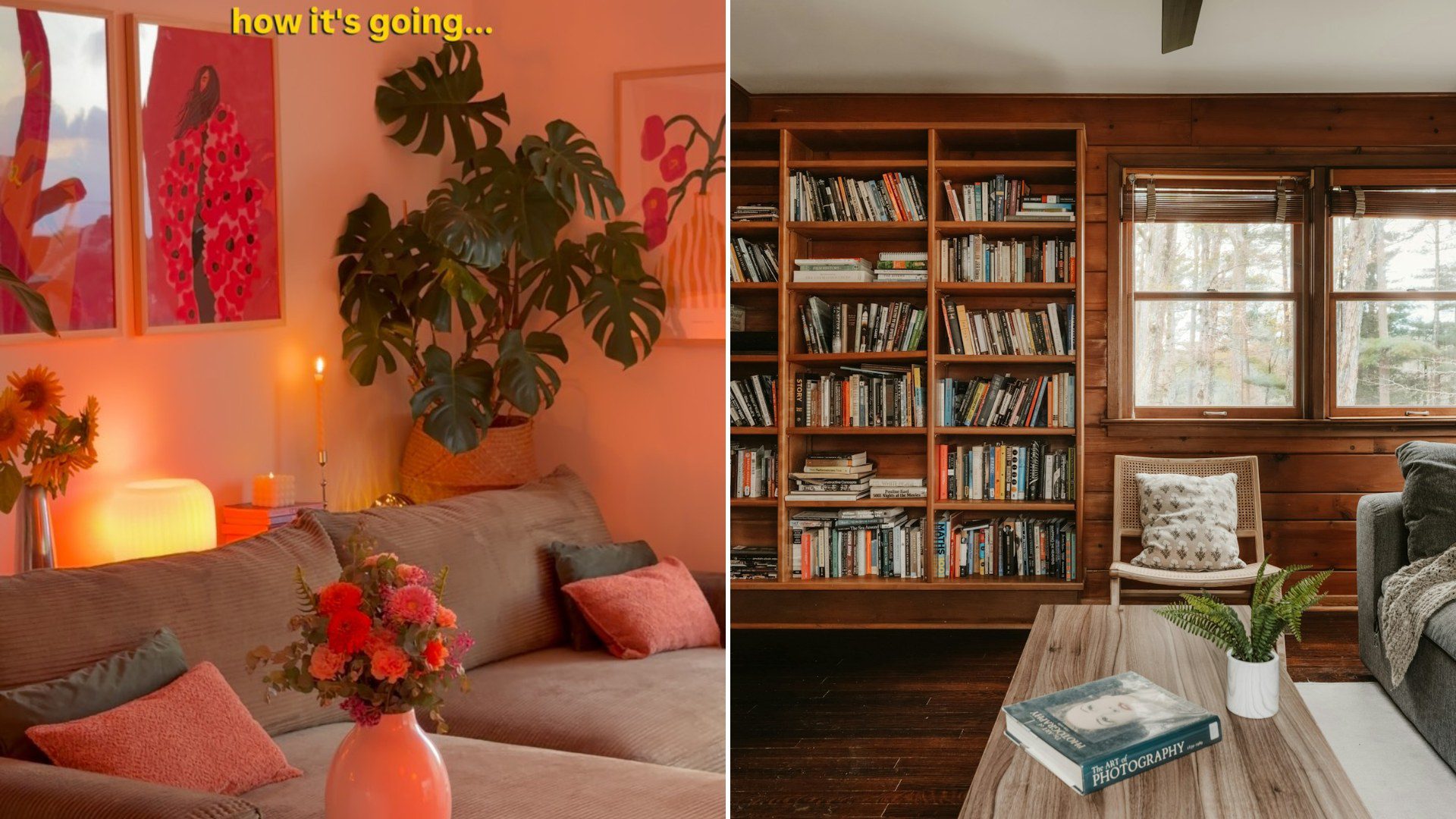
Renters often get told that a truly cozy, personal-feeling home is something to save for homeownership, but creator @cozy.renter is building an entire online presence around proving that wrong. Her latest reel shows a living room’s dramatic shift from a plain, bare rental space to a fully styled, textured, and genuinely inviting room, all without a single nail hole that would cost her a security deposit. Her caption, “From a simple DIY to our favourite corner,” captures the quiet pride of transforming a space you don’t even own into one that finally feels like home.
Renter-friendly design has exploded as its own content category over the past several years, driven largely by the simple demographic fact that more people are renting for longer stretches of their adult lives than previous generations did. Where home design content used to assume ownership as a baseline, an entire ecosystem of creators now specializes exclusively in solutions that work within the constraints of a lease: removable wallpaper, tension rods instead of mounted curtain rails, peel-and-stick tile, and furniture arrangements that can be undone in an afternoon when moving day comes.
What makes this particular transformation compelling is how complete it feels despite those constraints. A bare rental living room, the kind with builder-grade paint, minimal character, and nothing to suggest anyone actually lives there, can feel genuinely demoralizing to come home to day after day, especially for families trying to build a sense of stability in a space they know is temporary. Watching that same room become layered, textured, and personal, through soft furnishings, art, and thoughtful arrangement rather than permanent alterations, offers real, replicable hope to anyone currently staring at their own blank rental walls.
There’s also a financial accessibility angle worth noting here. Full-scale renovations are simply out of reach for most renters, both because landlords typically prohibit structural changes and because the investment wouldn’t make sense in a space you don’t own long-term. Soft styling, the kind featured in this transformation, tends to be dramatically more affordable than its renovation counterpart, relying on throw pillows, rugs, curtains, and smaller decor pieces that can move with a tenant from one apartment to the next, building value in the decor itself rather than in the walls that currently surround it.
For families specifically, a cozy, well-designed living room carries weight beyond aesthetics. It’s often the room where the most family time happens, the space for movie nights, homework, and simply existing together at the end of a long day, which means its emotional importance can outweigh its square footage. Parents renting a home while saving toward ownership, or simply renting by choice in a higher-cost housing market, understandably want that central gathering space to feel intentional and warm rather than like a placeholder they’re waiting to leave behind.
This content also reflects a broader cultural shift away from treating rental housing as inherently temporary or unworthy of investment. A decade or two ago, there was a common assumption that renters shouldn’t bother decorating too much, since they’d eventually move on anyway. Creators like @cozy.renter are actively dismantling that mindset, arguing instead that a home should feel like a home regardless of who holds the deed, and that the years spent renting are just as deserving of comfort and personal style as any other stage of housing.
The DIY element referenced in the caption also speaks to a growing comfort among renters with hands-on projects that used to feel intimidating or off-limits. Building simple shelving that doesn’t require wall anchors, reupholstering a secondhand piece of furniture, or constructing a removable accent feature are all approaches that let renters put real craftsmanship into a space without crossing into territory a landlord might object to. That blend of creativity and constraint often produces more interesting design solutions than an unlimited budget and a blank check ever would.
It’s also worth acknowledging the role community plays in this particular niche of content. Renter-focused design accounts tend to build especially engaged followings, in part because the audience is actively searching for solutions to problems they’re currently living with, not just admiring aspirational content from a distance. A styled corner like the one shown here becomes a direct source of ideas viewers can attempt in their own homes that same weekend, which is part of why this kind of content consistently earns more saves and shares than purely aspirational, big-budget renovation reveals.
Ultimately, what this transformation demonstrates is that coziness was never really about permanence in the first place. It’s about intention, the choice to make a space reflect the people living in it, regardless of what the lease says about how long they’ll be there. For every renter scrolling past this video wondering if their own bare apartment could ever feel like home, the answer embedded in @cozy.renter’s favourite corner is a clear and encouraging yes.