


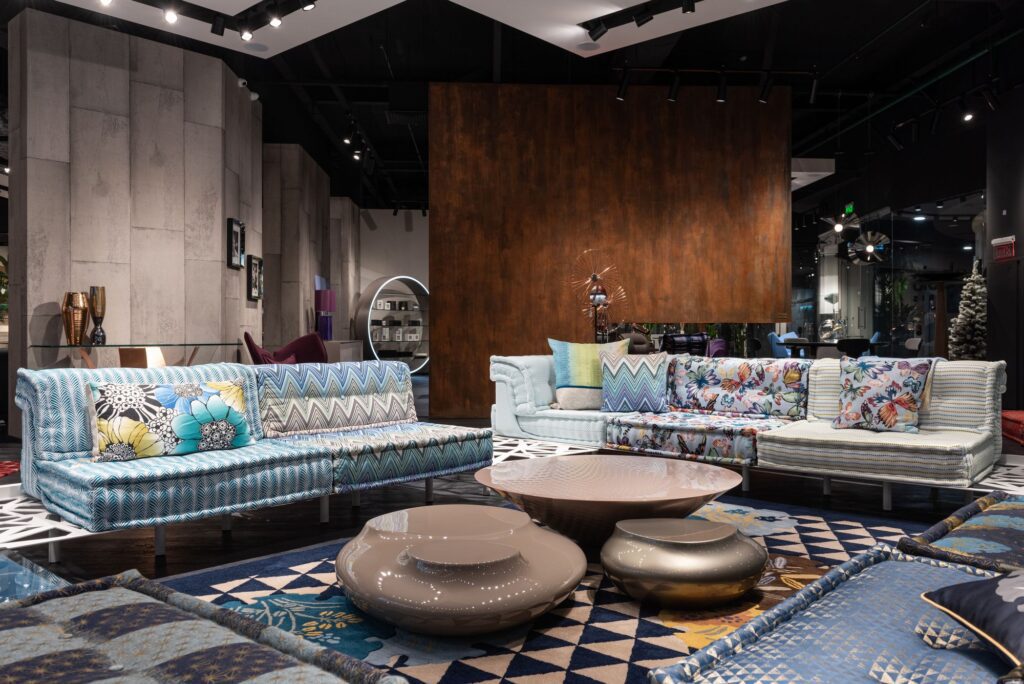
You’ve probably done this yourself: spent a rainy afternoon scrolling through sofa after sofa, saving a dozen browser tabs, comparing the same sectional across five different retailers’ websites. And then, right when it’s time to click “add to cart,” something makes you close the laptop and go look for your car keys instead. That instinct isn’t a fluke, and it isn’t just you. Shopping behavior data compiled by First Chair shows that 63% of furniture shoppers start their search online, but only 43% actually finish the purchase there — a 20-point gap between browsing and buying. The pattern gets even more pronounced for the biggest pieces in a room: 65% of sofas and 69% of sectionals are still bought in a physical store, no matter how much scrolling happened first. If your own furniture hunt always seems to end with an actual trip to a showroom, you’re in excellent company.
Why the Research Happens Online, But the Sale Doesn’t
None of this means online research is a waste of time. It’s the opposite, really — that early scrolling is how most of us narrow ten thousand options down to a manageable shortlist. But furniture behaves differently than almost anything else people buy on a screen. A pair of shoes has a size chart. A sofa has an entire relationship with your body, your doorway, your dog, and the fifteen years you’ll probably keep it. Industry research from Radial’s consumer trends study found that consumers want to be able to size an item up in person and confirm it actually fits the space they have in mind, which is a very different job than picking a color or a style. That single need explains most of the gap.

Your Body Knows Things a Photo Can’t Tell You
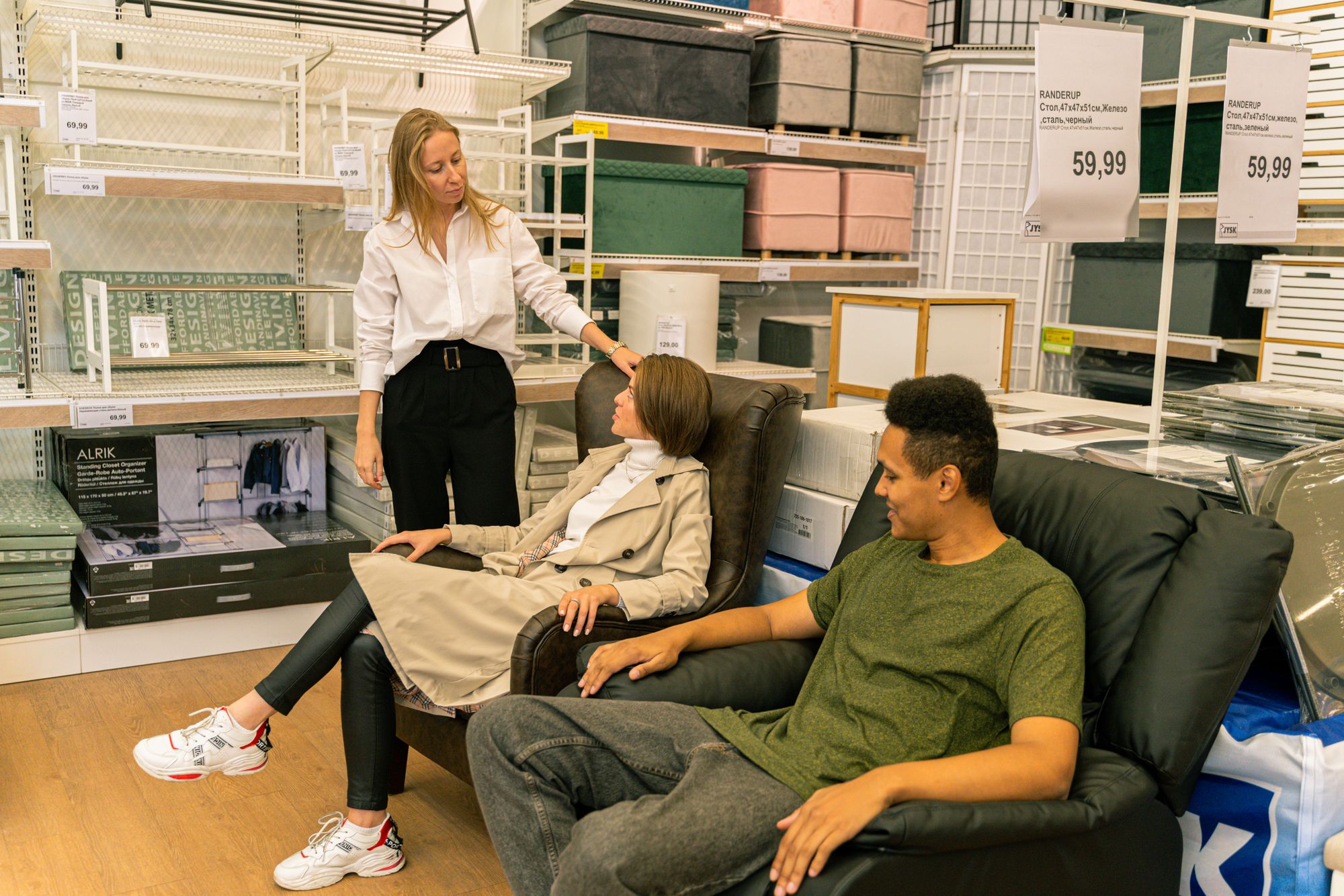
Comfort is personal in a way that’s almost impossible to convey through a screen. The cushion that photographs beautifully might be too firm for someone who likes to sink in, or too shallow for someone tall enough to need real leg support. Scale is just as tricky: a sectional that looks perfectly proportioned in a showroom photo can swallow a smaller living room whole once it’s actually sitting in it. According to First Chair’s research on furniture return rates, about 80% of furniture returns happen not because anything is defective, but because of mismatched expectations — misjudged scale, colors that read differently in person, or a piece that simply doesn’t work the way it looked like it would online. Roughly 28% of buyers say they hesitate to purchase furniture online specifically because they can’t touch the fabric or test the cushions first. That hesitation is doing exactly what it should.
What Happens After You Click “Buy” Matters More With Big Furniture
There’s also the simple logistics of the thing. A pair of earrings that doesn’t work out gets dropped in a mailbox. A sectional that doesn’t work out needs two people, a truck, and an afternoon nobody budgeted for. Online furniture returns run somewhere between 18% and 25%, compared to roughly 8.72% for in-store purchases, according to First Chair’s data — and processing a single furniture return can cost a retailer 20% to 65% of the item’s value, a cost that often gets passed back to shoppers in the form of restocking fees or non-refundable delivery charges. Broader retail research backs this up: the National Retail Federation’s 2025 Retail Returns Landscape report found that 19.3% of online purchases are expected to be returned in 2025, and 82% of shoppers say free returns are an important factor in deciding where to buy. For a $40 sweater, that friction is an inconvenience. For an $1,800 sofa that needs a freight delivery scheduled and two flights of stairs navigated, it’s a genuine deterrent, and it’s a big part of why so many people take their research in-store to close the deal.
Color and Fabric Rarely Look the Same on a Screen
Ask anyone who has ordered a “warm gray” sofa and received something closer to lavender, and you’ll understand this one instantly. Screen calibration, lighting, and photo editing all shift how a fabric or finish actually reads, and velvet, boucle, and performance fabrics in particular can look completely different in a photograph than they feel under your hand. That’s part of why the mismatched-expectations figure above is so high — it isn’t that people are being careless shoppers, it’s that certain qualities of furniture simply don’t translate through a lens. Seeing a fabric swatch next to your existing rug, in your own home’s light, is still one of the most reliable ways to avoid a costly surprise.
Measure Your Space Before You Fall in Love With Anything
Here’s where you can get ahead of all of this. Before you even start browsing, grab a tape measure and get the real dimensions of the space you’re furnishing — not just floor space, but doorways, stairwells, hallway turns, and elevator dimensions if you’re in an apartment. Painter’s tape on the floor, outlining exactly where a sofa or sectional would sit, tells you more in thirty seconds than a hundred product photos ever will. Write these numbers down somewhere you’ll actually have them later, like your phone’s notes app, so you’re not eyeballing it in a crowded showroom trying to remember whether your hallway is 34 or 38 inches wide.
Let Online Research Do the Narrowing, and Let Your Hands Do the Deciding
The smartest shoppers don’t treat online browsing and in-store visits as competing options — they treat them as two stages of the same job. Use the internet for what it’s genuinely good at: comparing prices across retailers, reading return policies, narrowing down styles and finishes, and building a shortlist of three or four pieces worth seeing in person. Then take that shortlist to a showroom and actually sit, lie back, and test drive it the way you would a mattress. Bring a swatch of your existing decor if you can, or at least good photos of the room in natural light, so you’re comparing the piece to reality rather than to memory.
Don’t Be Shy About the Floor Model
Once you’re in the store, remember that the floor model is often up for negotiation, especially if it’s the exact configuration you want. Retailers regularly discount floor models to clear space for new inventory, and because the piece has likely been sat on by dozens of shoppers already, you can inspect its wear firsthand rather than hoping a brand-new one holds up the same way. It’s entirely reasonable to ask whether a floor model is available at a discount, whether it can be delivered sooner than a special order, and whether any damage (a scuff on a leg, a slightly faded cushion) can shave more off the price. The worst that happens is someone says no.
Read the Return Policy Like You Mean It
Before you commit to anything large, actually read the return policy rather than assuming it works like it does for smaller purchases. Ask specifically about restocking fees, who pays for return shipping or pickup on oversized items, and how long you have to decide once the piece is actually in your home rather than from the day you ordered it. Given that furniture return costs run so much higher than typical retail returns, some stores structure their large-item policies very differently from their general merchandise ones, and it’s worth getting that in writing or at least in an email before you sign anything. A generous return window is worth more than a slightly better price if it means you’re not stuck with a sofa that turned out to be the wrong color.
What all of this really points to is that the gap between online browsing and in-person buying isn’t a failure of e-commerce, and it isn’t shoppers being old-fashioned. It’s furniture being furniture: big, expensive, and deeply personal in a way that a screen simply can’t fully capture. The research phase and the decision phase are doing two different jobs, and treating them that way — gathering information broadly online, then trusting your own hands, eyes, and tape measure to make the final call in person — is exactly how people end up happy with what shows up in their living room.