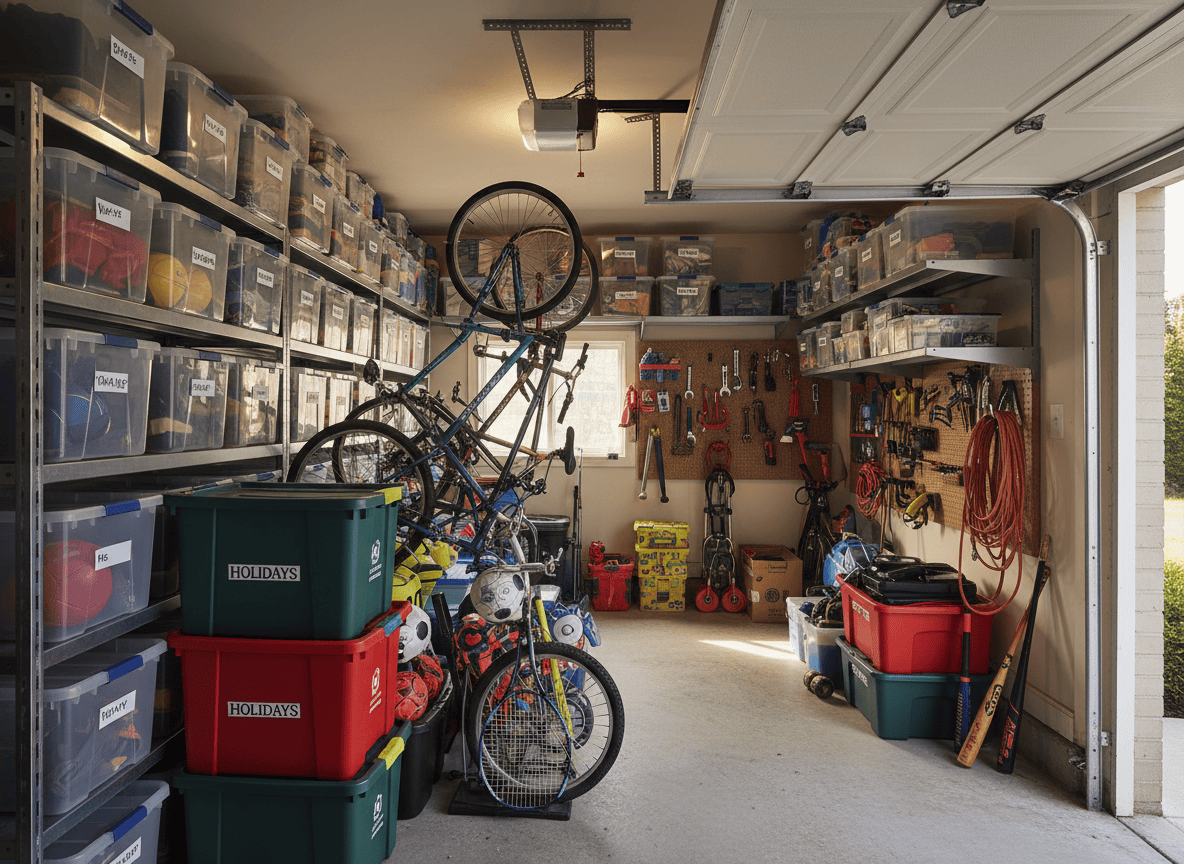
Thirty-six percent of Americans with a garage say it’s too cluttered to fit a vehicle inside, according to a national survey of 2,004 U.S. adults commissioned by CRAFTSMAN, the tool and storage brand owned by Stanley Black & Decker. Sixty-two percent went further, naming the garage the single most cluttered room in their entire house. Run the numbers back a few years and the trend gets worse, not better: a 2015 survey from storage brand Gladiator GarageWorks put the “too cluttered to park” figure at just 23% of respondents. Clutter has always been the easy explanation for the empty-garage phenomenon, and it’s a real one. It’s also only half the story.
The Storage Industry’s Own Numbers Keep Climbing
What makes the CRAFTSMAN figures worth taking seriously is who paid for them. This isn’t a wellness blogger’s guess or a random online poll; it’s a company that sells garage shelving and toolboxes asking its own potential customers, in a scientifically fielded survey with a margin of error of plus or minus 2 percentage points, whether their garage actually works as a garage. Fifty-two percent told CRAFTSMAN they’re unsatisfied with how their garage is organized. Nearly 80% keep power and hand tools in there, 76% store outdoor equipment, and lawn mowers alone show up in more than half of American garages. None of that is surprising on its own. What’s notable is how much that stockpile has grown relative to how much space a typical garage actually offers, because the garage itself hasn’t gotten any bigger.
The Part Everyone Skips: The Cars Got Bigger, Too
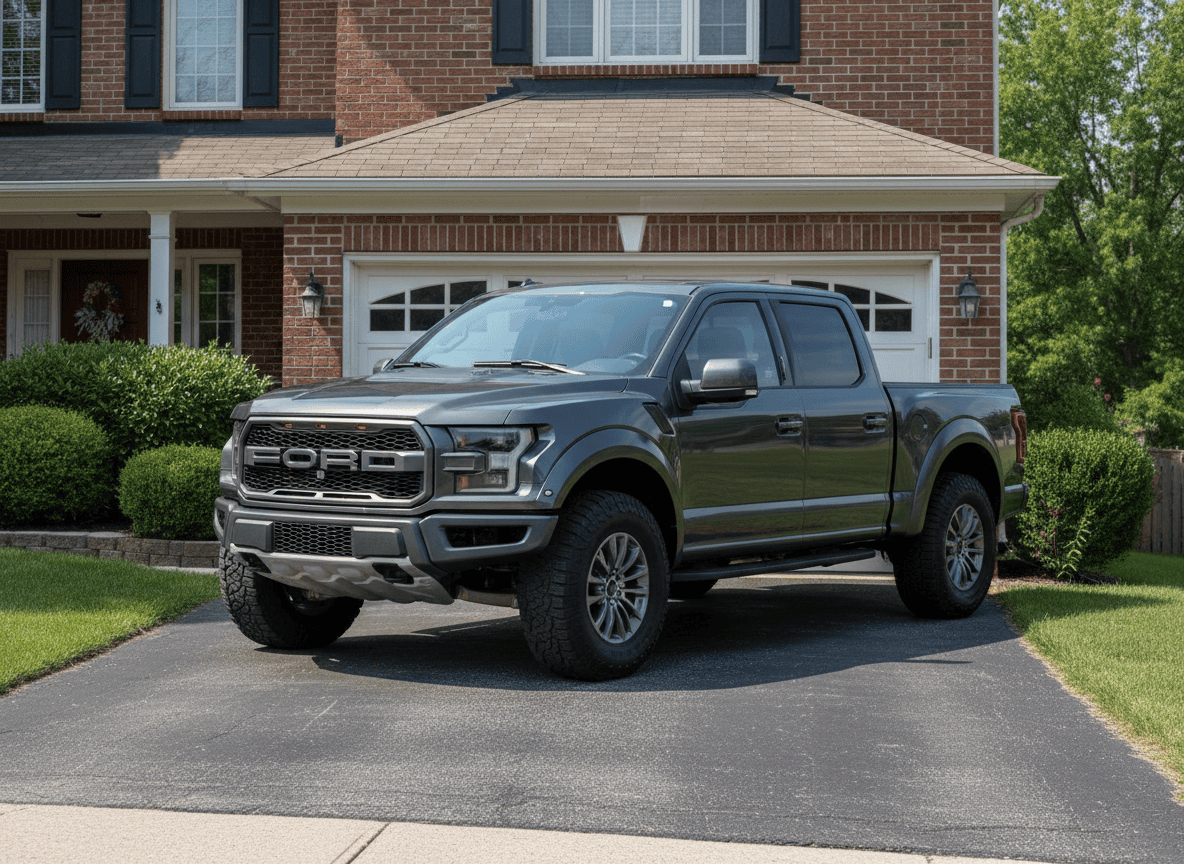
Here’s the piece of the puzzle that clutter surveys don’t measure. While garages built in the 1980s, ’90s, and even early 2000s have stayed roughly the same width, the vehicles Americans actually buy have not. A 2023 analysis of parking industry design standards found that between 2003 and 2023, the Toyota RAV4 gained 5 inches in width and the Honda CR-V gained 3, while even sedans like the Camry and Accord grew by more than an inch and a half. Zoom out further and the shift is even starker: the best-selling car in the U.S. in 1987 was the Ford Escort, and the best-selling vehicle today is the Ford F-150, a truck that’s roughly 13 inches wider. Parking engineers now design around an “85th percentile” vehicle that measures 6 feet 7 inches wide — essentially the width of an F-150 — a figure that didn’t exist as a design baseline a generation ago. Garages built to fit a Escort-sized sedan were never going to comfortably swallow a modern half-ton truck, storage bins or not.
What Researchers Found When They Actually Measured Garages
This isn’t just an internet theory, either. A widely cited UCLA Center on Everyday Lives of Families study, along with a Sacramento-area homeowner survey referenced in the same reporting, found that roughly a third to three-quarters of households with garages weren’t parking a single car in them — numbers that track closely with the CRAFTSMAN and Gladiator figures despite coming from a completely different kind of research. The researchers’ read was blunt: when a household has to choose between storing belongings and storing a car, and street parking is free, the car loses. Combine that incentive with vehicles that have physically outgrown the garages built to hold them, and the math stops adding up twice over — once in the boxes and once in the driveway.
So What Actually Fixes This
Professional organizers who work specifically in garages tend to push back against the instinct to just “buy more bins.” The CRAFTSMAN survey found that 90% of respondents believe a well-organized garage looks and feels larger, and 52% said they’d prefer a matching, wall-mounted storage system over stacking more plastic totes on the floor. Vertical storage — pegboards, slatwall panels, ceiling-mounted racks for seasonal items — reclaims floor footprint without requiring anyone to throw away the lawn mower. But if a household’s vehicle genuinely doesn’t fit the garage’s stall dimensions regardless of what’s stored, no amount of organizing solves that; it’s a structural mismatch, not a clutter problem, and it’s worth measuring the actual bay width against the vehicle before assuming a weekend of purging will fix it.
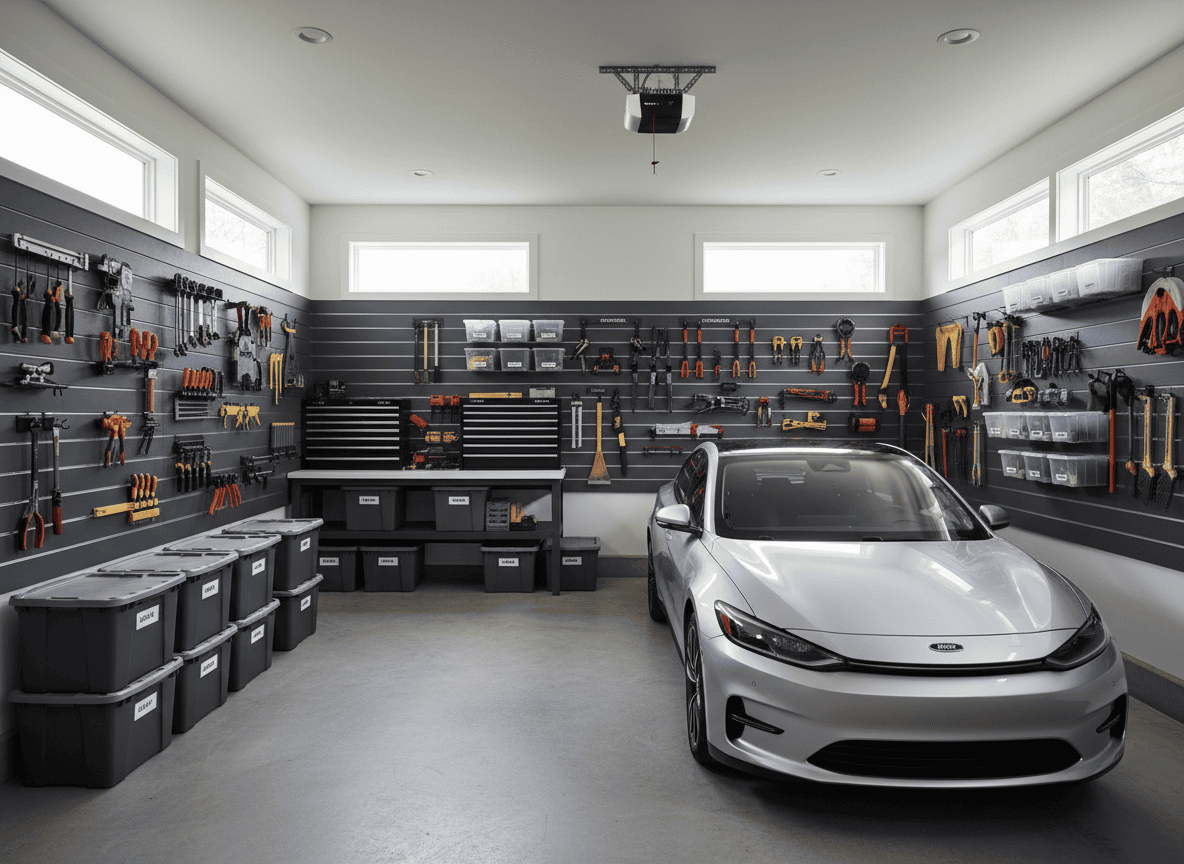
The clutter numbers get all the headlines because they’re easy to picture: bins everywhere, no path to the car. But the harder truth sitting underneath those survey results is that American garages were built for American cars of a different era, and both the boxes and the vehicles inside them have been quietly outgrowing that space for decades.