


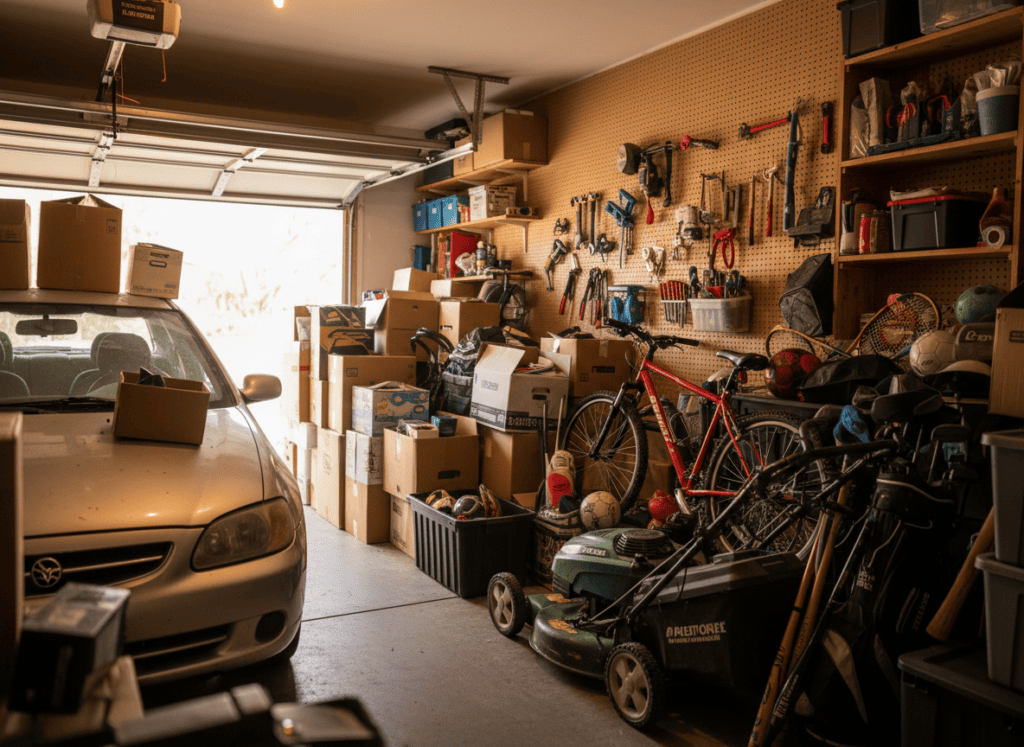
Thirty-six percent of American homeowners say their garage is so packed with stuff that they can no longer park a vehicle inside it, according to survey data released by CRAFTSMAN. Another 62% go further, naming the garage the single most cluttered space in their entire home, ahead of the basement, the attic, and even the junk drawer. For a room originally built to shelter a car, that is a strange thing to be true in millions of houses at once, and it says less about laziness than about how differently people plan for other rooms.
The Room Everyone Skips
Kitchens get remodeled. Closets get custom shelving. Living rooms get redesigned every few years as furniture wears out or tastes change. The garage, by contrast, tends to get whatever is left over: an old bookshelf pulled from a bedroom, a folding table nobody wants inside, bins stacked because there was nowhere else to put them the day they arrived. CRAFTSMAN’s national survey of more than 2,000 adults found that 52% of respondents are outright dissatisfied with how their garage is organized, yet most never treat it as a real organizing project with a budget or a plan. It becomes the house’s holding pattern instead of a functioning room.
What’s Actually Filling the Space
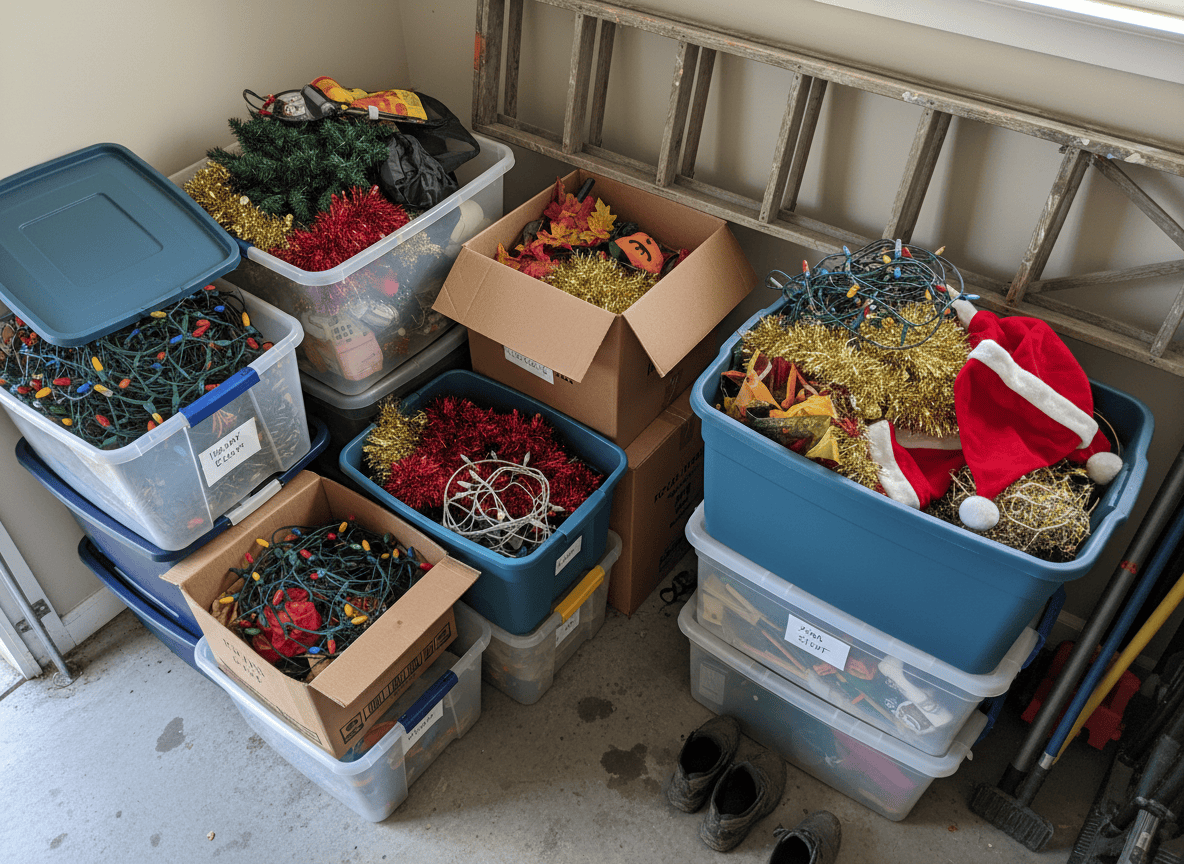
The same survey breaks down what’s crowding people out of their own garages, and tools dominate the list. Eighty percent of respondents store power tools and hand tools out there, 76% keep outdoor equipment like mowers and trimmers, and 67% say they now own so many tools that keeping them organized “is a must.” Layer in seasonal decorations, sports gear, overflow pantry items, and the boxes nobody has unpacked since the last move, and the math stops working. A two-car garage has a fixed footprint, but what gets asked of it keeps growing.
This isn’t just a garage-specific problem, either. A separate 2025 StorageCafe survey found that 42% of Americans feel overwhelmed by clutter frequently or all the time, and 33% currently pay for off-site self-storage. Some of that rented space is almost certainly holding items that used to live in a garage before the garage ran out of room.

The DIY Boom Is Making It Worse
Fifty-three percent of the homeowners CRAFTSMAN surveyed now use their garage as an active DIY workspace, not just storage, and that number climbs to 62% among millennials and 56% among Gen X respondents. A garage doing double duty as a workshop needs room for a workbench, a place to spread out a project, and easy access to whatever tool the job calls for, which is a very different layout requirement than simply parking a car and shutting the door. Power drills top the list of most-used tools at 56%, followed by shop vacs at 41%, while 62% store leaf blowers, 57% keep string trimmers, and 51% still have a lawn mower taking up floor space. Every one of those items needs somewhere to live, and in most garages, that “somewhere” is still the floor.
Why the Neglect Keeps Compounding
Part of the issue is architectural: garages rarely come with built-in storage the way kitchens come with cabinets. Everything added later is improvised, which means it competes for floor space instead of using walls, ceilings, or doors. Part of it is psychological — a garage door closes, so the mess disappears from view in a way a cluttered kitchen counter never does. And part of it is genuinely financial. CRAFTSMAN’s data found that 90% of respondents believe a well-organized garage can make a small space feel larger, and 85% call an organized garage “a source of pride,” yet the gap between believing that and acting on it stays wide because garage organizing rarely feels urgent until a car literally won’t fit anymore.
Fixing It Doesn’t Require a Renovation
The homeowners who do close that gap tend to skip a full remodel and go vertical instead. Slatwall panels, ceiling-mounted racks, and ceiling tracks pull bulky, rarely-used items like bins and ladders off the floor entirely, which is often the single biggest space recovery move available. Labeled, matching bins were a preference for 52% of survey respondents, likely because uniform containers stack predictably instead of wasting the odd gaps that mismatched boxes leave behind. None of this requires new square footage. It requires treating the garage as a room with a floor plan, the same courtesy already extended to every other space in the house.
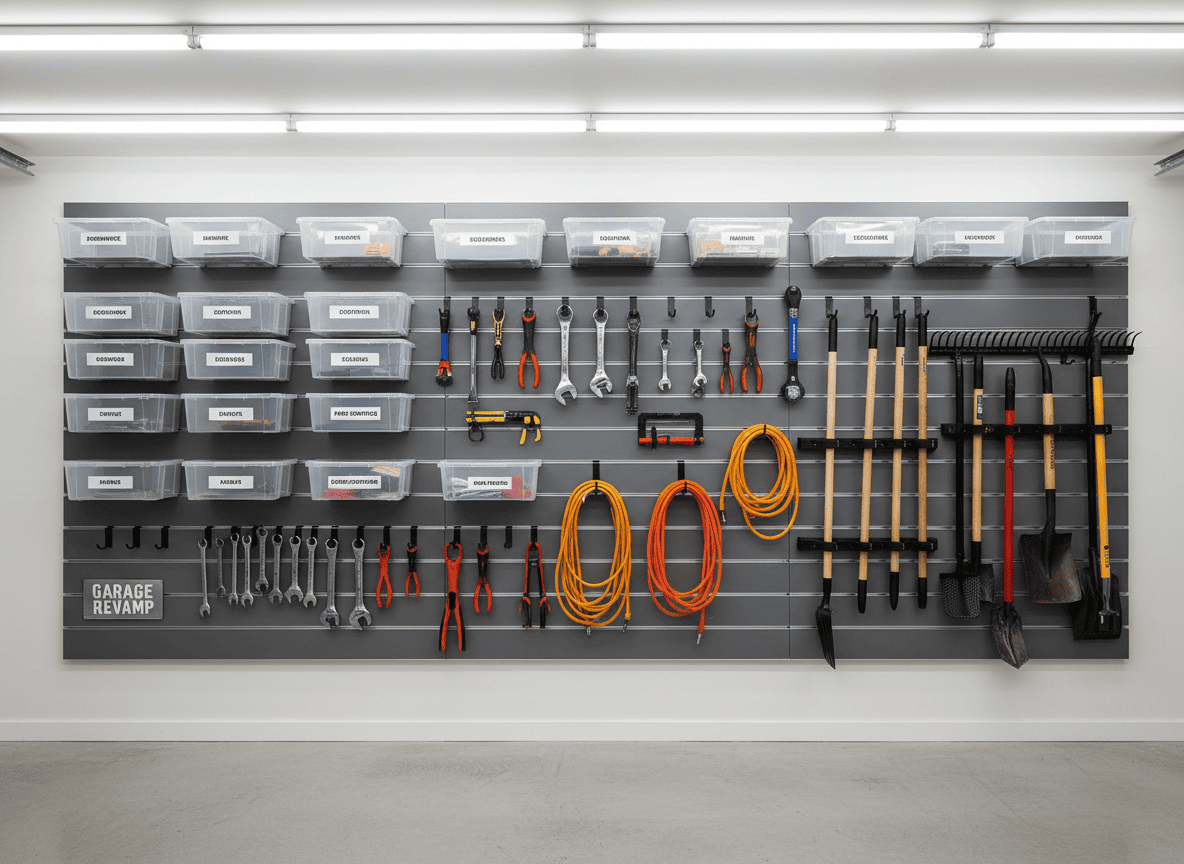
A garage that can’t hold a car isn’t a storage failure so much as a planning gap, and it’s one of the few rooms in an American home where a weekend of wall-mounted shelving can recover space that a renovation budget would otherwise be needed to buy.