



More than 200 people in the United States die every year from carbon monoxide produced by ordinary household products, according to the U.S. Consumer Product Safety Commission’s own Carbon Monoxide Fact Sheet. Not from house fires. Not from a car left running in a closed garage. Just from the appliances so many of us keep on hand for exactly the kind of emergency that makes us reach for them. Two product categories sit at the top of that list, and if you’ve ever run a generator during a storm or plugged in a space heater to take the chill off a cold bedroom, this one is worth your full attention. The reassuring part is that almost every one of these deaths is preventable, and once you know where the real risk hides, it’s genuinely simple to protect your household. So let’s walk through exactly what the federal data shows and what to do with it.
The Numbers Behind the Warning
The CPSC’s fact sheet is refreshingly specific about which products cause the most harm. Portable and stationary generators are linked to 92 deaths a year, more than any other single product category tracked by the agency. Portable heaters come in second, tied to 33 deaths annually. Beyond the fatalities, the CPSC notes that several thousand more people end up in hospital emergency rooms every year being treated for non-fire carbon monoxide poisoning that didn’t turn fatal but easily could have.
For a wider lens on just how serious this gas is, the Centers for Disease Control and Prevention puts the broader picture at more than 400 Americans dying every year from unintentional, non-fire carbon monoxide poisoning across all sources, including vehicles, with over 100,000 people visiting an emergency department for it annually. The CPSC’s 200-plus figure covers non-automotive consumer products specifically, so it’s a meaningful slice of an even larger public health issue, not the whole story. Either way you look at it, this is a gas that quietly ends more lives each year than most people realize, and it does it in homes, not junkyards or industrial sites.


Why Generators Top the List
Here’s what makes generators so dangerous, and it isn’t a manufacturing flaw or bad luck. It’s almost always about where the generator ends up running. During a power outage, when a house is dark and cold and everyone just wants their refrigerator humming again, it’s tempting to pull the unit into a garage, onto a covered porch, or tuck it just outside a window to keep the extension cord short. The CPSC is blunt about why that’s a mistake: a single portable generator can produce as much carbon monoxide as hundreds of idling cars, and running one in any enclosed or semi-enclosed space, even with the garage door open, lets that gas pool up faster than most people expect. The agency’s guidance is to run generators outdoors only, at least 20 feet from the house, with the exhaust pointed away from doors and windows, according to the CPSC’s Carbon Monoxide Information Center. Carbon monoxide doesn’t announce itself. There’s no smell, no visible haze, nothing that tips off your senses before symptoms start, which is exactly why the placement rule matters so much more than instinct.
Portable Heaters: The Quiet Second Culprit
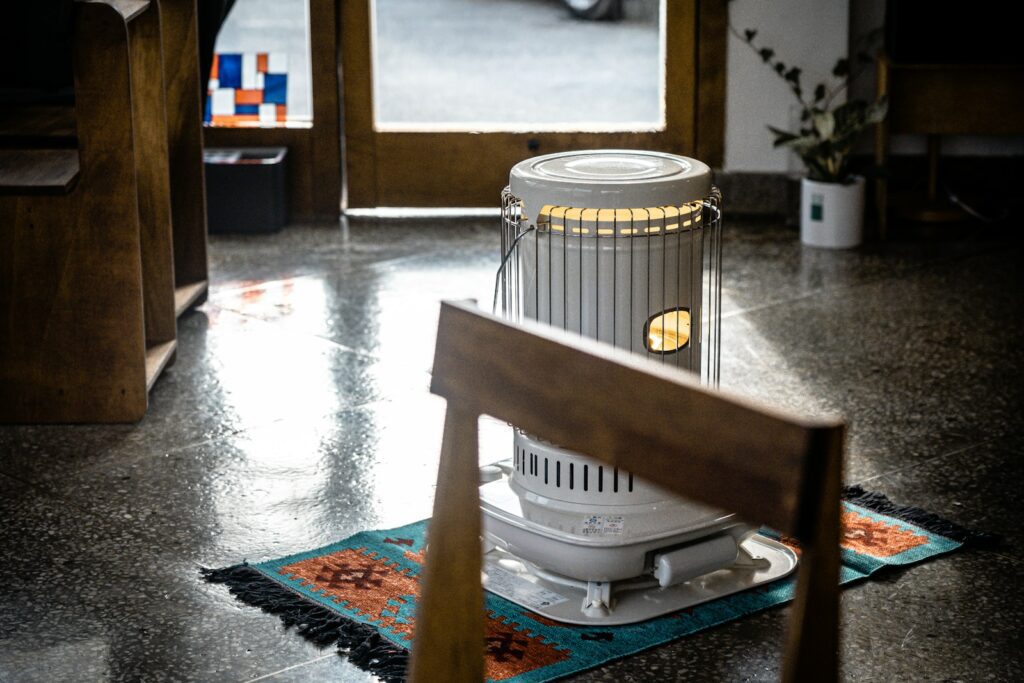
Portable heaters cause fewer deaths than generators, but the mechanism is strikingly similar: a fuel-burning appliance, whether it runs on propane, kerosene, or another combustible fuel, operating in a space that doesn’t have enough fresh air moving through it. A closed bedroom, a small camper, a tent, a workshop with the windows shut against the cold, these are all places where carbon monoxide can build to dangerous levels within a couple of hours. Unlike a furnace, which is vented to the outside as part of a home’s design, a portable heater typically isn’t vented at all, so every bit of exhaust it produces stays in the room with you. If you use a fuel-burning portable heater indoors, cracking a window and running it for shorter stretches rather than all night matters more than most people assume, and an electric space heater sidesteps the carbon monoxide risk entirely if that’s an option for your situation.
Where Your Detectors Actually Need to Go
This is the part homeowners get wrong most often, and it’s an easy fix. Plenty of people assume a carbon monoxide detector belongs near the furnace or water heater, treating it like a smoke detector pointed at the source of the danger. But carbon monoxide mixes with regular air and travels throughout a house, so the CPSC recommends installing detectors on every level of your home and outside each sleeping area, not tucked away in a utility closet. Interconnected alarms are the gold standard here, since one going off anywhere in the house triggers all of them at once, giving everyone a chance to wake up and get out before symptoms set in. Skip spots near heating vents or anywhere furniture or curtains could block the sensor, and if you’re leaning on battery power rather than a hardwired system, put a reminder on your phone to test them twice a year. A detector doing its job is really the last line of defense, and it works best when it’s positioned to wake you up, not just to log a reading no one sees until morning.

What To Do During a Power Outage
Power outages are when all of this comes together, because they’re precisely when people reach for generators and heaters at the same time their guard is down and their patience is thin. Before you ever need one, decide now where your generator will sit outdoors, well away from every door and window, and keep that spot clear of snow or debris so you’re not tempted to improvise closer to the house in the moment. If you’re using any fuel-burning heater indoors during an outage, keep a window cracked for airflow and never let it run unattended overnight. Make sure your carbon monoxide detectors have fresh batteries before storm season hits your area, not after the lights go out, since that’s exactly when you won’t want to be searching a dark house for a spare nine-volt. And if an alarm does sound, treat it as real: get everyone outside into fresh air immediately and call for help from there, rather than trying to locate the source first.
None of this requires giving up the conveniences that get a household through a rough night, a warm room, a working refrigerator, lights that turn back on. It just requires putting a little distance and a little airflow between those conveniences and the people relying on them, and letting a properly placed detector stand guard for the hours you can’t. That’s the whole difference between a story about a storm you got through and one of the roughly 200 that don’t end that way.