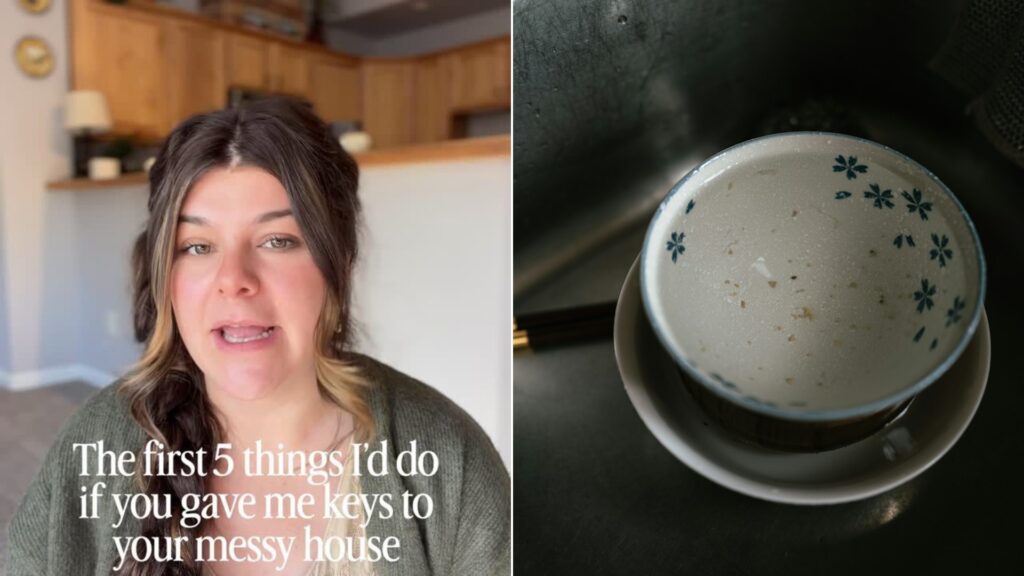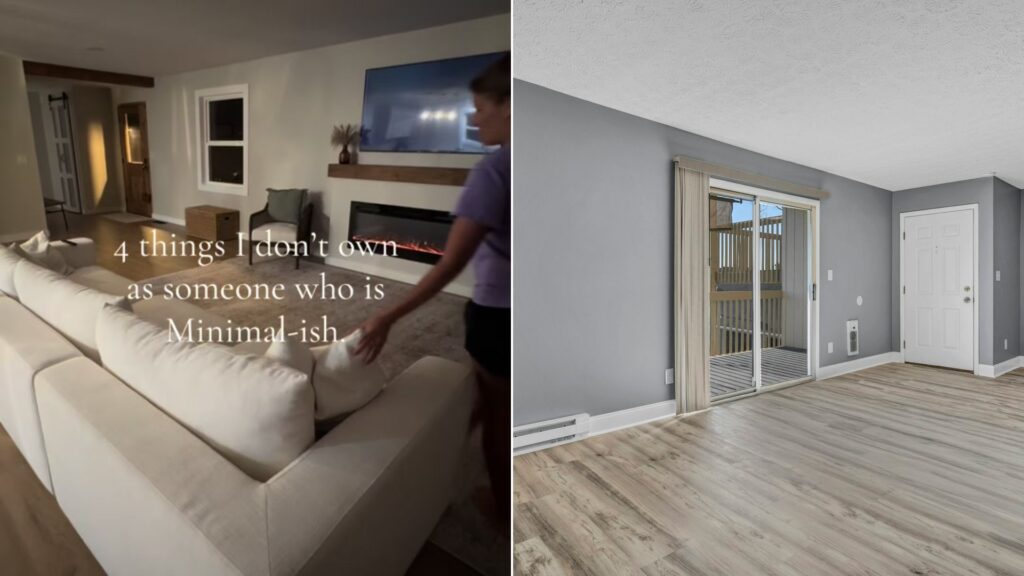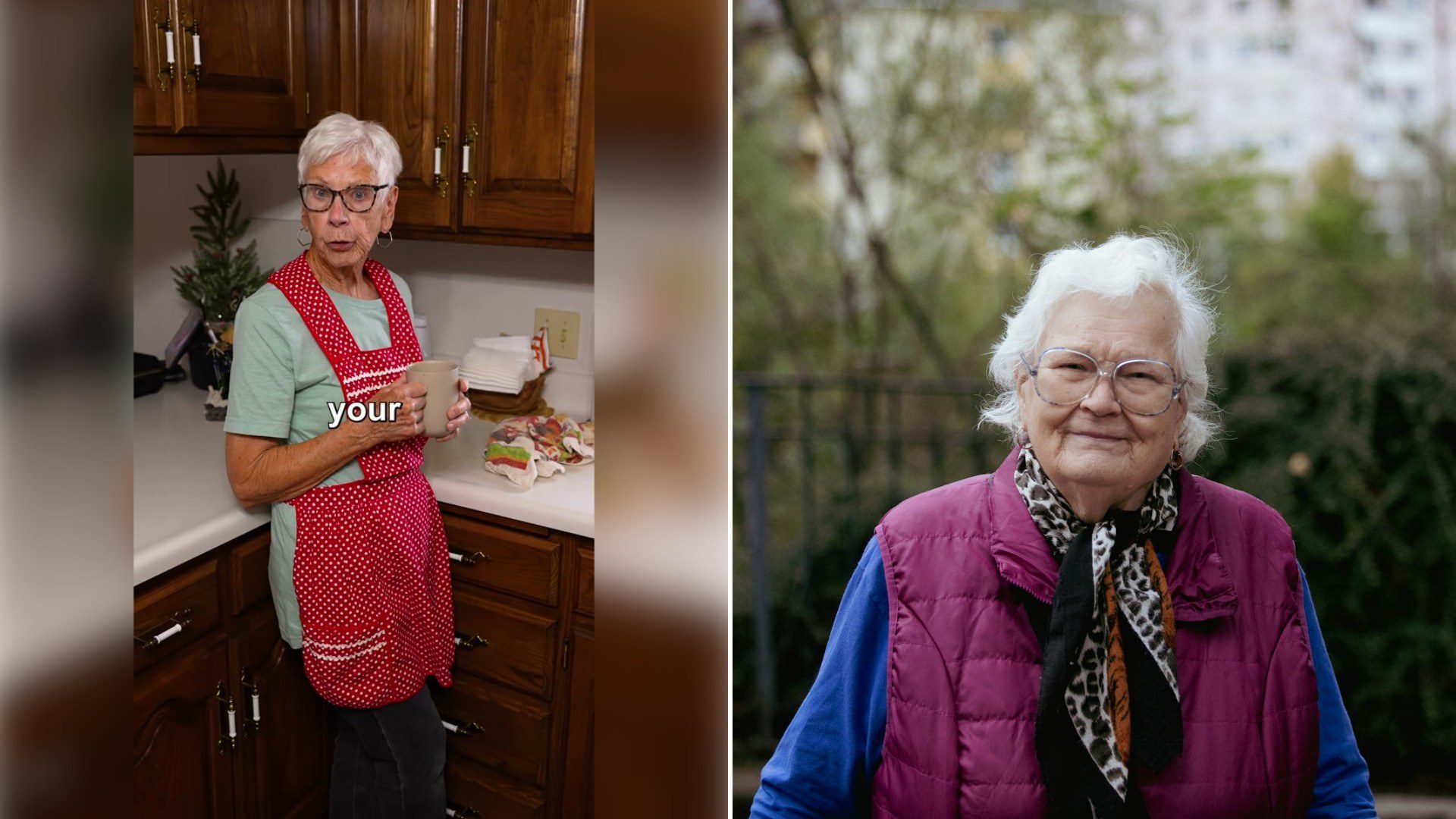
She is standing in her kitchen in a red polka dot apron, a mug in one hand, and she starts by describing your house, not hers. “Right now, your house is loud,” says the white-haired grandmother who posts on TikTok as @grannybibbins. “Somebody’s always crying, fighting or hollering.”
She knows what the mom on the other side of the screen wants, too. “And you’re dreaming about five minutes of peace and quiet,” she says. Then she leans toward the camera, and the tone shifts. “Let me tell you about quiet, honey.”
@grannybibbins
What follows takes her about ten seconds, and there is not a wasted word in it. “One day you will get all of it you want,” she says. “The rooms go still, the dishes stay clean. Nobody hollers your name.”
That last line is the one that turns. Up to that point she could be describing a reward: still rooms, a clean sink, nobody yelling for you from two rooms away. It is the exact list a tired parent would write if asked what a good afternoon looks like. Then she finishes the thought with her hand pressed flat to her chest. “And the quiet you beg for is the loneliest sound there is.”
The whole video is 31 seconds long. She is in a mint green T-shirt under the apron, glasses on, in front of dark wood cabinets and a white countertop, and her words pop up on screen one at a time as she says them. There is no music cue to tell you how to feel and no story about her own family. She does not say how many children she raised or how long her own house has been quiet. She just talks straight to the person watching, calls her “honey” and then “Mama,” and gets to the point.
The point comes in two sentences. “So on the loud days, the crazy ones, try to love the noise,” she says. “Mama, one day you would give anything to hear it again.” Her caption repeats it in nine words: “Enjoy the noise while you still have it.”
It would be easy to hear that as one more person telling worn out parents to treasure every second. Listen to what she actually says, though, and it is a smaller and more doable ask.
First, she does not tell anyone the noise is pleasant. She opens by agreeing that it is crying, fighting and hollering. She calls the loud days “the crazy ones.” Nothing in the video suggests a mom is wrong to want five minutes of peace. She takes that wish as a given.
Second, the verb she picks is “try.” Try to love the noise. Not every day, either. She is talking about the loud days specifically, the ones where it feels like too much. That is an instruction a person can follow at 5 p.m. on a Tuesday, because it leaves room to fall short.
Third, her list of what goes missing is ordinary on purpose. Still rooms. Clean dishes. Nobody hollering your name. She is not warning about missed milestones or big occasions. She is saying the background racket of a full house is the thing itself, and that the dirty dishes are evidence somebody was there to eat.
So what does a parent do with a 31 second talking-to from a grandmother in an apron?
One option is to take her list and flip it. The next time the sink is full, or someone yells “Mom” from the other end of the house for no good reason, that is a moment she says you will one day want back. You do not have to enjoy it. Noticing it is enough.
Another is to keep some of the noise. Photos capture how kids looked, but she is talking about how a house sounds. A voice memo of the dinner table, the bedtime negotiations, or the argument over whose turn it is costs nothing and takes a minute. If she is right that you would give anything to hear it again, it makes sense to record a little of it now.
A third is to stop treating quiet as the finish line. You can still take your five minutes when you can get them. She never says otherwise. Her warning is about getting all the quiet you want, permanently, and finding out it was not what you were after.
And on the days when none of that works, her standard is still a forgiving one. She did not say love the noise. She said try.