


Did you know that Griswold and Wagner cast iron skillets are among the most sought-after vintage kitchenware by collectors? This is due to their long history, quality craftsmanship, and the unique characteristics that set them apart from modern brands. If you’re lucky enough to own a piece from these manufacturers, you could be sitting on a small fortune! This guide will help you identify and value your Griswold and Wagner cast iron skillets, based on expert insights and trusted sources. Let’s dive in!
1. Identifying Griswold Cast Iron Skillets

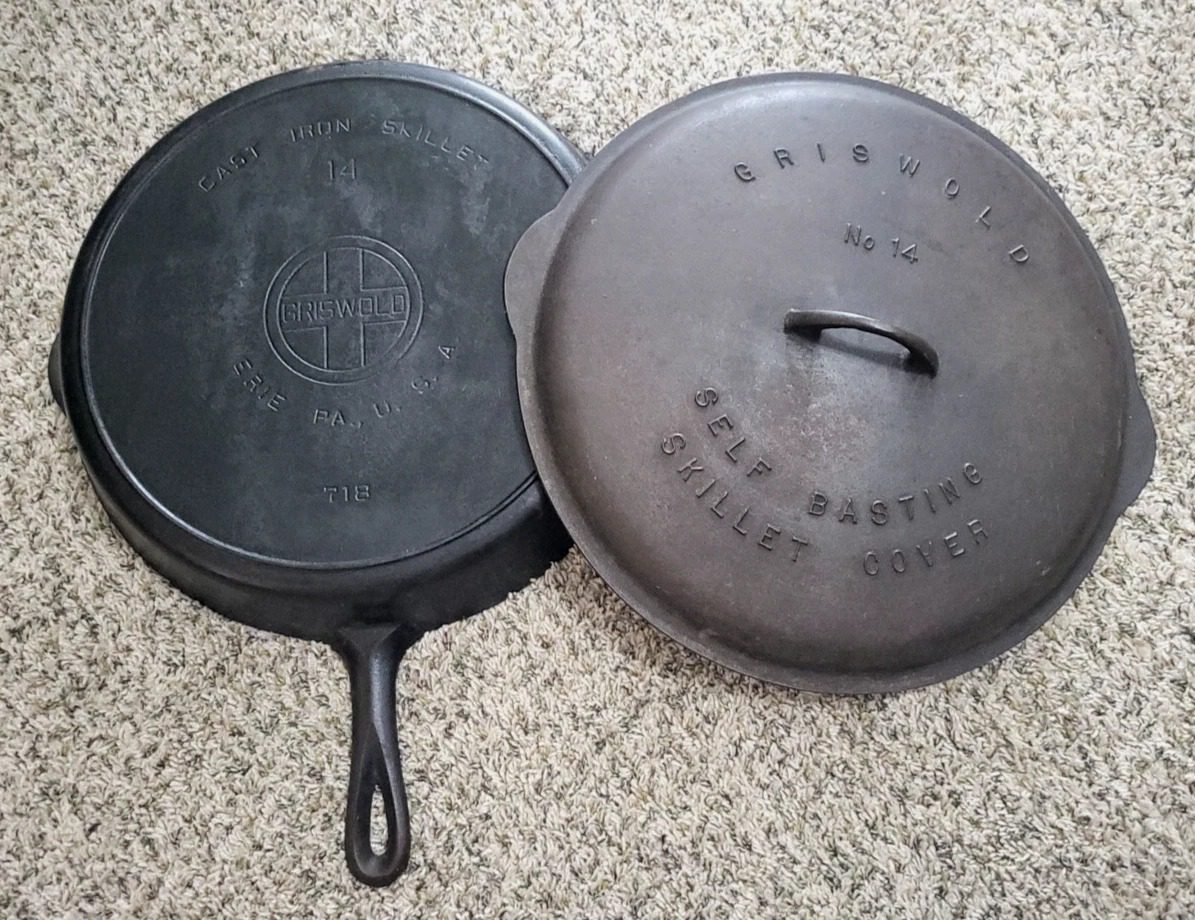
The quickest way to identify a Griswold skillet is to look for the Griswold logo on the bottom of the pan. The most common logo, which features a cross inside a circle, is often referred to as the “Griswold cross.” However, the company used several logos throughout its history, so you may come across variations. The logo’s design, size, and placement can help date the skillet (for example, the large block logo generally dates to the 1920s–1940s). For a clear visual timeline of marks, see Cast Iron Collector: Evolution of the Griswold Trademark.
2. Identifying Wagner Cast Iron Skillets


Wagner skillets can be identified by changes in the Wagner/Wagner Ware logos across eras. Early pieces (late 1800s–1910s) often show a simple “WAGNER,” while later pieces (1920s–1950s) commonly read “Wagner Ware” and may include the “SIDNEY -O-” foundry mark for Sidney, Ohio. A concise, image-rich reference is Cast Iron Collector: Evolution of the Wagner Trademark (also see the company overview at castironcollector.com/wagner.php).
3. Checking the Condition
Condition heavily impacts value. Skillets with smooth cooking surfaces, no cracks or warping, and minimal pitting command stronger prices. Proper cleaning and seasoning preserves a pan’s condition without over-restoring it. For authoritative care instructions, see Lodge: Cleaning & Care and their guide on How to Season.
4. Researching Skillet Values
Once you’ve identified the maker and assessed condition, compare recent realized prices (not just asking prices). Credible auction databases provide sold results you can filter by maker and form:
- LiveAuctioneers: Griswold price results
- Browse Wagner sold examples on LiveAuctioneers (e.g., a Wagner Ware #6 skillet result or grouped Wagner lots) to gauge current ranges.
For community insights and restoration tips, the long-running forum r/castiron can also be useful (always cross-check claims against sold-price data).
Unearthing a vintage Griswold or Wagner cast iron skillet can be like finding a hidden treasure. With this guide, you’re well-equipped to identify and value your cast iron skillets, potentially turning your kitchenware into a lucrative collectible. Remember, proper care and maintenance can help preserve your skillet’s value over time. Happy hunting!