

The first thing out of the hall closet is a crushed air filter. “Here’s a crushed filter because I was jamming stuff in there,” says Ellen, and the whole cleanout starts right there with a laugh.

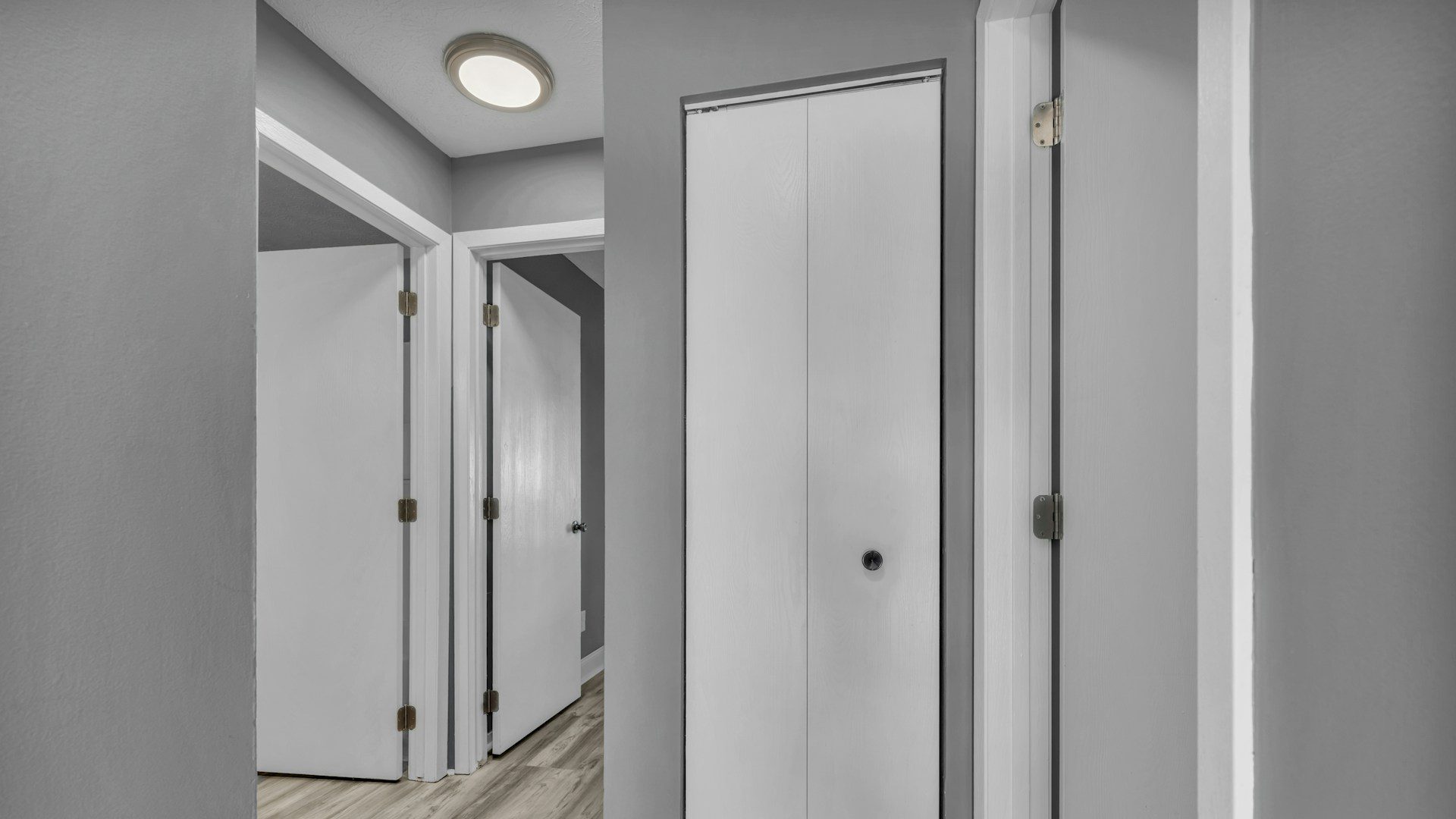
Ellen is a nurse and a Cub Scout leader who has also taught Sunday school, and her lower hall closet had become the place where everything got shoved. Organizing coach Shannon Torrens came over to help, and the two decided to empty every single thing onto a table so they could really see what they were going through.
It was tight in that closet, and they had just finished the upper half. Now it was time for the bottom.

The Little Backpack That Was Hard To Let Go Of
The bags came first, because they were the easiest place to start. Out came a small backpack with cute eyes that you can squeeze.
“It was Ben’s backpack, but I think we need to let it go,” Ellen says. She admits she had been hanging on to it as a sentimental piece, but she knows it will only deteriorate in the closet. “Someone else would enjoy it.”
That one sentence is the heart of the whole day. A keepsake that is shut in a dark closet is not doing anything for anybody, while one that goes to a donation pile can make a different child happy.
Freebies From Work, Holey Totes And A Beat-Up Diaper Bag
There was a lot more to sort through. A few tote bags went straight into the trash because they had holes and were all beat up, and Shannon suggested a trash bag for this kind of thing, because half-used or ripped items would not need to be looked at twice.
Two backpacks that Ellen got as freebies from work were another easy call. One was a lunch-pail style she had never used, so it went to the donation pile in good condition. Another she used only once and found very uncomfortable to wear.
A diaper bag was harder. “You could tell I used the tar out of this thing,” Ellen says. She had shoved it to the back out of sentiment, but it was in such bad shape that she decided it had to be trashed.
Some bags stayed. A swim bag with goggles, the hiking packs the family uses for day hikes and a small bag she carries to Cub Scouts all earned a spot in the keep pile.
A Caution Vest, Friendship Bracelets And A Spirograph Business
Not everything was a serious decision. When a caution vest came out, the pair joked about dressing up as the Village People, and the laughter went on from there.
A tangle of string turned out to be bracelet making supplies. A set of Play-Doh cookie cutters with letters could go, because “kids are past that.” Even a bag of clay was all mixed together, since the kids had blended every color.
Then the stamps and sticker books triggered some memories. The two swapped memories of embossing kits, and one of them recalled a third-grade Spirograph business, selling the drawings for a dollar and charging ten cents extra for one dot of puff glitter paint.
What Stayed, What Went, And The Doom Pile
Some things earned their place. A plywood number four that was cut out for Andrew when he was a kid is sentimental, and Ellen says the kids inherited it as they turned four. It stays.
The laminator got a loud “love my laminator,” along with laminating pouches and the stationery for the kids’ thank you notes. A box of Sunday school supplies for a storytelling program stays too, in case, as she laughs, “the spirit moves.”
The air purifier filter stays because she uses it every fire season. A first aid kit that includes more heavy duty supplies is also kept, and Shannon suggested labeling it so anyone could grab it in a hurry. “That’s actually a really good idea,” Ellen says.
Leftovers from homeschooling, such as place value and fraction pieces and a pile of index cards, were let go because the kids are done with them and she is not homeschooling anymore. Ellen is also stepping back from her Cub Scout role in January, and the two agree that when you are doing too much, you tend to not do it very well.
Anything sentimental went to what Ellen calls the “doom pile.” Ellen’s plan is to give each kid one storage container and limit their keepsakes to what fits inside, an idea Shannon loves.
The Closet Now Has A Whole Empty Side
Shannon sorted the keepers into two sides, one for crafting and the other for items around the house, such as the medical gear and the air purifier. Bins that were left over became places for tags so everyone knows what is where.
Containers that did not close before now shut, and bags fit in front. “We have cleared so much space in that hall closet that it’s essentially a whole side that’s empty,” Shannon says.
Ellen says there is no way she would have gone through the closet on her own. The two plan to keep decluttering together, and the trains may even find a new home in one of the kids’ rooms once space opens up.
Tips You Can Use In Your Own Closet
You can copy this system at home. Empty the whole space onto a table so you can see everything, and sort into keep, donate, trash and recycle piles.
- Use a trash bag for worn-out items so you do not have to handle them twice.
- Donate things in good condition that you never use.
- Give each family member one container for keepsakes.
- Label emergency supplies so anyone can find them.
The best part is that the guilt fades. A crushed filter and an old backpack look like small things, but letting them go made room for a closet that works.
More Stories You May Like
- 32,791 Amazon Dressers Costing About $160 Are Recalled Because They Tip Over Unless Anchored, And A Refund Means Writing RECALLED On Yours
- Seller Warns Vinted Quietly Changed Packaging Rules, So If A Courier Crushes An Unpadded Package The Buyer Gets A Full Refund, Keeps Your Item, And You Don’t Get Paid
- Amazon Is Letting Some Shoppers Text Its Alexa Shopping Agent To Buy Things, Reorder Past Orders And Set Price Drop Alerts, But Only By Invitation For Now