


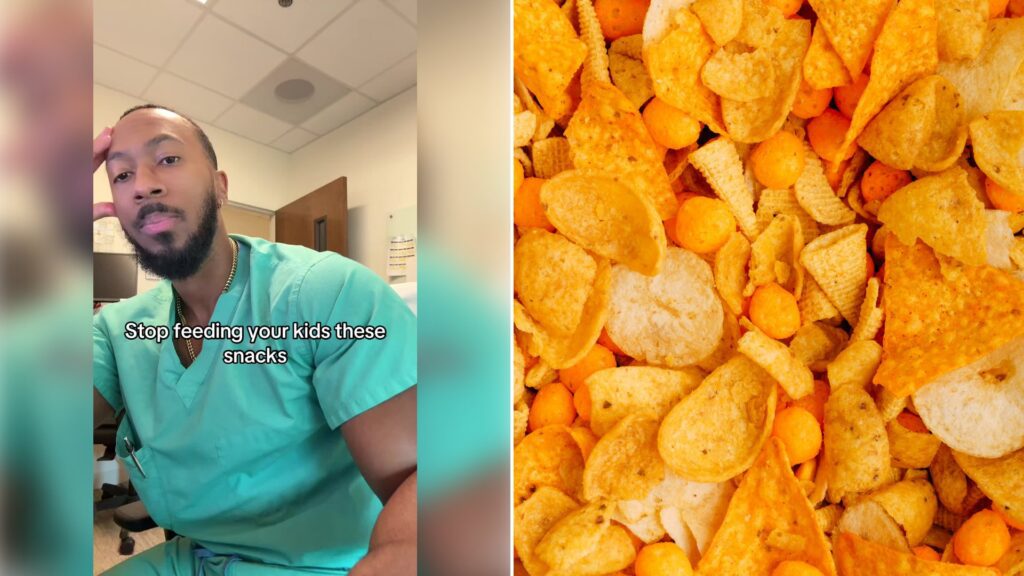
A video from the account sgtmedicinebag, filmed by a healthcare worker in scrubs at what appears to be a clinic, opens with on-screen text reading “Stop feeding your kids these snacks.” His caption spells out the specific concern: “Eating these spicy snacks can lead to acid reflux, IBS, gastritis, colitis, and possibly worse. Please refrain from this,” tagged #physicianassistant, #nursepractitioner, #emergencymedicine, #parentsoftiktok, and #coloncancer. The video pulled in a massive response: 850,000 likes, 22,300 comments, 105,000 saves, and 421,700 shares.
@sgtmedicinebag Eating these spicy snacks can lead to acid reflux, IBS, gastritis, colitis, and possibly worse. Please refrain from this #physicianassistant #nursepractitioner #emergencymedicine #parentsoftiktok #coloncancer
Extremely spicy, capsaicin-heavy snacks like Flamin’ Hot Cheetos and Takis have drawn clinical attention for years, well before this particular video. Emergency physicians have described patients, usually children and teens who eat the snacks in large quantities, coming in with upper abdominal pain that radiates into the chest, a presentation linked directly to the capsaicin and red pepper content. For kids who already deal with acid reflux or GERD, doctors have noted that a round of extremely spicy, heavily processed snacks can flare up those symptoms considerably. One more benign but alarming effect doctors have flagged: the red dye in these snacks can turn stool bright red or orange after a large serving, which has sent worried parents to the ER mistaking it for gastrointestinal bleeding when nothing was actually wrong.
These concerns are part of why multiple school districts, including schools in New Mexico, California, and Illinois, have moved to ban the snacks from campus in past years, citing both their lack of nutritional value and the volume of health complaints tied to them. Some of the same reporting has also pointed to a less obvious concern: the snacks are formulated to be intensely flavorful in a way some researchers have compared to patterns seen in overeating and craving-driven behavior, meaning the “can’t eat just one bag” reputation these snacks have isn’t purely anecdotal.
None of this means an occasional spicy snack is dangerous for every child, the clinical concerns described here are generally tied to large, frequent quantities rather than an isolated bag at a birthday party. But the pattern a healthcare worker describes in a video like this, kids working through a bag or more on a regular basis, fits closely with the exact scenario doctors have flagged repeatedly: a snack engineered to be hard to stop eating, landing on a digestive system that wasn’t built to handle that volume of capsaicin and dye on a routine basis.
More from Decluttering Mom
- Mom of Two Opens Her Three Car Garage on a Doom Pile of Boxes, Finds Diapers From a Subscription Still Running and a Sauna Boxed for a Year, Then Clears Enough to Park Inside
- Woman Says She Came Home From a Cleaning Service Visit to a Gas Burner Left On With No Flame, Then Found Her Purse, Tax Documents and Real Silverware in Two Garbage Bags Downstairs
- Homeowner Whose Husband Said He Could Not See the Garage Floor Hauls Out Four Years of Stuff, Patches and Paints One Wall White, Then Hangs Bikes, Helmets and a Vacuum on Rails