


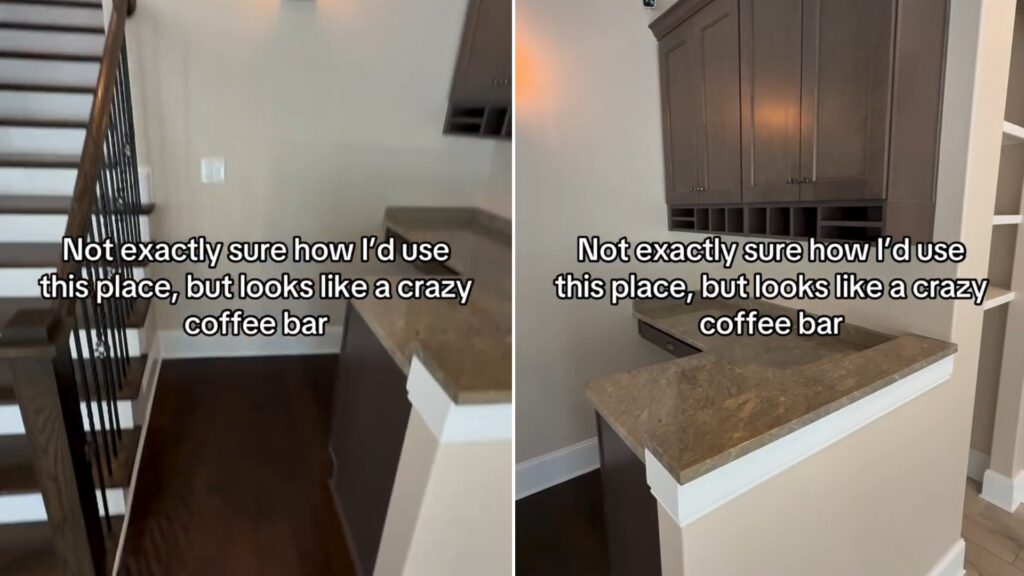
A single walkthrough reel pulled 278,000 views, roughly 142 times the median for that account, because the home tour turned up a feature the listing agent standing right there couldn’t explain. The creator’s own POV video shows the moment on camera: a genuinely odd architectural detail, and a real estate professional whose job is knowing houses shrugging at it in real time. That combination, an expert stumped on camera, is rarer than it sounds, and it points to something true about older housing stock. Plenty of period homes still have features nobody currently in the business was ever trained to recognize.
Why Real Estate Agents Miss These Details
Most agents are trained on comparables, disclosures, and closing timelines, not architectural history. A feature that made complete sense in a home built in the 1920s can look like a total mystery to someone whose expertise is priced-per-square-foot in the current market. That knowledge gap is well documented. Family Handyman’s own rundown of mysterious old home features runs through more than twenty examples that routinely stump current homeowners and, by extension, the agents walking them through a sale, including brass floor valves, wall niches sized for landline phones, and iron-doored coal chutes that once let delivery workers shovel fuel straight into a basement furnace.
The Everyday Features That Get Mistaken for Mysteries
A lot of what shows up in these viral walkthroughs turns out to be ordinary infrastructure from an era before modern utilities standardized. Ice doors let delivery workers restock an icebox without stepping inside the home. Milk doors did the same job for dairy deliveries. Dumbwaiters moved food and dishes between a kitchen and a dining room on a different floor, a genuinely useful feature in houses built before anyone assumed a family would just carry it themselves. Laundry chutes dropped clothes straight from an upper floor to a basement washing area. None of these were designed to be strange. They were designed around household labor patterns that simply don’t exist in most homes anymore.
When a Feature Really Doesn’t Have a Clean Answer
Some details resist easy explanation even from people who do know architectural history, and that’s usually where the genuinely fun mysteries live. A servant call button embedded in a dining room floor, a razor blade disposal slit built into an old medicine cabinet wall cavity, or a “Pittsburgh potty,” a random freestanding basement toilet with no walls around it that steelworkers and miners once used to clean up before entering the main house, all fall into that category. They’re documented and explainable with enough research, but they’re specific enough to a particular trade or era that most people, agents included, have simply never encountered one before touring the house that has it.
Features Tied to Transportation and Safety, Not Just Utilities
Not every mystery feature is about deliveries or chores. House Digest’s own catalog of bizarre old home details points to things like carriage steps, stone mounting blocks set at the curb specifically to help passengers climb down from horse-drawn wagons, sometimes engraved with the family’s name, and decorative hitching posts used to tether a horse before cars existed. Dutch doors, split horizontally so the top half can open while the bottom stays shut, trace back to 17th-century Netherlands and were originally meant to let air in while keeping animals and small children contained. Anchor plates, the star or emblem-shaped metal fixtures sometimes bolted to old brick facades, aren’t decoration at all. They’re the visible ends of steel rods reinforcing a wall against buckling, dressed up enough that most people never realize they’re structural.
What This Says About Buying an Older Home
A stumped agent isn’t a red flag. It’s a reminder that older houses carry design decisions from entirely different domestic routines, and that a home inspector or a period-specific historian will often know more about a 1920s build than the person selling it. Anyone touring a pre-war house should expect at least one detail nobody in the room can immediately place, and treating that as a research project instead of a warning sign is usually the right call. The oddity is rarely a defect. It’s just a house remembering a version of home life that stopped being relevant decades before anyone currently living in it was born.