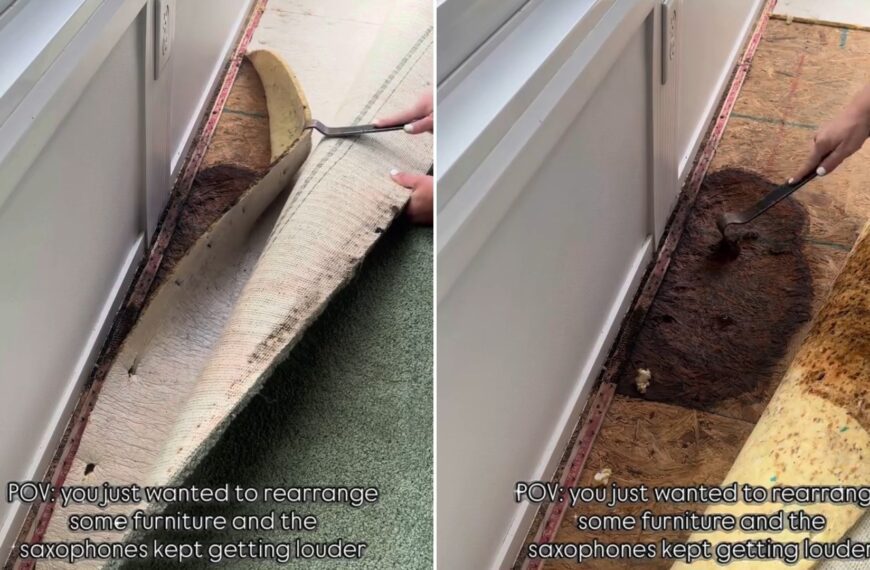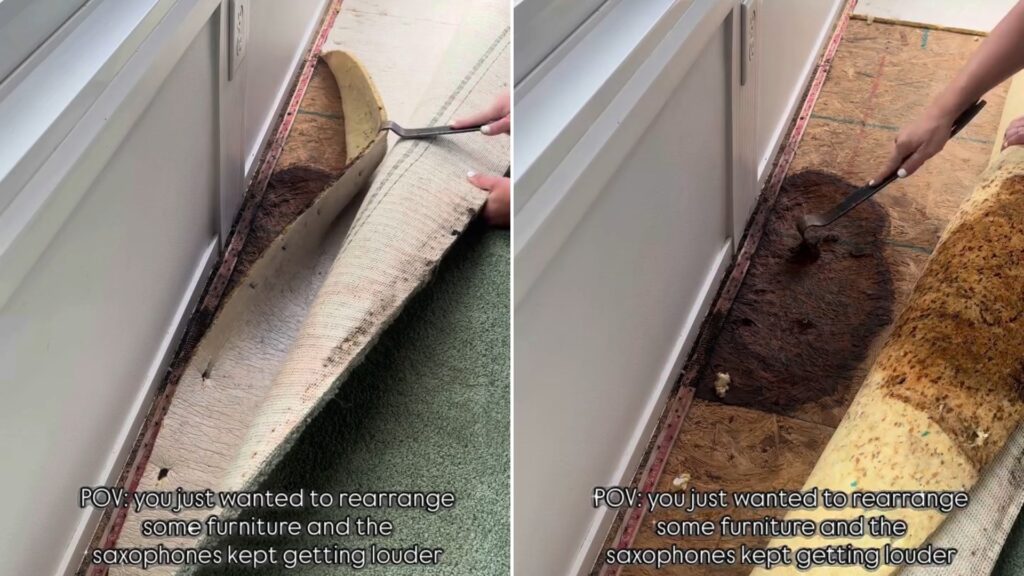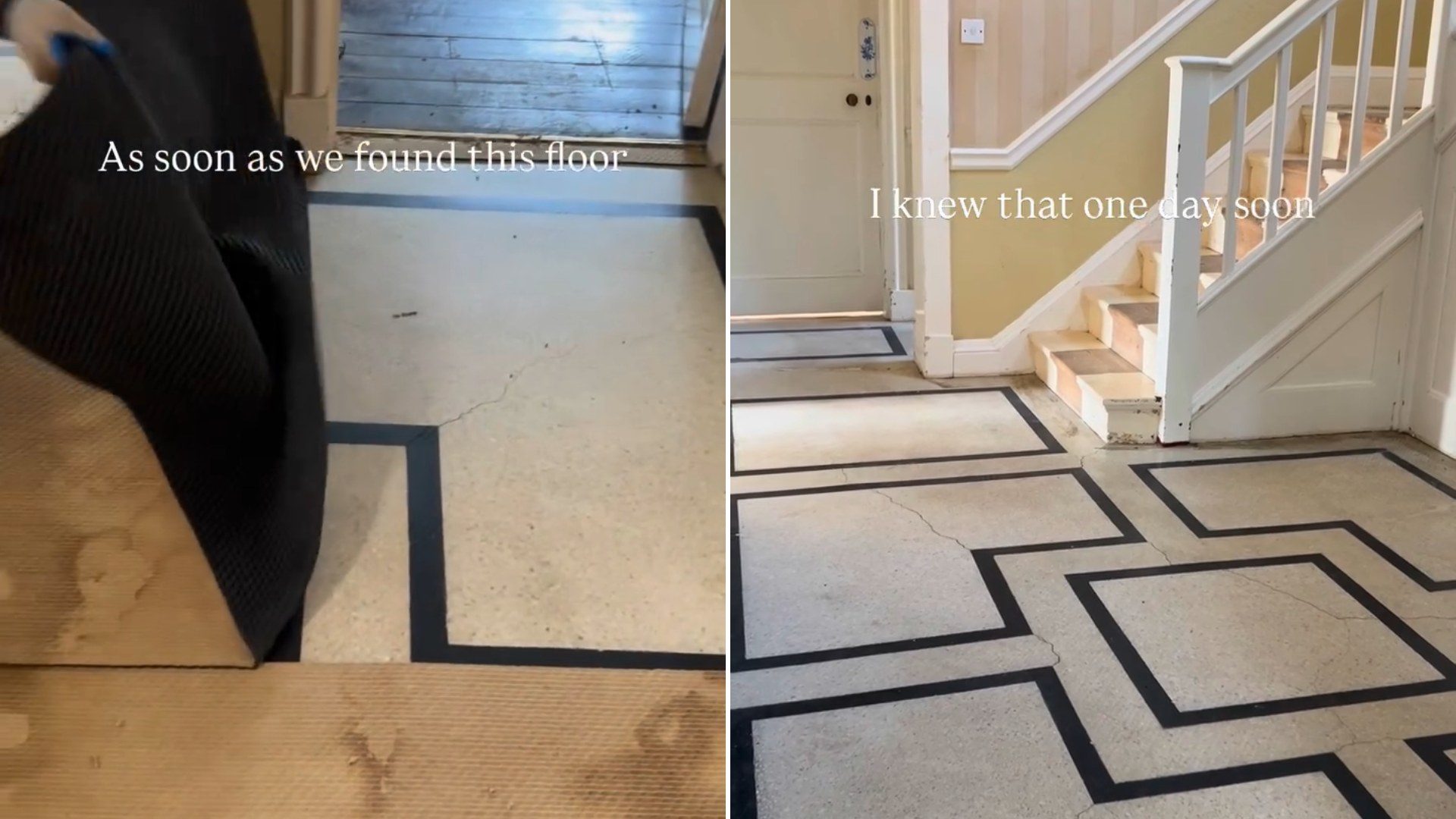
A homeowner tore up wall-to-wall carpet that had covered a living room for decades and found a completely original vintage tiled floor underneath, still intact after being sealed away for that long. The moment is documented in the homeowner’s own Instagram reel, which has gathered attention well past the account’s existing follower base.
Key Points
- The carpet had reportedly covered the living room floor for decades before it was pulled up.
- Underneath was an original tiled floor, still perfectly intact, according to the video.
- The creator’s account has about 1.6K followers, and the reveal has resonated well beyond that base.
Wall-to-wall carpet became one of the most common flooring choices in American homes through the middle of the 20th century, marketed at the time as cheaper to install than refinishing existing floors and better at muffling noise in busier households. Rather than remove the tile, wood, or stone already down, installers frequently laid carpet padding directly over it. Whatever was underneath often survived completely untouched, just out of sight for however long the carpet stayed down.
That’s part of why “what’s under my old carpet” reveals have become a recurring genre on Instagram and TikTok in recent years. Homeowners buying older properties, or finally renovating rooms they’ve lived in for years, routinely find hardwood, patterned tile, or stone that was covered rather than torn out. Some finds turn out damaged beyond saving. Others, like this one, come up in close to original condition.
Vintage tile specifically has shifted from something people used to rip out to something treated as a selling point. Reclaimed and antique-style tile now carries a premium in home stores precisely because manufacturers can’t easily replicate decades of wear and glaze variation. Encaustic cement tile in particular, common in homes built from the 1920s through the 1950s, tends to hold up well under carpet since it was never exposed to foot traffic, sunlight, or the chemical wear of decades of cleaning products.
Homeowners curious whether something similar is hiding under their own carpet usually don’t need to tear up an entire room to check. Pulling back a corner near a closet, a baseboard, or a spot hidden by furniture is generally enough to tell whether there’s tile, hardwood, or bare subfloor underneath, without committing to a full removal before knowing what’s actually there.
Whether this particular floor stays exposed or gets covered again is up to the homeowner, but for the moment it’s visible for the first time in years.