


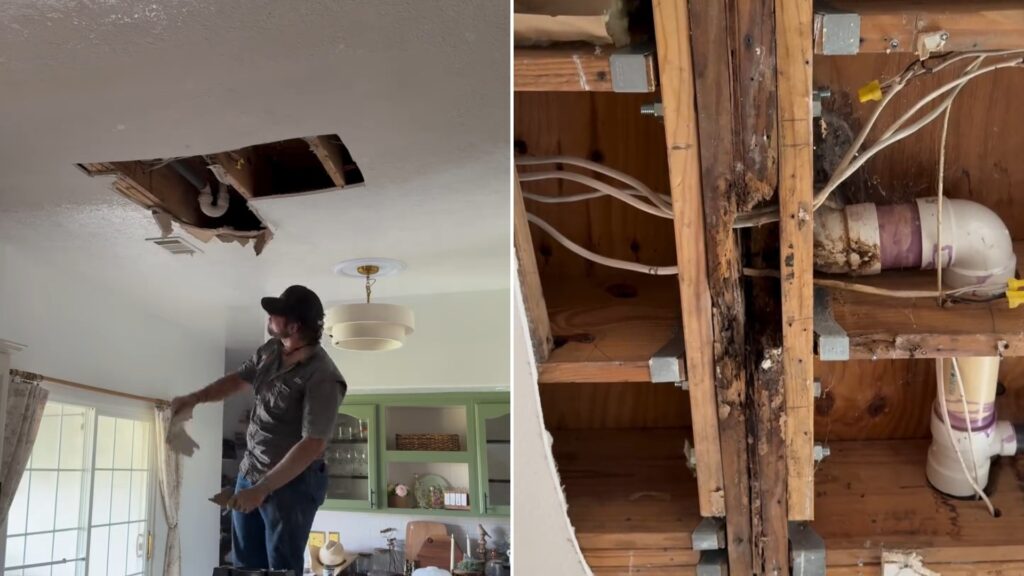
A homeowner renovating an outdated kitchen pulled down a single ceiling panel expecting routine demo work and instead found mold and structural rot spreading well beyond what the home’s original inspection had flagged, according to her own Instagram post.
Key Points
- The damage was discovered behind a single ceiling panel during a kitchen remodel, according to the homeowner’s video.
- Both mold and structural rot were visible once the panel came down, spreading further than the scope the original inspection had noted.
- The reveal was posted to the homeowner’s own Instagram account, which has 7.7K followers.
Why Ceiling Damage Outruns What an Inspection Catches
A standard home inspection is visual. Inspectors generally aren’t permitted to cut into walls or ceilings, so their assessment stops at whatever a panel, a coat of paint, or a layer of insulation allows them to see. Moisture problems above a kitchen ceiling often start small, from a slow leak around a vent stack, aging roof flashing, or plumbing running through the floor above, and spread laterally along framing and insulation long before any staining reaches the visible surface below. By the time a panel comes down and the damage is visible to the eye, the affected area is frequently much larger than the single point where the leak began.
Rot in ceiling framing isn’t only cosmetic. Once structural wood members are compromised, they lose load-bearing capacity, and mold growing in the same damp conditions can spread into insulation and adjacent framing bays that still look untouched from below. Kitchens are especially prone to this pattern because of how many potential moisture sources sit stacked in one small footprint — a dishwasher supply line, a sink drain, an ice maker line, and often a bathroom directly overhead, any one of which can leak slowly for months without a visible drip ever reaching the kitchen floor below.
What Homeowners Should Do
- Don’t seal it back up. Covering rot or mold with a new panel without remediation allows both to keep spreading behind the new surface.
- Identify the moisture source before repairing. Replacing damaged framing without finding and fixing what caused the moisture means the same damage comes back.
- Get affected framing evaluated structurally, not just treated cosmetically, since rot can reduce a joist or beam’s ability to carry weight even when surrounding wood still looks intact.
- Test before assuming the extent of damage, rather than basing remediation only on what’s visible once the first panel comes down.
- Bring in a moisture meter or a mold inspector before closing up any repair. Surface-level cleaning can remove visible staining while leaving spores active inside framing that looks dry to the touch.