


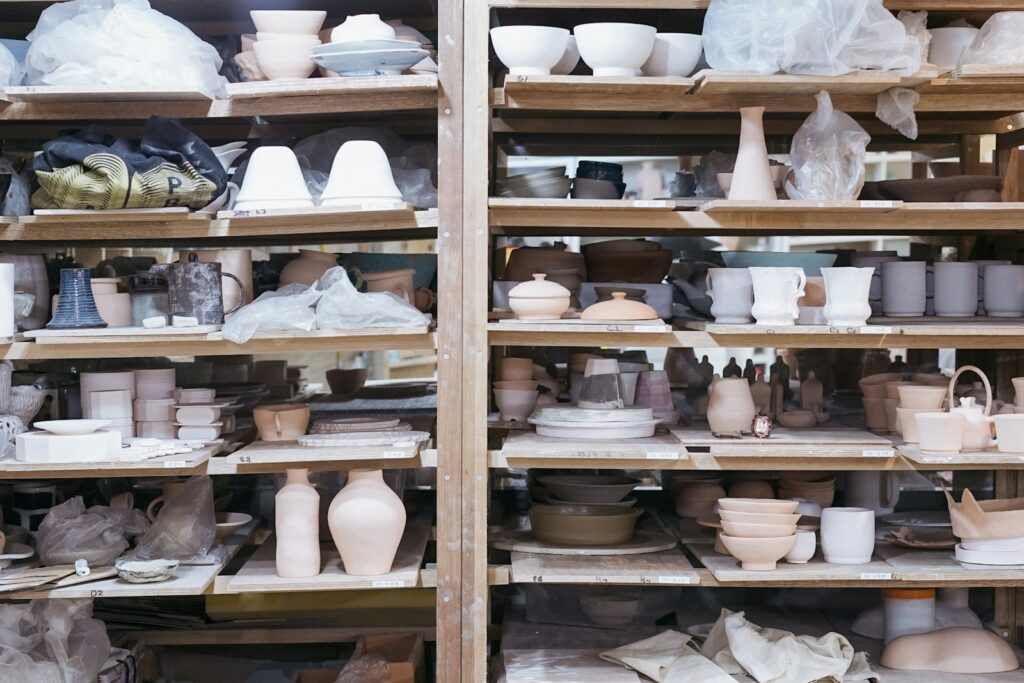
A shelf collapse that shattered an entire collection of ceramics became the raw material for a full mosaic kitchen backsplash, according to a TikTok video posted by the homeowner who put the pieces back together on her wall instead of sweeping them into the trash. The creator, who posts to more than 81,000 followers, turned what most people would call a bad afternoon into a permanent design feature. It’s a specific kind of project — not a mosaic bought and installed as a kit, but one built entirely from pieces that already existed in the house and would otherwise have been thrown away.
@brook.ballard
Why Broken Ceramics Work Better Than New Tile
A mosaic built from an accidental break has an advantage a kit doesn’t: the pieces already share a history. Plates, mugs, and bowls that lived on the same shelf tend to have coordinating glazes and colors even if no one planned it that way, which means the resulting backsplash reads as an intentional palette rather than a random grab bag. New mosaic tile, by contrast, has to be color-matched from scratch, and it rarely includes the small design details — a painted rim, a maker’s mark, a glaze pattern — that make broken dinnerware pieces genuinely distinctive once they’re set into grout.
The Basic Process, Whatever the Source Material
Turning broken ceramics into a mosaic follows the same general steps regardless of what broke: pieces get sorted by color and thickness, cut down further with tile nippers where a shape needs to be smaller, and arranged dry on the surface before anything is permanently set. Thickness matters more than most first-timers expect — a backsplash mixing quarter-inch plate shards with thicker mug bases needs extra adhesive or a leveling layer so the finished surface isn’t uneven under grout. Sharp edges get a light sanding pass before installation, both for safety during handling and so the grout lines sit cleanly against each fragment.
What Makes a Backsplash the Right Spot for It
Kitchen backsplashes are a practical home for broken-ceramic mosaics because the area doesn’t take direct foot traffic or heavy weight, unlike a floor mosaic, and it’s sized to use up a modest quantity of material — a single shelf’s worth of shattered plates and mugs is often close to enough. It’s also one of the few high-visibility spots in a house where an uneven, irregular surface reads as intentional texture rather than a flaw, which forgives the small inconsistencies that come with working from broken material instead of uniform tile.
Grout Choice Changes the Whole Look
Grout color does more work in a broken-ceramic mosaic than it does in a standard tile job, because the fragments themselves are irregular sizes with gaps a uniform tile layout wouldn’t have. A dark grout — charcoal or black — tends to unify a mismatched mix of patterns and glazes by putting a consistent line around every piece, which reads as deliberate even when the ceramic itself is a grab bag of styles. A white or light grout does the opposite, letting each fragment stand out individually, which works better when the broken pieces already share a tighter color story. Porous or unglazed ceramic also typically needs a sealant before grouting, since it can otherwise absorb grout haze that’s difficult to fully wipe off a rough, uneven surface.
The Larger Pattern This Fits Into
Projects like this sit inside a broader shift in how people treat broken household items — less as trash to be replaced and more as raw material with one more use left in it. Chipped dinnerware, cracked terra cotta pots, and cast-off tile have all shown up in similar reuse projects for the same basic reason: once an item is broken beyond its original function, it’s effectively free material, and mosaic work is one of the few crafts where irregular, mismatched fragments are an asset instead of a defect. The accident that starts the project — a shelf giving way, a box dropped during a move — ends up mattering less than what happens in the weeks after, when the cleanup pile becomes the parts bin instead of the curb.
What separates this kind of project from a typical DIY tutorial is the order of operations: nobody planned a mosaic backsplash and then broke dishes to make it happen. The breakage came first, and the design decision came after, which is part of why the result reads as original rather than replicated from a template. That sequence — damage before design — is difficult to fake and even harder to shop for, which is exactly what makes a project built from an actual accident stand out from one built from a kit.