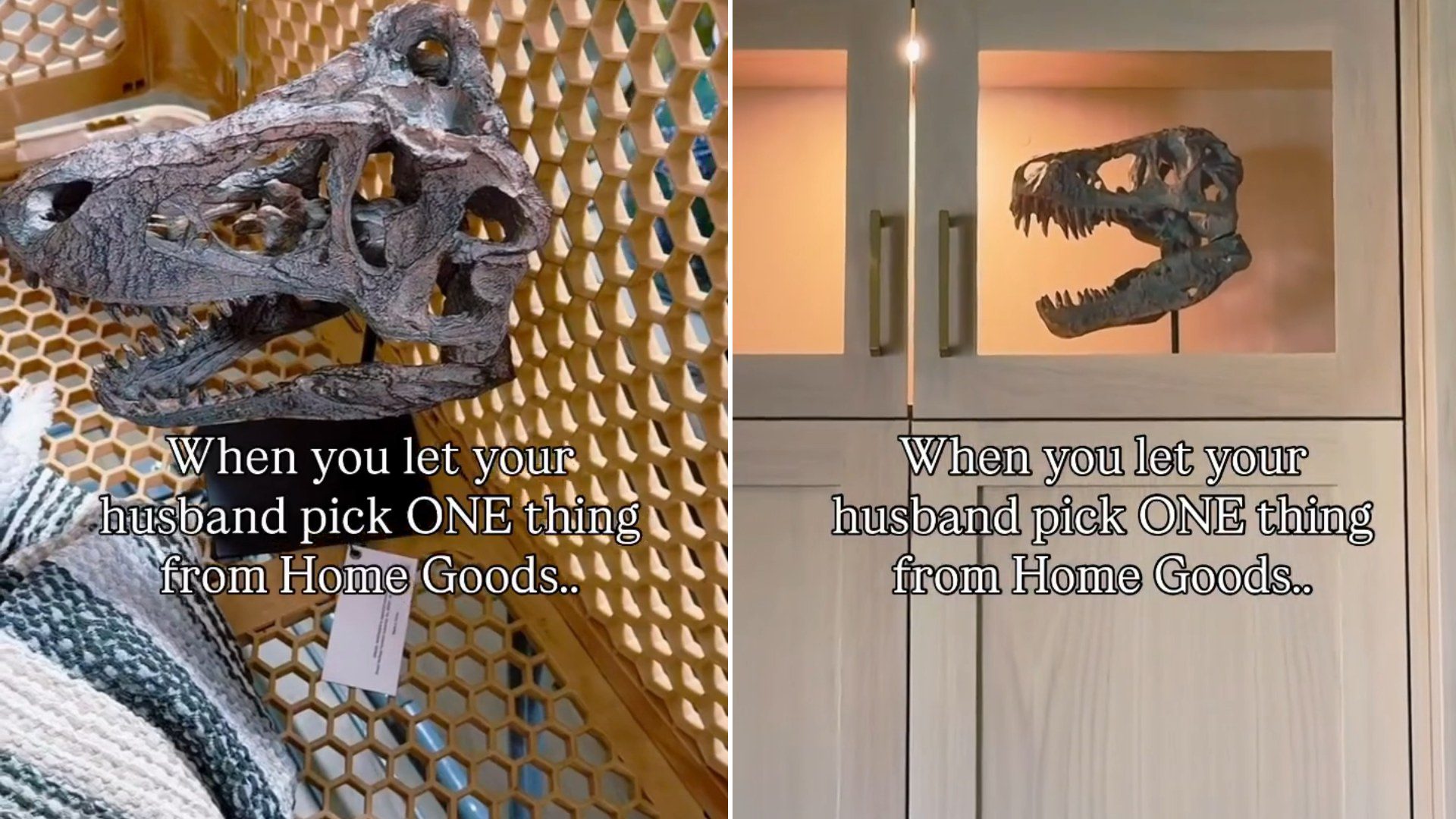
One Instagram reel of a wife discovering a fossilized dinosaur skull mounted above her own kitchen cabinets has now pulled in 1.9 million views, a number nearly a thousand times the account’s typical reach. In the video, the homeowner walks into her kitchen to find that her husband installed the genuine fossil piece as permanent wall decor while she was out, turning a routine afternoon into the kind of reaction video that only works because the object itself is real, heavy, and impossible to ignore.
A Fossil Is Not a Framed Print
What separates this from a typical decor prank is the material itself. A mounted fossilized skull, unlike resin replicas sold at most home stores, comes from an actual prehistoric specimen, prepared and stabilized for display rather than a museum drawer. That distinction is exactly why collectors and designers treat these pieces as investment objects rather than novelty items, and why installing one on a wall is a real commitment rather than a swap-it-out-next-season decision.
Why Bold, Unapologetic Pieces Are Having a Moment
The reaction the video captures fits into a broader shift away from matched, neutral interiors. According to the design research site Dudu Interiors, taxidermy and natural-history objects work because they transform a space into something “layered, expressive, and deeply personal,” giving a room a sense of narrative that mass-produced decor can’t replicate. The site is careful to note that the difference between a tasteful statement piece and an overwhelming one comes down to restraint and intentional placement, not just owning something dramatic.
Designers Have Been Building Toward This
This isn’t a fringe impulse. Reporting from 1stDibs’ Introspective magazine found that specialty dealers like Creel and Gow say natural-history pieces still sell in serious volume, with custom requests arriving from clients across the country. Designer Ken Fulk has built entire rooms around mounted giraffe heads, and designer Ryan Korban has said taxidermied and preserved creatures add “a layer of whimsy to a room that no other decorative arts element can give.” The trend traces back to the centuries-old cabinet-of-curiosities tradition, popularized in the modern era by Paris’s 19th-century taxidermy shop Deyrolle, which still supplies collectors and designers looking for authentically sourced specimens today.
The Money Behind the Trend
Real fossils have gotten dramatically more valuable at the high end, which is part of what’s pushing them into private homes instead of only museum halls. A Stegosaurus specimen named Apex sold for $44.6 million at Sotheby’s in July 2024, shattering the previous fossil auction record of $31.8 million set by a Tyrannosaurus rex in 2020, according to Axios. The buyer, hedge fund founder Ken Griffin, said he planned to loan the specimen to a U.S. museum, but the sale still underscored how far private collector demand for prehistoric specimens has climbed, to the point that some paleontologists worry scientific institutions are being priced out of fossils they’d otherwise study. Most homeowners obviously aren’t bidding at that level, but the same appetite that produces a $44.6 million auction result also fuels a smaller, more accessible market in authenticated partial fossils and mounted skulls, the tier a piece like the one in this kitchen most likely came from.
The Kitchen Test
A kitchen is a strange, and telling, place to put a dinosaur skull. It’s the room families spend the most functional time in, the one usually reserved for the safest, most neutral choices in a house: white cabinets, subway tile, a single piece of framed art over the sink. Mounting a genuine fossil there instead of in a study or entryway is itself the statement. It signals that the piece isn’t being tucked away for guests to discover on a tour; it’s meant to be lived with daily, over morning coffee and dinner cleanup, which is a different kind of commitment than displaying it in a room nobody uses every day.
What This Means for Anyone Considering a Statement Piece
The lesson from both the reel and the broader trend data isn’t “buy a dinosaur skull.” It’s that a single, well-placed, genuinely unusual object can do more for a room’s identity than an entire matched furniture set. Collectors sourcing authentic natural-history specimens should expect real cost and real logistics: mounting hardware rated for the weight, provenance documentation, and, per the designers cited above, enough restraint elsewhere in the room that the piece reads as curated rather than chaotic. A viral reaction video is a fun entry point into that idea, but the underlying design principle predates social media by a couple of centuries.
The video works precisely because the fossil isn’t trying to blend in with anything else in that kitchen, and that refusal to compromise is the whole trend in miniature: a room built around one unforgettable thing instead of ten forgettable ones.