


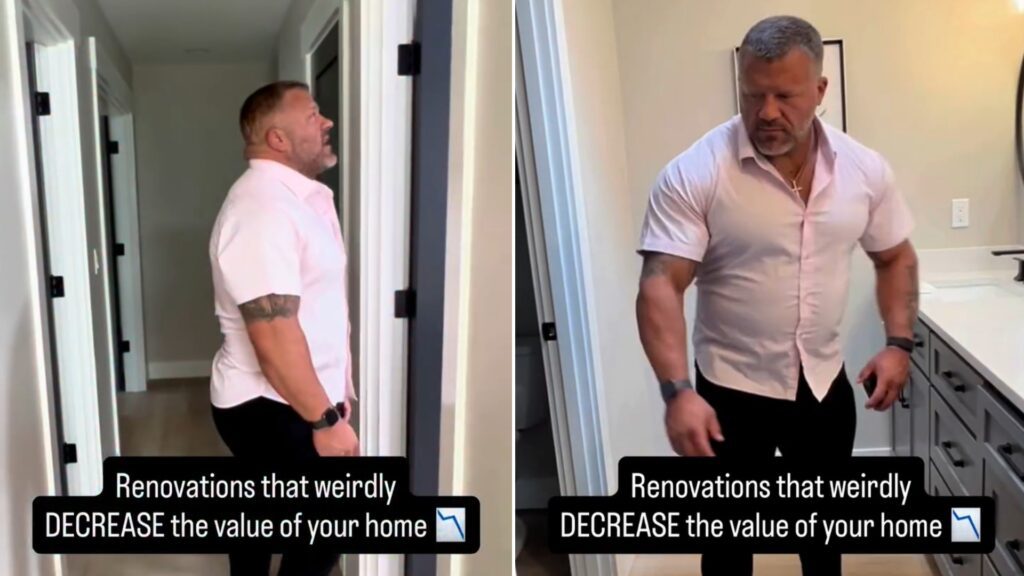
A creator who has walked through dozens of renovations up close says one bathroom decision keeps showing up in houses that otherwise look flawless: pulling out the only bathtub in the home and replacing it with a walk-in shower. The reel, posted to Instagram, has been watched more than 3.2 million times, about 17 times the typical reach for that kind of content, and the response suggests plenty of people have made this exact swap without knowing what it can cost them at resale.
Why a Missing Tub Shrinks the Buyer Pool
Real estate professionals have flagged this specific tradeoff for years: a house with zero bathtubs anywhere on the property narrows who’s willing to make an offer, even when every other finish in the bathroom has been upgraded. Families with young kids, buyers thinking ahead to aging in place, and anyone who simply prefers a soak over a stand-up shower will cross a tub-free house off their list. Guidance from remodeling firms that track this exact tradeoff, including ImproveIt Home Remodeling’s breakdown of the issue, notes that swapping a tub for a shower generally doesn’t hurt resale when a second bathroom in the house still has a tub. The risk is specific to homes where that shower conversion eliminates the last one on the property.
It’s an easy mistake to make because the decision usually happens for good reasons. Walk-in showers are safer for older adults, easier to clean, and read as more modern in listing photos, so a full gut renovation naturally drifts toward removing a tub that hasn’t been used in years. The problem is that the renovation gets optimized for the current owner’s daily life, not for the far larger and more varied pool of people who’ll eventually buy the house.
The Money Math Doesn’t Move the Way People Expect
Spending more on a bathroom doesn’t offset this particular mistake, which is what makes it easy to miss compared to more obvious red flags like outdated tile or a broken exhaust fan. A buyer touring a house with a high-end spa-style shower, heated floors, and designer tile will still ask where the tub went if they’ve got small kids or expect to eventually sell to someone who will. Bathroom counts and tub availability factor into how comparable sales get analyzed, so a home that reads as three bedrooms, two baths, zero tubs can get valued differently than a functionally identical layout with at least one.
New construction has muddied this rule somewhat. Plenty of new-build primary suites now skip the tub entirely in favor of an oversized shower, which is slowly shifting buyer expectations in some markets. But that shift is concentrated at the top of the new-construction market, not in the resale market most sellers are actually competing in, where the old assumption about needing at least one tub in the house still holds across a lot of regions.
What to Do Instead
The workaround costs far less than either extreme. Keeping one tub, even a basic one tucked into a secondary or kids’ bathroom, while converting the primary bath to a walk-in shower preserves the resale safety net without sacrificing the daily-use upgrade most homeowners actually want. It’s a smaller, cheaper compromise than gutting every bathroom the same way or leaving a tub in place purely out of fear, and it’s the fix that keeps surfacing in response to reels like this one. Not never remove a tub. Never remove the last one.
Why the Timing Makes This Mistake Even Costlier
A full bathroom remodel isn’t cheap to begin with, which is exactly why getting the tub decision wrong stings. The average full bathroom remodel runs $6,456 to $24,715 nationally, with a typical project landing around $15,586, according to This Old House’s 2026 cost data. That’s not a small renovation someone can casually redo if a real estate agent points out the tub problem three years later during a pre-listing walkthrough. Once the plumbing, tile, and layout are finished around a walk-in shower, reversing course means tearing back into finished work, not making a quick swap.
That’s the real cost of the mistake: it’s not that removing the last tub is expensive to fix later, it’s that most homeowners won’t fix it later at all. They’ll list the house as-is and let the missing tub quietly narrow their buyer pool instead, which is precisely the scenario this reel is warning people about before they sign off on their own renovation plans.