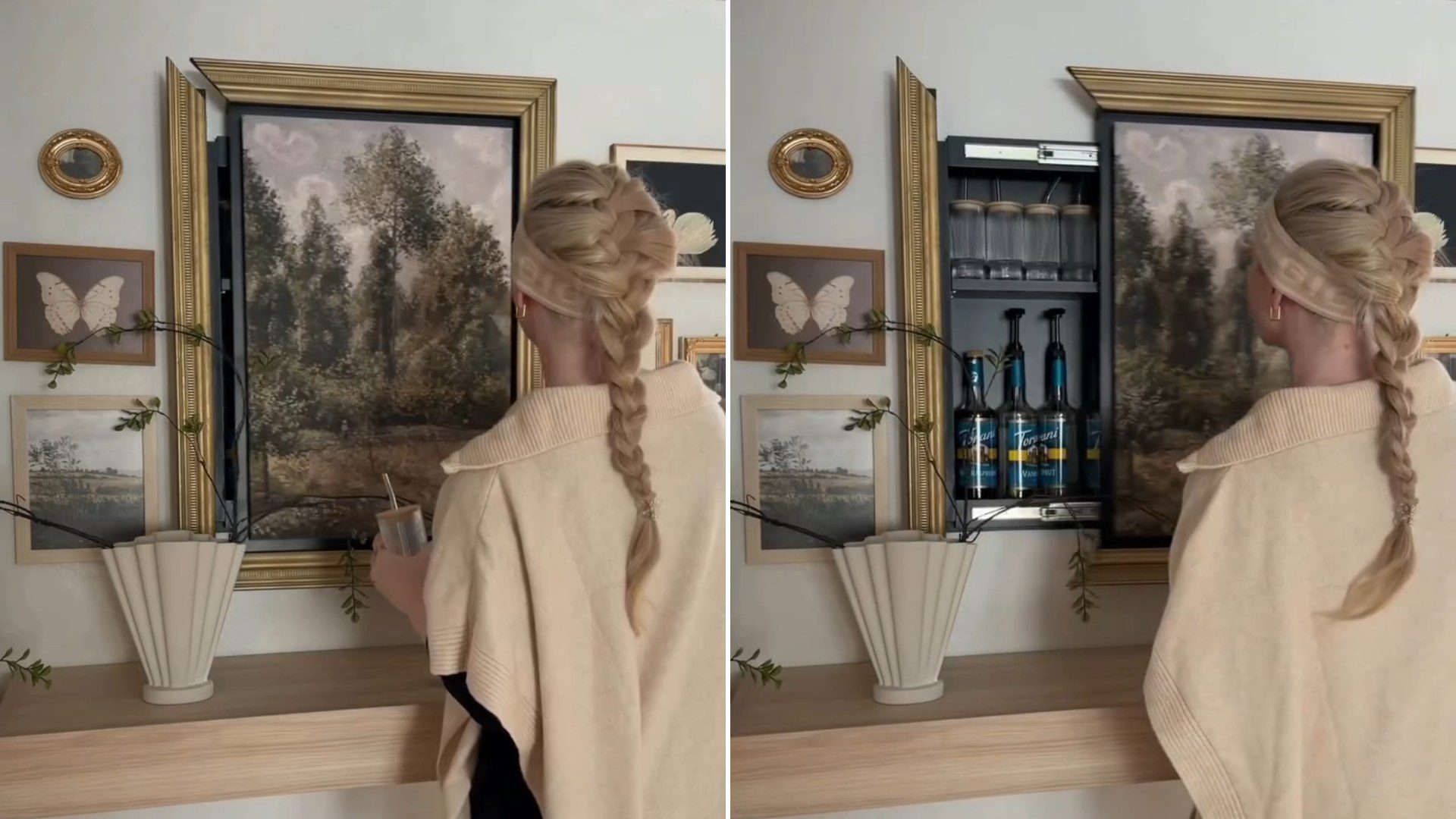
A homeowner filmed herself pushing on a framed wall painting that swung open like a hidden door, revealing a fully stocked liquor cabinet built directly into the wall cavity behind it instead of drywall, according to her own Instagram post.
Key Points
- The painting is mounted on a hinge, allowing the entire framed piece to swing outward away from the wall.
- Behind it, instead of drywall, is a recessed cabinet stocked with bottles and bar accessories, built into the space between the wall studs.
- The reveal was documented in the homeowner’s own Instagram reel, posted to an account with 21K followers.
How a Build Like This Comes Together
Hidden cabinets built behind swinging wall art typically start by removing drywall between two studs to open up the cavity, then framing out shelving that fits the resulting gap. The painting itself gets mounted to a small door-style frame with concealed hinges on one side and a magnetic or push-latch catch on the other, so it stays flush against the wall until someone applies pressure to the right spot. The depth of a standard interior wall cavity, roughly three and a half inches, is enough for bottles to stand upright, though builders working on deeper versions often notch the base plate or combine two stud bays for extra shelf depth.
The appeal of a project like this is less about the storage itself than the reveal. Anyone can add a cabinet with a visible door. Building one behind an ordinary piece of wall art means guests walk past it without a second glance until it’s opened on purpose. Small touches, like a battery-powered puck light triggered when the door swings open, or shelving cut to fit specific bottle heights rather than generic spacing, are usually what separate a cabinet that reads as an afterthought from one that photographs like a finished feature of the room.
What to Know Before Trying It
- Check for wiring and plumbing first. Any cavity between studs can carry electrical lines or pipes, so confirming what’s inside the wall before cutting into it is a required first step, not an optional one.
- Stick to non-load-bearing walls. Removing drywall between studs on a load-bearing wall without properly reinforcing the opening can compromise the wall’s structure.
- Budget for hardware, not just materials. Concealed hinges rated to hold a framed panel plus a stocked shelf cost more than standard cabinet hinges, and skimping on them is the most common point of failure in builds like this one.