


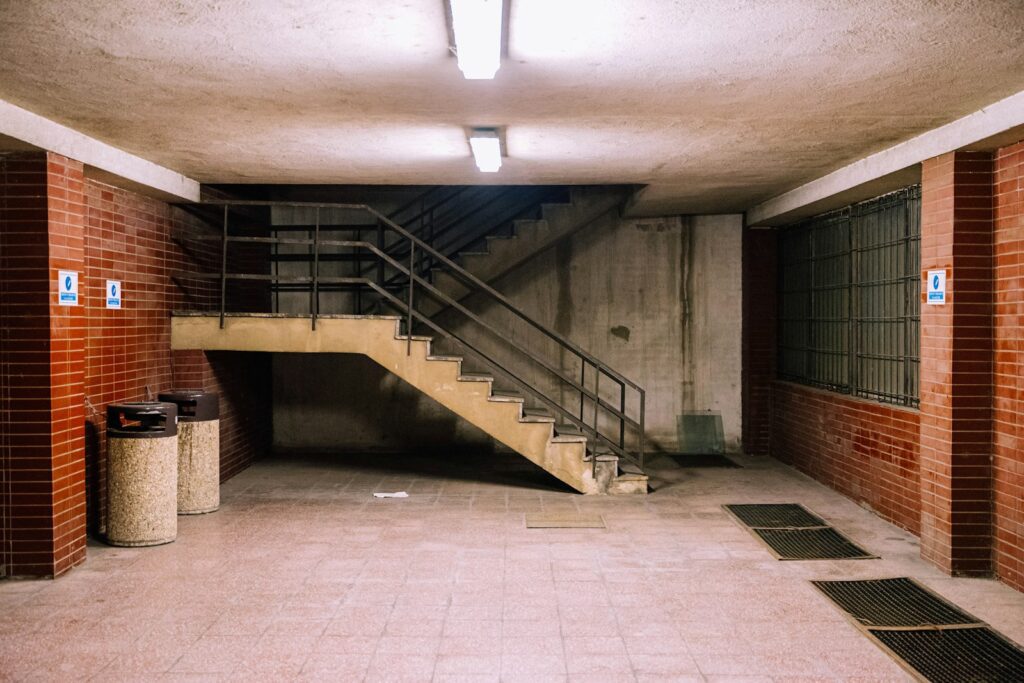
A basement that felt fine all summer can turn musty within a few weeks of the first cool September nights, and the timing isn’t a coincidence of imagination. Warm, humid air holds more moisture than cool air, and when outdoor temperatures start dropping while soil around a foundation is still holding onto summer’s groundwater, that moisture has nowhere to go but into the one part of a house that stays cool and dark year-round. Building scientists have documented the humidity threshold where this becomes a mold problem rather than just a damp smell, and the number is more specific than most homeowners realize.
Why Basements Spike Every Fall Specifically
Concrete and masonry foundation walls behave like sponges, wicking groundwater upward and inward through capillary action long after the surface soil looks dry, according to Building Science Corporation’s research on moisture control in residential buildings. Through summer, that moisture partially evaporates into warm air that can hold it without much visible effect. Once fall arrives and temperatures drop, particularly overnight, the same amount of moisture condenses out into cooler basement air far more readily, which is why the musty smell so many homeowners notice each autumn is not new moisture arriving, but existing moisture becoming visible as humidity for the first time all year.

The Humidity Threshold Where Mold Becomes a Real Risk
Building Science Corporation’s research identifies relative humidity above 70 percent at a surface as the point where mold growth becomes a genuine risk, a threshold that holds across climate zones. The Environmental Protection Agency frames the safe range from the other direction, recommending that indoor relative humidity stay below 60 percent and ideally between 30 and 50 percent, according to EPA guidance on mold prevention. A basement that drifts into the 60s and 70s during fall, which is common in homes without a dehumidifier running, sits squarely inside the range where mold has what it needs. The same EPA guidance notes that any building material that gets wet needs to dry out within 24 to 48 hours to avoid mold taking hold, which is a narrow window for a basement that has no active way of shedding moisture on its own.
Why the Timeline Matters More Than People Expect
Mold does not need a flood or a leak to establish itself. A basement sitting at 65 or 70 percent relative humidity for consecutive days during fall is providing the same conditions, just spread out gradually instead of arriving all at once. That is part of why the problem so often gets discovered by smell rather than sight. Elevated humidity shows up as an odor well before visible mold growth becomes obvious on framing, drywall, or stored belongings, and by the time it is visible, the conditions that caused it have typically been present for weeks already. Homeowners who wait for a visible sign before addressing basement humidity are, by definition, waiting past the point building scientists consider the safe threshold.
The Dehumidifier Setting That Keeps a Basement Out of Range
Setting a basement dehumidifier to hold relative humidity between 30 and 50 percent, in line with EPA’s recommended indoor range, keeps a basement well clear of the 70 percent threshold where mold risk becomes real, with enough margin to account for the daily swings that come from doing laundry, running a shower upstairs, or simply changes in outdoor weather. Running a unit continuously during the shoulder months, rather than only after a musty smell has already appeared, addresses the moisture while it is still just water vapor rather than after it has already fed a colony of mold spores. A basement that gets attention only when something smells off is, according to the building-science data, already behind the curve rather than catching the problem early.
What Finished Basements Have to Lose
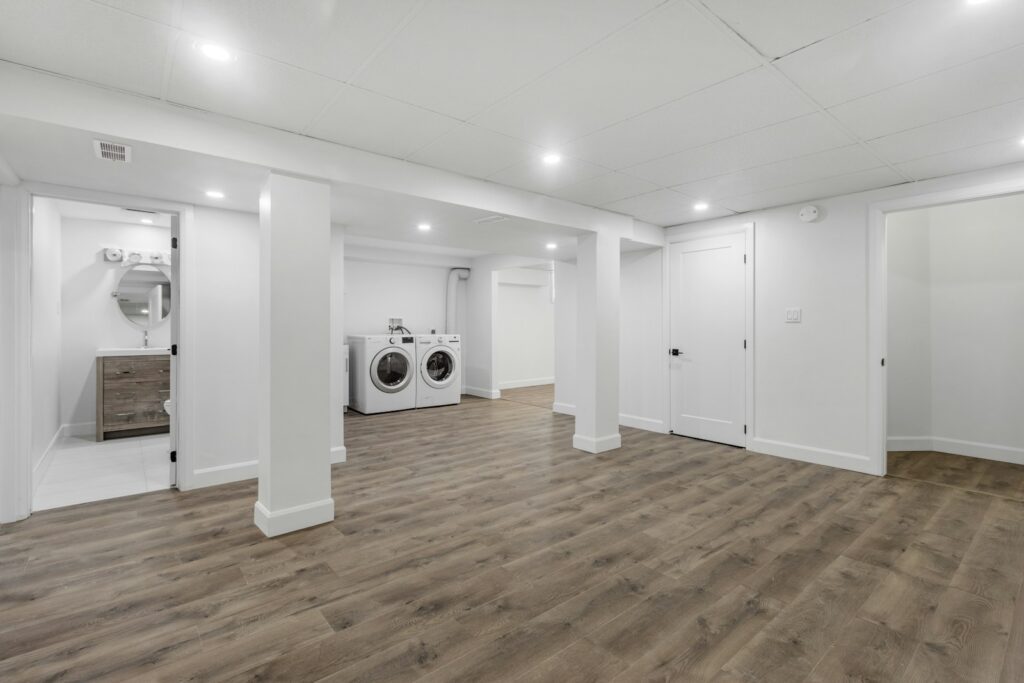
The stakes are higher in a basement that has been converted into living space, a playroom, a home office, or storage for anything porous like cardboard boxes, books, or upholstered furniture. Drywall and carpet padding hold onto humidity far longer than bare concrete does, which means a finished basement can cross into risky humidity ranges for days before a musty smell becomes noticeable at all. Unfinished basements at least let a homeowner see condensation on a cold water pipe or dampness on a foundation wall as an early clue. A finished space hides that same moisture behind materials that are, unfortunately, also some of the best food sources mold can find, which is part of why finished basements tend to have the more expensive remediation bills once a problem is finally caught.
A Cheap Way to Know Before the Smell Shows Up
A basic hygrometer that measures relative humidity costs under $50 at most hardware stores, and checking it periodically through September and October gives a homeowner a number to act on instead of waiting for a smell to make the decision. Pairing that reading with a dehumidifier set to the 30-to-50-percent range keeps a basement inside the range building scientists and the EPA both point to as safe, turning what used to be a seasonal surprise into a number on a dial that gets checked the same way a thermostat does.