A landmark study tracking families through the 1980s and 1990s found that children in professional households heard roughly 2,153 words per hour from the adults around them, compared with 1,251 words per hour in working-class homes and 616 in families receiving public assistance, a gap researchers Betty Hart and Todd Risley calculated would add up to about 30 million fewer words heard by age three in the lowest-exposure households. That research became one of the most cited findings in early childhood development, and decades later, MIT researchers revisited the question with brain imaging to see what was actually driving the outcomes tied to it. What they found reframes the entire conversation around what matters most before kindergarten, and it has very little to do with counting words at all.
The Back-and-Forth Matters More Than the Word Count
Researchers at MIT recorded home audio for a group of children ages 4 to 6 from a range of socioeconomic backgrounds, then used brain imaging to measure activity in Broca’s area, the region tied to language processing, while the children completed language tasks. Kids who experienced more conversational turns with adults, meaning genuine back-and-forth exchanges rather than one-sided talking at a child, showed significantly more activation in that brain region, and this held true independent of family income, IQ, and even how many words the adults spoke overall, according to the study published in Psychological Science and summarized by MIT’s Integrated Learning Initiative. In other words, a parent narrating their own day out loud to a toddler who never responds does less for that child’s developing brain than a shorter exchange where the toddler babbles, gestures, or mispronounces a word and an adult actually responds to it.
What Counts as a Conversational Turn With a Child Who Can’t Talk Yet
The LENA Foundation, a research organization that has spent years studying early language development using recorded audio from thousands of families, defines a conversational turn as any back-and-forth vocal exchange between an adult and a child from birth to age five, and stresses that it starts long before a child says recognizable words. An adult initiates, a child responds with even a coo or a babble, and the adult continues the exchange as though it were a real conversation, because to a developing brain, it functions like one. According to LENA’s published research summary, increased conversational turns are tied to gains in language, social skills, reading ability, and measured IQ, and the organization’s data suggests the brain benefit comes specifically from the turn-taking pattern rather than from raw exposure to adult speech in the background.
Why Pediatricians Are Being Trained to Ask About This
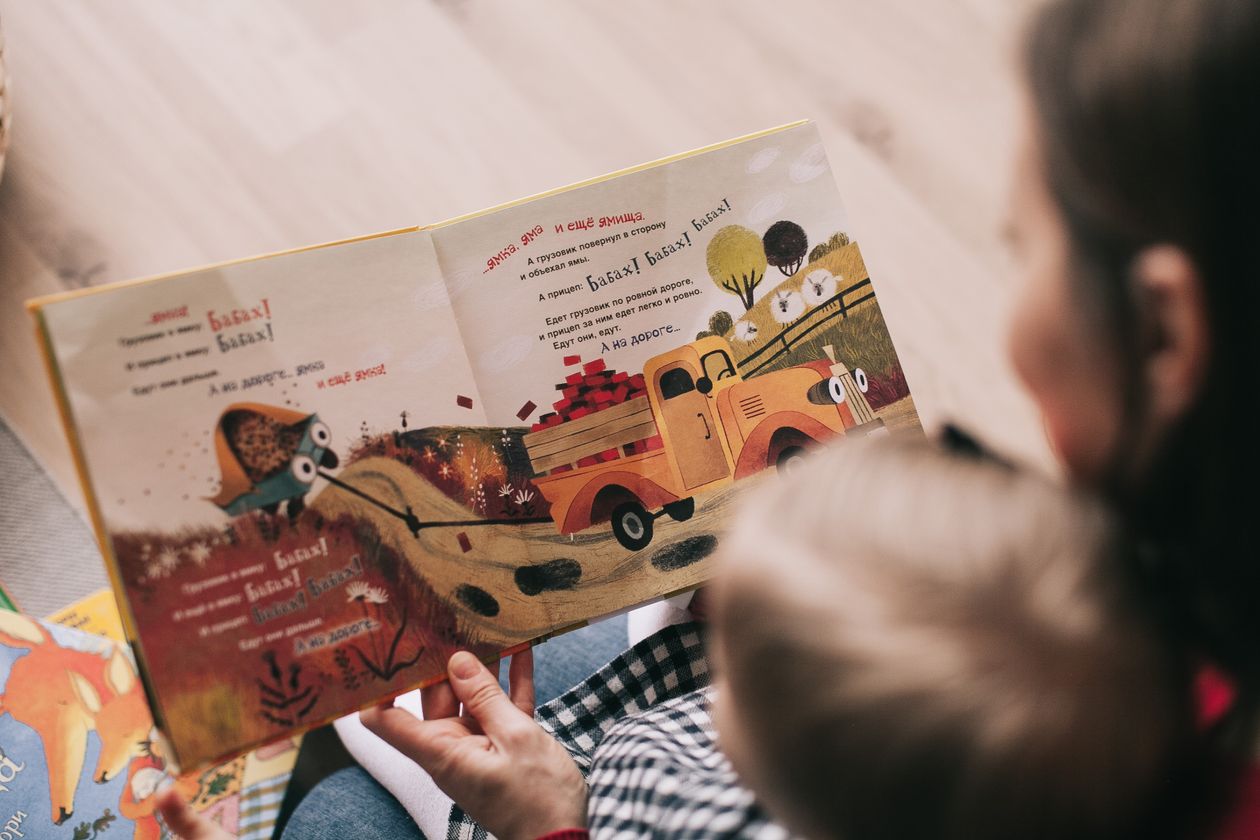
The American Academy of Pediatrics has formalized reading aloud and shared talk as a standard part of well-child visits, not an optional add-on, through its updated literacy promotion policy statement, which frames daily reading and conversation starting in infancy as core preventive care rather than an enrichment activity for families who can afford extra classes, according to the policy published in Pediatrics. That shift reflects the same research: the intervention pediatricians are now trained to recommend is genuine back-and-forth talk, started early and repeated daily, regardless of a family’s income or education level.
The Daily Habits That Actually Move the Needle
None of the research suggests a parent needs to narrate every waking hour or drill vocabulary flashcards to close a gap that starts showing up before age three. What it does support is responding to a baby’s babbling as though it were a real sentence, pausing after a question to let a toddler actually attempt an answer instead of filling the silence, and turning routine moments like a car ride or bath time into exchanges rather than monologues. A parent reading the same book aloud every night and asking a two-year-old what happens next, then waiting through the mangled answer, is doing more measurable work for that child’s brain than a household that talks constantly but rarely waits for a response. Even a few extra minutes of this kind of exchange during a normal day, repeated consistently over months, appears to compound in ways a single long conversation never quite matches.
The gap researchers are now most concerned about comes down to how many of the words a child hears actually come back the other way, one small exchange at a time.