

You found a brand-new jacket with the tags still on for $9.99. Online, the same style is listed for around $80. Easy money, right? Not so fast. A full-time reseller used exactly this situation to show how to tell the difference between a good pickup and an expensive mistake, and it is advice worth knowing whether you sell for a living or just want to clear out your closets.

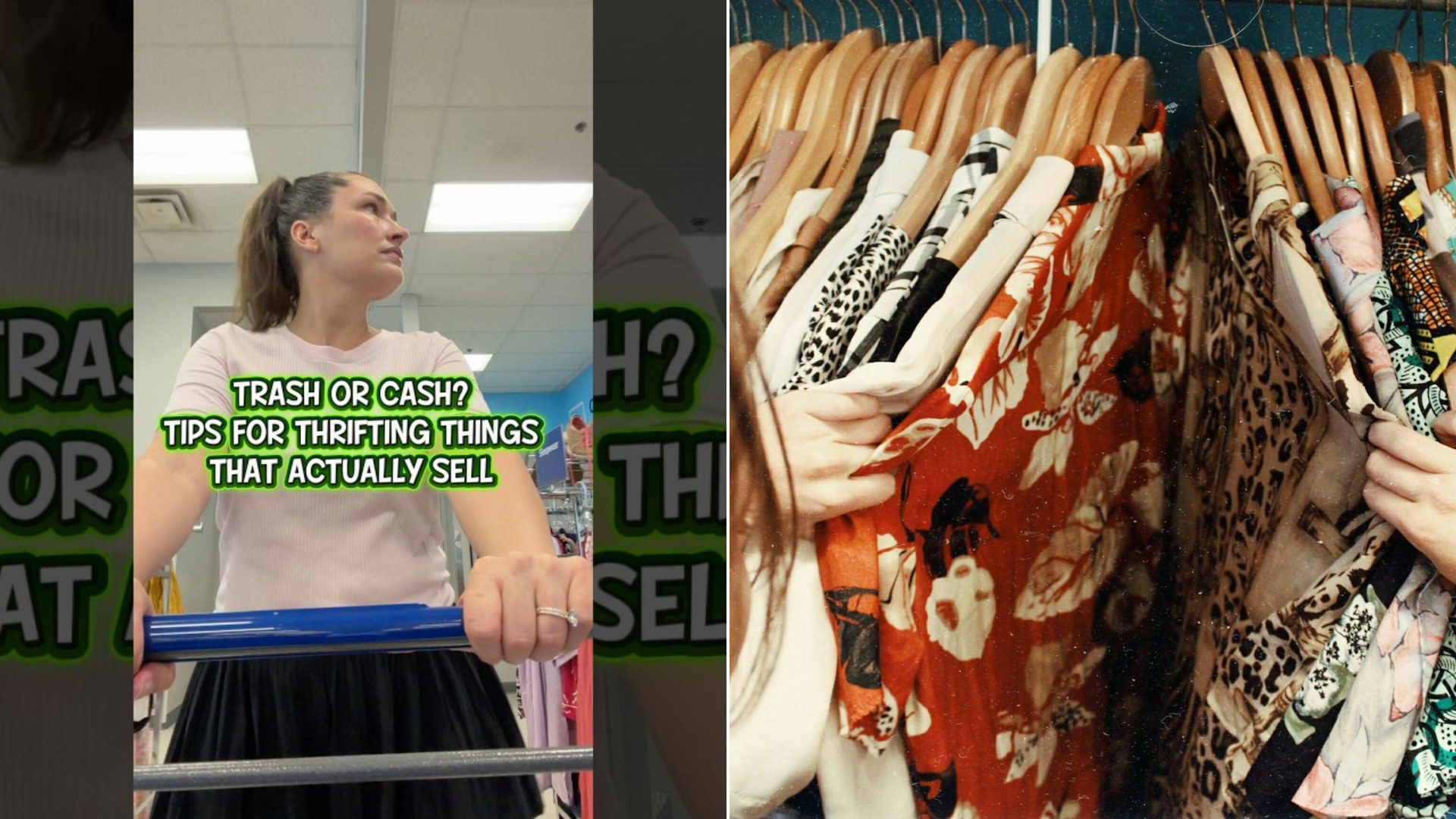
In this YouTube walkthrough, the reseller describes spotting an On Cezanne tweed jacket, new with tags, at a thrift store for $9.99. A quick search with Google Lens turned up the style name, the Eloise Tweed Jacket. The brand, the reseller says, is often carried at Nordstrom and Anthropologie, so the jacket seemed to have real potential.

Why a high listing price does not mean much
There were a few of the exact same jacket for sale on eBay, priced at about $80. That might make you think you hit the jackpot. But the reseller has a rule: always check sold comps. What something is listed for is not its true value. It is only what a seller hopes to get.
When the reseller filtered eBay to show sold listings, none of that particular style had sold in the last 90 days, even though other jackets from the same brand were selling just fine. That is a warning sign. A jacket that sits unsold for months is not an $80 jacket. It is an $80 hope.
The sell-through rate, explained
To put a number on it, the reseller uses what is called the sell-through rate. You take the number of items sold and divide by the number available. In this case, nothing sold, so the jacket had a 0 percent sell-through rate over the past 90 days.
A simple example: if 10 of a certain style are listed and 5 have sold in the last three months, the sell-through rate is 50 percent. That means roughly half the market is moving. A 0 percent rate means buyers are not biting at any price.
Checking a second platform
The reseller did not stop at eBay. Certain brands do better on Poshmark than on eBay, or the other way around, so the jacket was checked there too. On Poshmark, one was available, new with tags, for $27, and it had not sold. Filtering to sold listings showed only one that had sold.
One important detail: when Poshmark says “sold out” rather than “sold,” it means it was a multi-quantity listing. In that case you only see the listing price, not what the buyer actually paid. So even that one sale tells you very little.
With the cost at $9.99 and a lone listing at $27 that had not moved, the reseller called the jacket a bad pickup and left it behind. Thankfully, there were other good finds on the same trip.
A quick checklist before you buy to resell
Here is a simple routine based on this example. It takes just a couple of minutes per item, and it can save you from filling your home with things that will not sell.
- Identify the item. Use a photo search app, like Google Lens, to find the brand and style name. Check the tag inside too.
- Search active listings, but do not trust them. They show competition and asking prices, not what people pay.
- Filter to sold listings. On eBay, find the filter for sold items. Look at the last 90 days.
- Count it up. How many sold, compared with how many are available? Divide to find the rate.
- Look at the prices that sold, not the highest asking price. Notice how fast they sold and whether they needed a discount.
- Check a second site. If a brand is fashionable, try the same search on Poshmark or another resale app.
- Do the math. Subtract your cost, selling fees, shipping and supplies from the likely price. If what is left is slim, pass.
If you are selling what you already own
The same rules apply when you are decluttering. Before you spend a Saturday listing a pile of clothes, take ten minutes to check a few sold listings. Items with strong sell-through, such as popular brands in good condition, are worth listing. Items that never sell can go straight to donation, which saves time and clears space.
It is also worth remembering that new with tags is not the same as in demand. Condition helps, but buyers are shopping for style, brand, size and season. A beautiful jacket in the wrong season, or from a brand that few people search for, may sit for months.
The takeaway
The lesson is a good one for anyone who loves a bargain: a low price is only a deal if somebody will buy it for more. Check the sold comps and the sell-through rate before you spend a dollar, and you will skip the pieces that look good on paper but never leave the shelf.
More Stories You May Like
- Reseller Says Used Clothes Are Not Worthless Because Cleaning Them Up, Taking Clear Photos, Listing Them On eBay And Shipping On Time Can Help Pay The Bills
- Thrift Flipper Paid Forty Dollars For An Italian Leather Couch At Goodwill And Says One Hour Of Work Means Five Hundred Sixty Dollars In Profit
- She Bought Eighteen Mismatched Nightstands For Five Hundred Sixty Nine Dollars And Refinished Them All At Once In An Assembly Line