


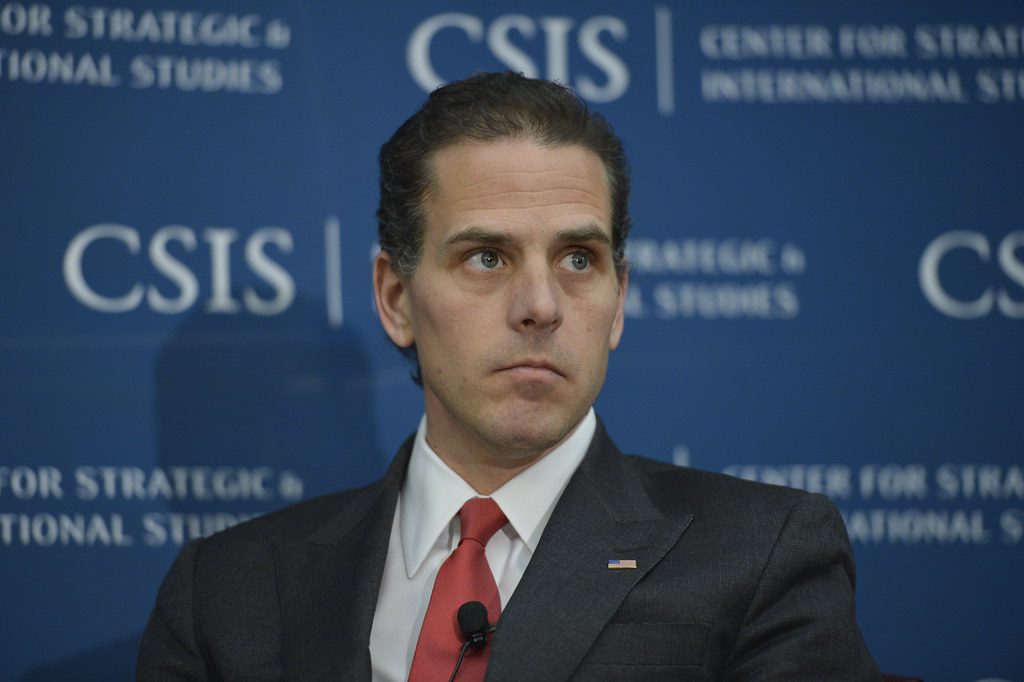
Hunter Biden is again at the center of a deeply personal legal battle, this time over allegations that he has cut off contact with his 7‑year‑old daughter and fallen behind on a hard‑fought child support deal. The girl’s mother, Lunden Roberts, is now asking an Arkansas judge to jail the president’s son, arguing that only the threat of incarceration will force him to honor both his financial obligations and his role as a parent. The clash exposes not just a bitter dispute between former partners, but a broader question about accountability when private family law collides with national politics.
The new contempt push and a plea to jail Hunter Biden

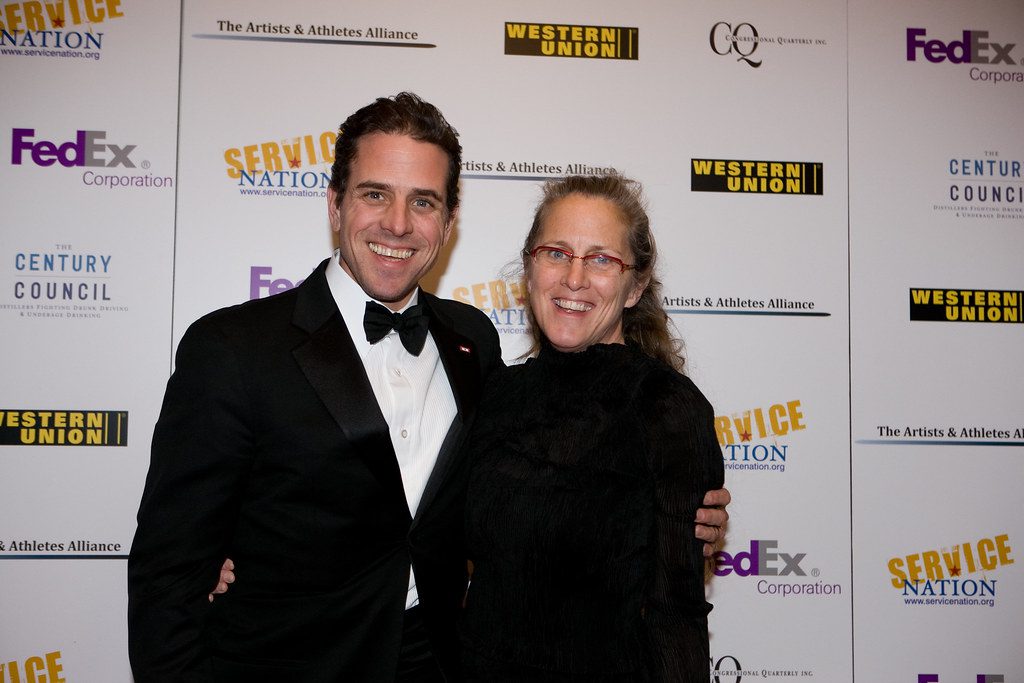
The latest flashpoint in the Arkansas case is a motion to reopen the child support proceedings and hold Hunter Biden in contempt, a move that escalates a long‑running dispute into a direct challenge to his freedom. In Independence County, court filings by Roberts’ legal team argue that Biden has failed to provide support at the level they say was contemplated in the prior settlement and has not maintained the contact with his daughter that the agreement envisioned. The motion, filed in Jan, asks the court to revisit the financial terms and to consider sanctions that could include jail time if Biden is found to have willfully ignored his obligations, according to a detailed Independence County account.
Roberts’ attorneys frame the request in stark terms, asserting that Biden has effectively abandoned his 7‑year‑old daughter and that lesser measures have not secured compliance. In their telling, the court already gave Biden the benefit of a reduced payment schedule and a carefully negotiated framework for contact, only for him to fall short on both fronts. The motion contends that the pattern of non‑payment and non‑communication is so entrenched that contempt alone is insufficient, and that incarceration is the only realistic way to compel him to meet his responsibilities. It is a rare step in a high‑profile paternity case, and it reflects how far the relationship between the parents has deteriorated since they first reached a settlement.
Allegations that Hunter Biden has “ghosted” his daughter
At the emotional core of Roberts’ filing is the claim that Hunter Biden has “ghosted” his daughter, cutting off contact despite a court‑approved framework for regular communication. Court documents describe a child who is now old enough to ask why her father does not call, and a mother who says she has watched scheduled phone conversations and promised visits simply evaporate. The filings assert that Biden has not spoken with the girl in months and that he has made no meaningful effort to build a relationship, even after acknowledging paternity and agreeing to a structured plan for contact, according to a Jan report on the ghosting allegations.
Those accusations are sharpened by the contrast between Biden’s public profile and his alleged private absence. While he has appeared at high‑stakes political events and spoken publicly about his recovery and his art, Roberts’ motion portrays a father who has not picked up the phone for his own child. The filings argue that this silence is not a misunderstanding or a logistical problem, but a deliberate choice that has left a 7‑year‑old feeling rejected. For Roberts, the emotional harm is part of the legal case: she is asking the court to recognize that the lack of contact is itself a violation of the spirit of their agreement, not just a moral failing.
From five‑figure payments to a reduced deal
The current dispute cannot be understood without revisiting how the Arkansas child support arrangement evolved from a high‑dollar demand to a scaled‑down compromise. Roberts initially sought substantial monthly support, reflecting Biden’s past earnings and the Biden family’s prominence, and at one point the case involved a request for payments in the range of $20,000 per month. After a protracted fight, the parties reached a settlement that significantly lowered that figure, with reports describing a reduction from a $20,000 demand to about $5,000, alongside other concessions that were meant to stabilize the situation, according to a Jan account of the $20,000 to $5,000 shift.
That compromise was layered on top of an earlier resolution in which President Joe Biden’s son agreed to provide not only monthly support but also proceeds from his artwork and to fund an account designed by Roberts for their daughter’s benefit. In that Jun settlement, reached in LITTLE ROCK and reported by KATV, Hunter Biden agreed that some of his art sales would be directed into an account for the child, and the court approved a new payment structure starting in July in Independence County, according to the LITTLE ROCK court summary. Roberts now argues that even this reduced and diversified package has not been honored, and that Biden’s alleged shortfalls on payments and contact show that the earlier compromise did not resolve the underlying problem.
The 2023 settlement and what both sides gave up
The 2023 settlement was supposed to mark a turning point, a moment when both parents accepted trade‑offs to avoid a drawn‑out trial and give their daughter a measure of stability. As part of that agreement, Roberts agreed to drop her request for their daughter to take the Biden surname, a symbolic concession that acknowledged the sensitivity around the family name. In exchange, Biden agreed to provide financial support that included monthly payments and a share of his art proceeds, and to participate in a schedule of regular calls that would help build a relationship with the child, according to a Jan account of how Roberts and Biden structured the deal.
That compromise came after years of litigation in Arkansas, including an initial period when Biden denied paternity and resisted turning over financial records. Once DNA testing confirmed he was the father, the case shifted toward hammering out a long‑term plan that would recognize his obligations without exposing every detail of his finances. The 2023 agreement was framed as the culmination of that process, with both sides signaling that they wanted to move on. The new motion argues that this hoped‑for closure never materialized, and that the very terms Roberts accepted, including the surname issue, now leave her with fewer tools to secure recognition for her daughter outside the courtroom.
Inside the new motion: “Incarcerate him, only then will he comply”
Roberts’ latest filing is notable not just for its legal requests but for its language, which reflects a deep sense of frustration and betrayal. In court documents, she is quoted as saying that the court should “incarcerate him, only then will he comply,” a stark statement that underscores her belief that fines or warnings are no longer enough. The motion portrays a pattern in which Biden responds only when facing serious legal pressure, and it argues that the court must now use its most powerful tool, the threat of jail, to enforce the existing orders on support and contact, according to a Jan report on her pressure campaign.
The motion also accuses Biden of inflicting emotional harm on their daughter by repeatedly raising her hopes and then disappearing, a pattern Roberts says has left the child confused and hurt. She argues that the court should treat this as a form of ongoing injury, not just a technical violation of a support order. The filing suggests that only the real possibility of incarceration will cut through what she describes as years of delay, broken promises, and half‑measures. It is a blunt argument that asks the judge to weigh not only bank statements and call logs, but the psychological impact on a 7‑year‑old who, according to her mother, keeps asking why her father is not there.
A 7‑year‑old at the center of a political firestorm
Behind the legal jargon and political noise is a child, Navy Joan, whose life has been shaped by a custody battle she did not choose. Photographs of Lunden Roberts and her daughter Navy Joan, whose father is Hunter Biden Credit, James Breeden, have circulated as the case has unfolded, turning a private Arkansas dispute into a national spectacle. The girl is now old enough to see her father’s name in headlines and to notice his presence at major political events, even as her mother says he has not called, according to reporting by David Millward US Correspondent on Lunden Roberts and her daughter.
Roberts has described how she tries to shield Navy Joan from the harshest commentary while still answering her questions honestly. The child’s age, 7, is central to the motion, because it underscores that she is no longer a toddler who can be distracted from her father’s absence. She can see that Hunter Biden appears alongside national figures and that he is a central character in stories about Democrats and Trump, yet, according to her mother, he does not appear in her daily life. That disconnect is what Roberts wants the court to confront: the gap between the public figure who speaks about family and redemption, and the private father she says her daughter barely knows.
“Classless” behavior and the emotional toll described in court
The new filings do not shy away from harsh characterizations of Hunter Biden’s conduct, with Roberts’ side describing his refusal to engage with his daughter as “classless” and cruel. Court documents cited by Priscilla, Published Jan, say that Hunter Biden has allegedly refused to speak to his 7‑year‑old daughter and has not sent her so much as a birthday message, despite having the means and opportunity to do so. The filings argue that this pattern shows a lack of basic decency and that it compounds the financial issues by sending the child a message that she is unworthy of attention, according to the detailed court docs describing his alleged silence.
Another section of the same case materials refers to a “Classless” Hunter Biden who refuses to speak with his daughter and has “ghosted her,” language that reflects the raw anger on Roberts’ side. The filings tie this behavior back to the 2023 settlement in the case, arguing that Biden’s failure to follow through on regular calls and gestures of support violates not just the letter but the spirit of that agreement. For Roberts, the emotional toll is not an abstract concept: she points to specific moments when her daughter has asked why her father does not call and why he seems to appear everywhere except in her life, according to the Classless description in the filings.
How the case intersects with Hunter Biden’s public narrative
The Arkansas dispute is unfolding against the backdrop of Hunter Biden’s broader public narrative, which has included high‑profile interviews, legal battles over firearms charges, and a prominent role in debates about his father’s presidency. In a recent televised appearance, Hunter Biden delivered an explosive interview sounding off on Democrats and Trump, presenting himself as a survivor of addiction and political targeting. That public persona, which also highlights his work as an artist and his shared love of art with supporters, sits uneasily beside Roberts’ portrayal of a father who cannot be bothered to call his 7‑year‑old, according to coverage of his explosive interview and the child support dispute.
Roberts’ motion implicitly challenges that narrative of redemption and responsibility, arguing that whatever progress Biden has made in his personal life has not extended to his obligations toward their daughter. The filings suggest that his public defenses, which often focus on political attacks and his struggles with addiction, do not explain or excuse his alleged failure to maintain contact and pay support. For critics, the Arkansas case has become a symbol of a broader pattern in which powerful figures talk about family values while falling short in their own homes. For Biden’s defenders, it is another front in a relentless campaign to weaponize his personal life. The court, however, will be focused less on political optics than on whether he has complied with the specific terms of the Arkansas orders.
Lunden Roberts’ hopes, disappointments, and next steps
More from Decluttering Mom: