


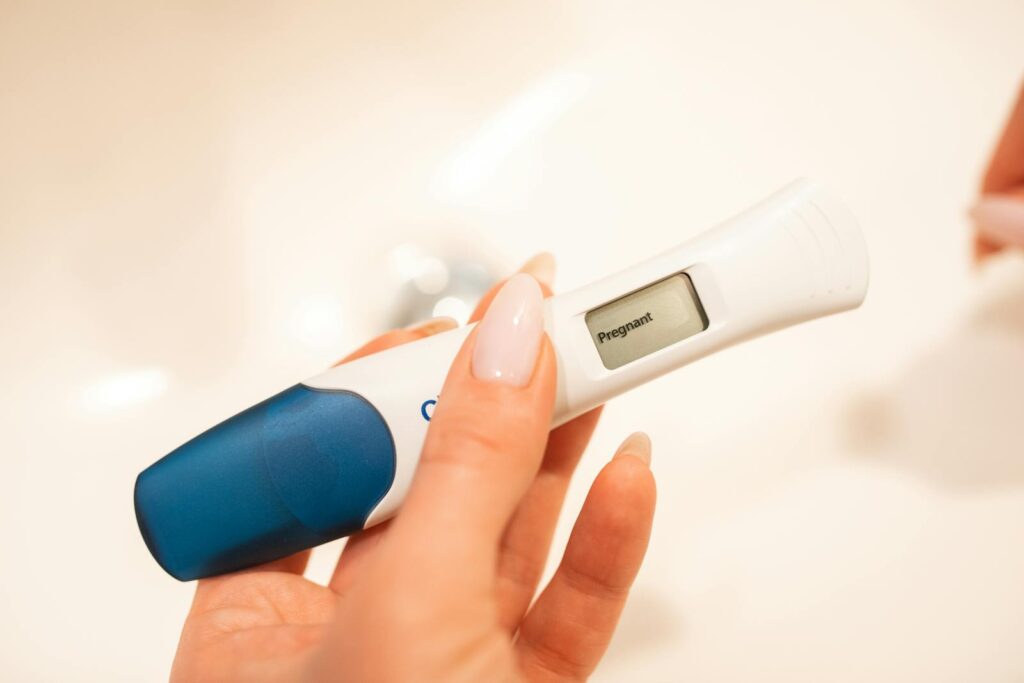
She had packed the pregnancy test in her toiletry bag, tucked between a travel toothbrush and a bottle of sunscreen. Somewhere between checkout and loading the car, it vanished. Now she was staring down a 22-hour drive home with a late period, no test, and a knot in her stomach that had nothing to do with the continental breakfast.
Stories like this circulate constantly in online fertility communities: someone plans to test on vacation, the moment slips away, and what should have been a relaxing trip becomes a long stretch of highway spent toggling between hope and dread. The scenario is specific, but the underlying tension is not. For anyone trying to conceive far from home, the collision of biology, emotion, and logistics can turn a road trip into an endurance test of its own.

Why a missing test feels like more than a missing object
A pregnancy test costs a few dollars at any pharmacy. Rationally, replacing one is simple. Emotionally, the lost test represents something harder to replace: the plan. The chosen morning, the imagined reaction, the partner waiting outside the bathroom door. When that script falls apart, the disappointment can feel disproportionate to the object itself.
Reproductive health counselors say the gap between deciding to test and actually seeing a result is often the most anxiety-heavy window in the process. A Choice for Women, a pregnancy support organization, encourages people not to face that window alone, suggesting they share the moment with a trusted friend or partner. When the test disappears on vacation, that support structure can feel disrupted too, especially if the person hasn’t told anyone they were planning to test in the first place.
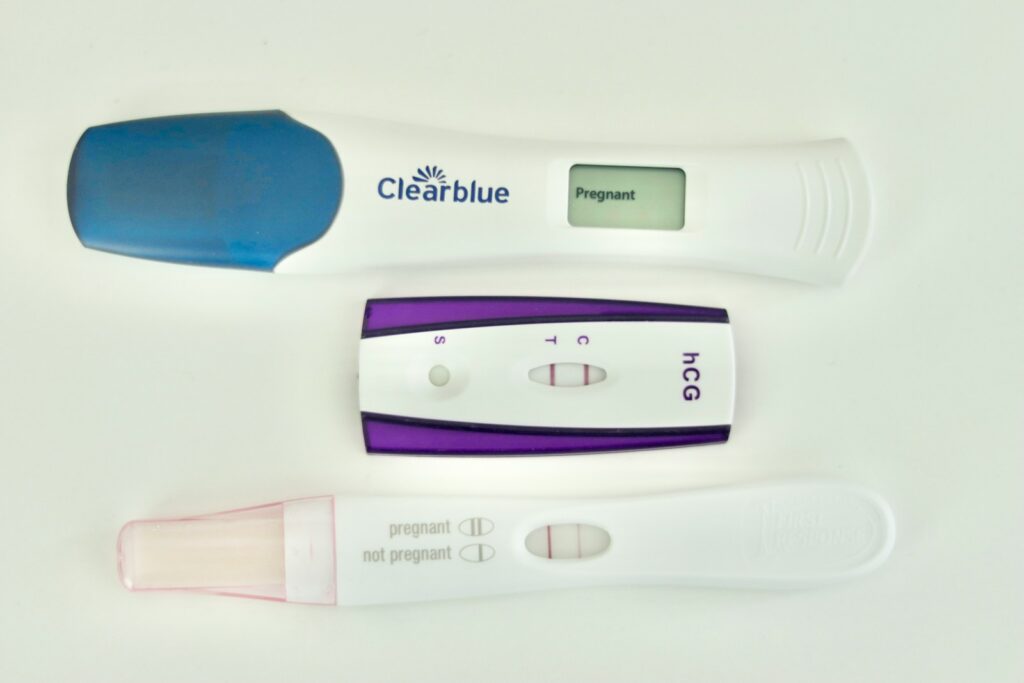
The practical fix is straightforward: stop at a pharmacy along the route and buy a replacement. Nearly every chain drugstore and most large gas stations in the U.S. carry home pregnancy tests. Knowing that option exists can take the edge off the initial panic, even if the timing still feels wrong.
Timing matters more than setting
Home pregnancy tests detect human chorionic gonadotropin (hCG), a hormone the body produces after a fertilized egg implants in the uterine lining. That process typically happens six to twelve days after ovulation, and hCG levels roughly double every 48 to 72 hours in early pregnancy.
The catch: testing too early can produce a false negative, not because the test failed, but because the body hasn’t produced enough hCG to trigger the result line. BabyCenter’s testing guide notes that using a kit before a missed period significantly increases the chance of a misleading negative. The UK’s National Health Service adds that when used correctly from the first day of a missed period, home tests are highly accurate, and a positive result is almost certainly correct.
For someone whose test disappeared mid-vacation, this is actually reassuring. If the plan was to test on the earliest possible day, waiting a day or two for a replacement may improve accuracy rather than compromise it. A test taken with first-morning urine at home, after hCG has had more time to build, is likely to be more reliable than one taken in a hotel bathroom at the outer edge of detectability.
Fertility specialists at Shree IVF Clinic recommend holding urine for at least two to four hours before testing, or using the first void of the morning, when hCG concentration is highest. That means the most accurate test is probably waiting at the other end of the drive, not at a rest stop along the way.
Sitting with uncertainty for 22 hours
Knowing the biology doesn’t silence the brain. A 22-hour drive is a long time to sit with an unanswered question, and the mind tends to fill empty hours with worst-case rehearsals.
Research on how people cope while awaiting medical results offers some useful parallels. A 2016 qualitative study published in BMC Pregnancy and Childbirth examined couples waiting for prenatal screening results and found that nearly all reported significant worry during the waiting period. But the same couples described being together as a source of comfort, and many said that deliberate distraction, such as staying busy or focusing on immediate tasks, helped them manage the anxiety.
Therapists who counsel people navigating possible pregnancy suggest a similar framework: separate what you can control from what you can’t. A Woman’s Place Clinic advises focusing energy on answerable questions (When will I test? Where will I buy a kit? Who will I tell first?) and practicing tolerance for the ones that have to wait.
On a long drive, that might look like picking a pharmacy stop, choosing a playlist or audiobook that demands attention, or simply talking through the anxiety out loud with whoever is in the passenger seat. Counselors note that voicing fears to another person often reduces their intensity, even when the other person has no new information to offer.
Journaling can also help. Hope Clinic, which provides pregnancy support services, recommends writing down thoughts and feelings during periods of uncertainty as a way to externalize worry rather than letting it loop internally. For a passenger on a long drive, a notes app works as well as a notebook.
Staying comfortable (and safe) on the road
Whether or not pregnancy is confirmed, someone who suspects they might be in the earliest weeks has good reason to treat a 22-hour drive with extra care. The biggest concern isn’t the pregnancy itself, which at this stage involves an embryo smaller than a poppy seed, but the general hazards of prolonged sitting and fatigue that affect any long-distance traveler.
Dr. Cassandra Simmons, an OB-GYN quoted in NewYork-Presbyterian’s Health Matters, recommends stopping every hour on long car rides to stretch your legs. If hourly stops aren’t realistic on a 22-hour haul, even simple calf raises and ankle circles while seated can support circulation and reduce the risk of blood clots, a concern that rises slightly during pregnancy due to changes in blood clotting factors.
Practical road-trip basics also matter more when nausea is a possibility. Safe in the Seat, a car safety resource, flags that long highway stretches can worsen pregnancy-related nausea, especially on winding roads or in warm vehicles. Keeping the car cool, having bland snacks within reach, and staying hydrated can all help. A travel safety guide from Cooper Hurley adds that packing food and drinks prevents the blood sugar crashes that cause dizziness and fatigue, both of which are dangerous behind the wheel regardless of pregnancy status.
If the person who might be pregnant is also the one driving, splitting the drive with a co-driver is the safest call. Fatigue-related accidents spike on drives longer than a few hours, and early pregnancy can amplify exhaustion even before a test confirms it.
What to do when you get home
The drive ends. The bags come inside. Now what?
If a replacement test was purchased along the way, the most accurate approach is to wait until the next morning and use first-morning urine. Follow the instructions on the specific kit, since sensitivity varies between brands. A positive result at this point is highly reliable. A negative, if the period still hasn’t arrived, may warrant retesting in two to three days or scheduling a blood hCG test through a healthcare provider, which can detect lower hormone levels than most home kits.
Emotionally, the return home is a good time to activate the support plan that got disrupted on vacation. That might mean calling the friend who was supposed to be on standby, booking an appointment with an OB-GYN or midwife, or simply sitting with a partner and acknowledging that the last day was harder than expected.
A lost pregnancy test on vacation is, in the end, a logistical hiccup dressed up in enormous emotional stakes. The biology doesn’t care whether the test happens in a beach rental or a bathroom at home. But the person taking it does, and giving yourself permission to feel the weight of that matters as much as any line on a stick.
More from Decluttering Mom: