


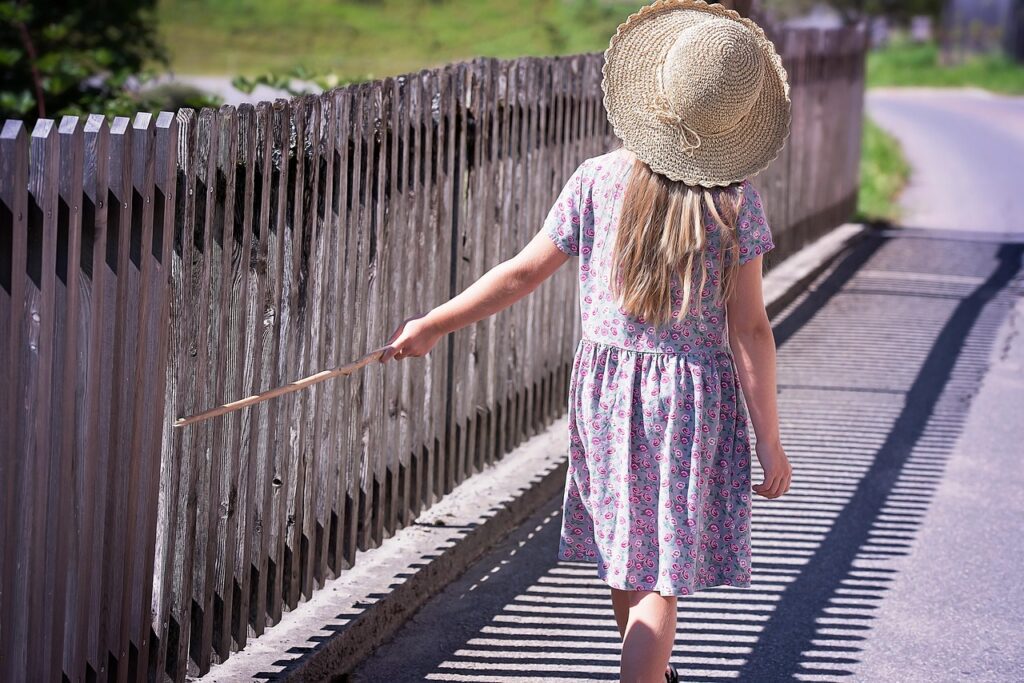
There is a certain kind of parenting anxiety that hits hard when your child is old enough to do something that seems completely normal and still feels impossible to greenlight.
In a post on Reddit, for one mom, that moment came when her 14-year-old daughter asked to start walking or roller skating home from school a couple days a week. The distance was only about two miles. Her daughter was responsible, communicative, and wanted the time alone to decompress. But even with all of that, the mother could not shake the fear that trust in her daughter was not the same thing as trust in the world around her.
That is what makes this kind of decision so hard.
A lot of moms are not really questioning whether their teen is capable. They are asking something heavier: when does healthy independence become a reasonable next step, and when does it still feel too risky to say yes?


Trusting Your Teen Is Only One Part of the Decision
That was the clearest tension in the discussion.
The mom did trust her daughter. She described her as mature, responsible, and already comfortable with other forms of independence, like skating around the neighborhood and going on walks with friends to nearby places. The problem was not her judgment in general. It was the fact that being a responsible teen does not automatically erase real-world variables like isolated stretches, sketchy areas, or people who make a route feel less safe.
That is the part parents sometimes struggle to explain, even to themselves.
Independence is not just about whether a teen can handle the walk. It is also about whether the route, the timing, and the backup plan make sense. A yes has to be built on more than confidence in your child’s character.
What Moms Are Really Evaluating First
In this case, the details mattered.
The family lived in a suburban area near shopping centers, and the mom said the route was mostly safe depending on which path her daughter took. But she also mentioned a couple of motels along the way where there had recently been some sketchy people around. That changed the conversation immediately. Instead of making the issue about whether her daughter was old enough, the real question became whether there was a safer route that still gave her the independence she wanted.
That is usually where moms need to start.
Not with a blanket yes or no, but with specifics.
How long is the route?
What parts feel exposed?
Are there sidewalks and crossings?
Who is nearby if something small goes wrong?
What stretches would make a parent uneasy even in daylight?
Those questions tend to tell the truth faster than a general argument about whether a teen is “ready.”
Independence Usually Works Better When It Is Practiced, Not Suddenly Granted
One thing that came through strongly in the replies was that many parents do see solo travel as a normal and valuable step into adolescence.
One person said she would allow it if the teen was generally responsible and the route had safe walking conditions, adding that kids need chances to practice assessing situations and responding when plans change. Another shared memories of walking and taking public transit alone as a young teen and described those solo moments as meaningful, quiet pieces of growing up.
That perspective matters because it reframes independence as something teens build, not something parents either fully allow or fully deny.
A teen walking home alone is often not really about getting from school to home. It is about learning how to move through the world with awareness, confidence, and some room to think. For creative or reflective kids especially, that time alone can feel restorative in a way adults sometimes forget once they become parents.
What Actually Helped This Mom Say Yes
The turning point in the update was not that her anxiety disappeared.
It was that the family made the plan more concrete.
She and her daughter talked through the route that morning and chose one that felt safer. She reminded her daughter to wear a helmet if she skated and to pay attention to her surroundings. Her stepdad worked from home and would be nearby if she needed anything. They also planned to put together a small emergency-preparedness bag. Once the plan felt more thought-through, the mother loosened the reins and let her daughter skate home. The huge hug she got afterward made it clear the moment meant something big to her daughter too.
That is probably the most useful takeaway here.
What made this feel manageable was not blind trust. It was trust plus planning.
What Moms Should Know First
The strongest lesson in situations like this is that readiness is rarely just about age.
A teen may be ready because she is responsible, communicates well, knows the area, and already handles smaller forms of independence well. But the route still has to make sense. The timing still has to make sense. The expectations still have to be clear. And if something on the path feels off, that is not overprotective paranoia. It is part of the evaluation.
At the same time, moms do not have to wait until every fear disappears before allowing more freedom.
Sometimes the right move is not a hard no. It is a smarter yes.
A safer route.
A check-in habit.
A conversation about attention and awareness.
A gradual start instead of an all-at-once leap.
That middle ground is often where both safety and independence can live.
Why This Decision Feels So Emotional
There is also a quieter truth under all of this.
For moms, letting a teen walk home alone can feel like one of those moments when childhood starts slipping into something more independent and less controllable. Even when the distance is short and the teen is trustworthy, it can still stir up fear because it asks a parent to accept that protecting a child forever is not really the job.
Preparing them is.
And honestly, that may be why these decisions feel so loaded. They are not just about the walk home. They are about the beginning of a different kind of parenting, where trust still matters, but trust by itself is not enough. Planning, judgment, and letting go a little more carefully matter too.
More from Decluttering Mom: