Toddlers do not always hear words the way grown-ups say them, and the result can be the funniest conversation of the day. One mom asked a simple question about where daddy went and got a cheerful, confident, and completely wrong answer.
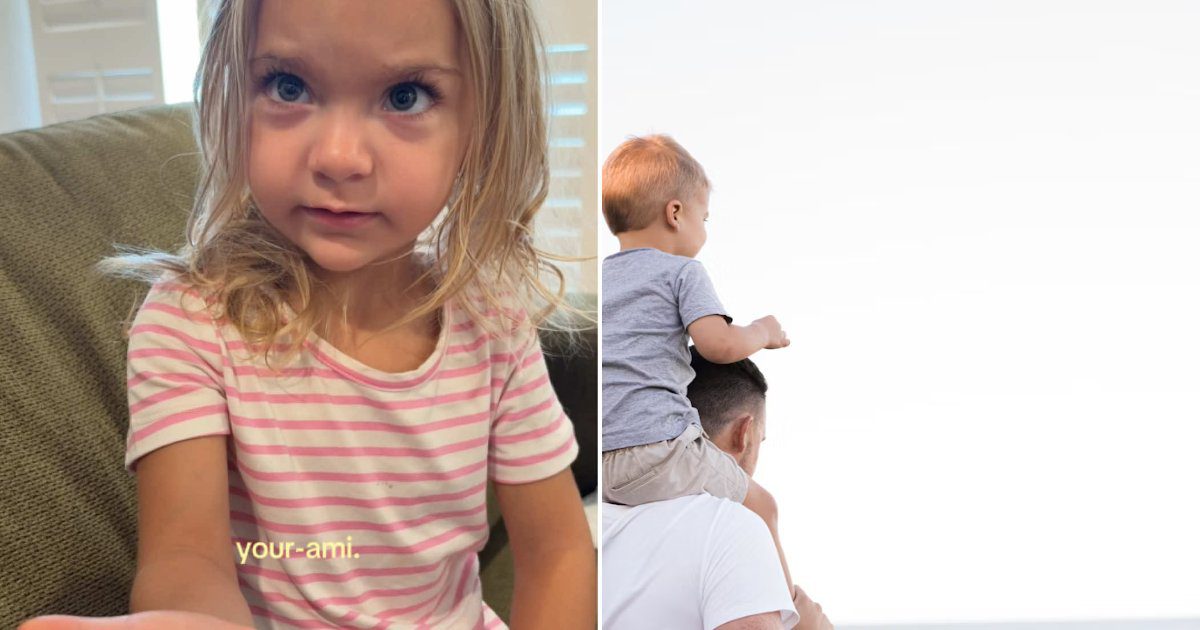
The post from @summersamermaid is captioned “The cutest miscommunication ever.”
@summersamermaid
The question
A little blonde girl sits on an olive green couch in pink and white striped pajamas. Her mom, behind the camera, asks where daddy went today. The girl answers with total confidence: “Hisami.” Mom repeats it back with a puzzled laugh. “Yeah,” says the girl.
Miami or Your Ami?
Mom tries again: he went to Miami. The girl nods and says he went to “your-ami.” Mom says it again, slowly, and the girl calmly repeats “your-ami.” Mom explains that it is called “my,” not “mine,” and the girl stretches out her open hand as if to make a point and says, “Yeah, it’s your-ami.”
The back and forth continues with neither side giving ground. Eventually the girl breaks into a huge grin, throws her head back laughing and then sits up again, still sure she has it right. Mom is laughing too, telling her she is so funny.
Why little ones mix up words
Language experts say young children often break unfamiliar words into smaller pieces they already know. “Miami” sounds a lot like “my” followed by “ami,” and since “my” and “your” are a natural pair for a child learning pronouns, “your-ami” makes perfect sense to her.
These moments are a normal and healthy part of learning to talk. Parents can help without making it a lesson:
- Repeat the right word naturally instead of correcting sharply.
- Show the place on a map or in a picture book to connect the word to something real.
- Enjoy the silly version while it lasts, because it will not last long.
- Record it. Mom certainly did.
How toddlers learn to say tricky words
Learning to talk is one of the biggest jobs of early childhood. Toddlers listen closely, copy what they hear and slowly sort out sounds, words and meanings. Along the way they swap sounds, drop syllables and invent their own versions of words. Mix-ups like this one are a sign that a child is actively working out how language fits together.
Pronouns such as “my,” “your” and “mine” are especially confusing, because the right word depends on who is speaking. It takes time and many conversations for children to use them consistently.
Common questions parents ask
Should I correct my child every time? Not usually. Constant correction can make a child feel self-conscious. Instead, repeat the right version back in a natural way. If she says “your-ami,” you might say, “Yes, Daddy went to Miami.” She hears the correct word without feeling put on the spot.
Is it normal for toddlers to be so sure they are right? Yes. Confidence is part of the age. Children this young often hold firm to their own version of a word, even when someone gently offers another one.
When should I ask a professional about speech? If you are ever worried about your child’s speech, hearing or progress, bring it up with your pediatrician. They can check in, answer questions and, if needed, point you to extra support. Asking early never hurts.
Try this at home: everyday ways to build language
- Read together every day, and pause to point at pictures and name them.
- Narrate what you are doing, such as “I’m putting the cup on the table.”
- Add a little to what your child says. If she says “car,” you can say “big red car.”
- Sing songs and nursery rhymes, which help children hear the rhythm of words.
- Give your child time to respond, and wait patiently for her answer.
Fun word games for little ones
- Name the places you pass on car rides, and look for them on a map or in a book later.
- Play “I spy” with colors and shapes.
- Make up silly rhymes together, like “cat, hat, bat.”
- Take turns telling a very short story, one sentence at a time.
- Look through family photos and talk about where each one was taken.
Many parents also find that slowing down helps. When you pause to listen, make eye contact and respond with interest, your child learns that talking is rewarding. Even a quick chat while buckling a car seat or folding laundry counts as language practice.
These funny mix-ups do not last forever. One day your child will say every word perfectly, and you will miss the charming versions. Enjoy them while you can, and write down your favorites.
Credit for the original post goes to @summersamermaid on TikTok.