


The story starts in a hotel car park, with a discarded four-poster that looked more “house clearance” than historic treasure. An antique furniture restorer spotted the bed frame, hauled it away from the trash, and only later discovered that the battered timber might once have cradled a king and queen of England. What followed was a slow, almost unbelievable realization that this throwaway find was tied to Henry VII, Elizabeth of York, and the earliest days of the Tudor dynasty.
At first, it was just a practical rescue: a solid old bed that could be repaired, resold, or stripped for parts. But as the restorer cleaned away hotel varnish and modern fittings, the carvings began to speak a different language, one of royal iconography, biblical scenes, and political propaganda carved into oak. The deeper he looked, the clearer it became that this was not just an antique, it was a surviving piece of Tudor statecraft hiding in plain sight.
The hotel castoff that turned into a royal mystery

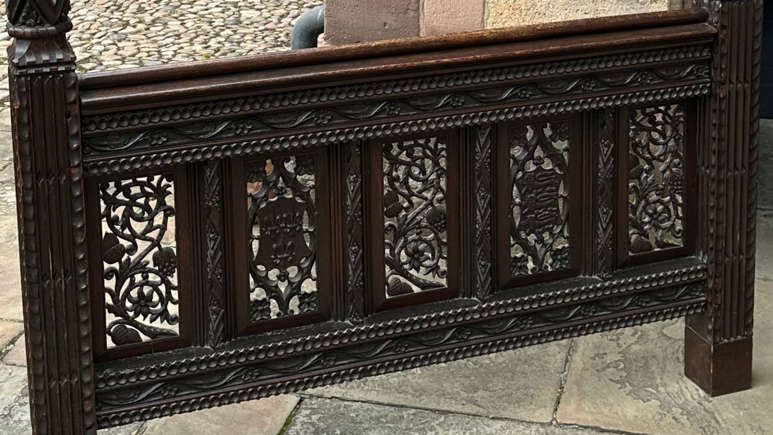
The bed’s modern life was as ordinary as it gets. The 15th century four poster had been standing for years in a room for newlyweds in a hotel in the English city of Chester, a workhorse piece of furniture that couples climbed into without any idea of its past. According to later research, this same bed had stood for 15 years in that bridal suite before it was removed, dragged into a car park, and left to be discarded, its royal story buried under layers of gloss and floral bedding in Chester.
When the hotel decided to clear out old furniture, the frame ended up dumped in the car park of the Redland Hotel, Chester, where it was effectively put out with the trash. The antique dealer who spotted it bought the entire bed for a modest sum, far less than its eventual historical value, after it had been used in that bridal room at the bargain price of £95 per night in the Redland Hotel. At that point, it was still just a lucky salvage, not a royal revelation.
From anonymous oak to Henry VII’s first state bed
The turning point came when the restorer began stripping back the finish and noticed that the carving was far more sophisticated than a typical Victorian or Edwardian reproduction. The headboard showed a striking scene: Henry VII and his queen presented as Adam and Eve, yet also transmuted into Christ and a redemptive royal couple, a dense piece of symbolism that matched the political theology of early Tudor England. That unusual blend of biblical and dynastic imagery, with Henry VII and Elizabeth of York woven into a single visual program of Adam and Eve and Christ, suggested the bed was not just old, it was part of a carefully crafted royal message, as later analysis of the headboard made clear.
Scholars who later examined the bed argued that the carvings, construction techniques, and iconography lined up with the period immediately after Henry VII’s marriage to Elizabeth of York, when the new Tudor regime was eager to project stability and sacred legitimacy. The uncanny identification of Henry VII’s first state bed, made around the time of that marriage and the couple’s imminent hopes for an heir, turned the rescued frame into a rare surviving piece of royal furniture, as detailed in research on the royal bed. What began as a hunch by a restorer became a full-blown historical case, linking a hotel castoff to the bedroom politics of the Tudor court.
Proving a Tudor legend hiding in plain sight
Turning a good story into accepted history required more than a romantic theory, so researchers leaned on science as well as style. Detailed study of the timber, tool marks, and paint traces suggested a late 15th century origin, consistent with the reign of Henry VII. One investigation described how the bed, used in a hotel for 15 years, turned out to be a marriage bed dating to the 15th century, with its age and craftsmanship pointing back to the earliest Tudor period and to Henry VII’s own marriage bed. The more the evidence stacked up, the harder it became to dismiss the idea that this was a royal survivor rather than a clever fake.
For historians of the Tudor dynasty, the bed’s survival is startling because so little royal furniture from that era remains. The frame is now widely discussed as the first state bed of Tudor England, a physical link to the moment when Henry VII and Elizabeth of York tried to fuse rival bloodlines into a single ruling house. That such an object could spend decades as a prop for newlyweds in an English hotel, then sit abandoned in a car park before an antique furniture restorer dragged it home, underlines how fragile the chain of custody can be for even the grandest artifacts. The man who rescued it thought he was saving a nice old bed from the skip; instead, he pulled a piece of royal propaganda, and a slice of early Tudor history, back from the brink of oblivion.
More from Decluttering Mom: