


For more than four decades, a Chilean mother lived with the ache of a baby she was told had died, while her son grew up in the United States believing he had no living relatives. Their story, separated by an ocean and a lie, finally bent back toward the truth when a DNA test and a few determined strangers connected the dots. The reunion, 42 years after that hospital room, is part detective tale, part family drama, and fully a reminder that even very old wounds can still be stitched together.
The man at the center of it all is Jimmy Lippert Thyden, a Virginia lawyer who discovered in midlife that his origin story was not tragic loss but a criminal theft. His journey back to his Chilean roots, and to the mother who never stopped wondering, shows how personal curiosity, modern technology, and grassroots activism can collide to rewrite a family’s history.

The Lie in the Delivery Room
The story starts in a Chilean maternity ward, where a young mother went into labor expecting to leave with her newborn and instead left with a death notice. According to reporting on the case, hospital staff told her that her baby had died shortly after birth, a claim that was never backed up with a body, a funeral, or even a clear medical explanation, yet it was delivered with the kind of authority that shuts down questions. In that moment, the woman who would later be identified as the Chilean mother of Jimmy Lippert Thyden was pushed into grief that had been manufactured for her.
Behind that lie, investigators and advocates now say, was a wider pattern of newborns being taken from vulnerable families and funneled into international adoptions. Accounts from Chile describe hospital workers and intermediaries who targeted women in difficult circumstances, then used falsified paperwork to declare babies dead or abandoned. In Jimmy’s case, the deception in that delivery room set off a chain reaction that would carry him out of the country and into a new life, while his mother was left to mourn a child she was told she would never see again.
A Baby Sent North, A Childhood Built on Half a Story
While his mother tried to make peace with a loss that never quite made sense, the baby she believed was gone was already on a very different path. As an infant, Jimmy was adopted by an American couple who were told he had no family and had been given up, a narrative that fit neatly into the paperwork they received. He grew up in the United States, eventually settling in Virginia, with loving parents who had no idea that the adoption they celebrated was rooted in a crime.
From his perspective, the story he carried into adulthood was simple and stark. He believed he had been born in Chile, that his biological family was gone, and that there were no blood relatives anywhere in the world who shared his history. As one detailed account notes, Jimmy Lippert Thyden always thought he had no living blood relatives, and that belief shaped how he saw himself, from childhood through his years in law school and into his career.
The Story That Sparked Suspicion
The first crack in that tidy but incomplete narrative came not from a long-lost cousin or a mysterious letter, but from a news story about someone else. Jimmy stumbled on a report about another Chilean-born man, identified as Scott, who had discovered he was taken from his family and adopted abroad. The details were uncomfortably familiar: a birth in Chile, a story of poverty and supposed abandonment, and paperwork that did not quite line up with reality.
Reading that account, Jimmy felt a jolt of recognition that he could not shake. The report notes that Jimmy had a similar reaction to Scott’s story, wondering if he too had been taken by force from a mother who was still alive. That question, once asked, refused to go back into the box. It pushed him to look again at his adoption documents, to notice the gaps and inconsistencies, and to consider that the “no living relatives” line he had accepted for years might not be the whole truth.
DNA, Data, and a Nonprofit Called Nos Buscamos
Curiosity turned into action when Jimmy decided to test his DNA and connect with people who were already digging into Chile’s stolen children cases. He reached out to the Nos Buscamos Foundation, an organization that works to reunite Chilean mothers with children who were taken from them and adopted out, often to families overseas. The group helped him navigate the maze of genetic databases and old records, pairing his DNA results with a growing pool of Chilean families who suspected their babies had been stolen.
When a match finally appeared, it landed on the desk of a volunteer who understood exactly what it meant. One account describes how, When the match came back, the next step was to call a woman named María Angélica González, who was then 69 years old and had spent her adult life believing her baby had died. The science was clear, but the emotional weight of that phone call was something no algorithm could soften.
The Call That Changed Two Lives
On the other end of that call, María Angélica González was about to have her world rearranged. She had been a young woman when hospital staff told her that her newborn had not survived, and she had carried that loss quietly for decades. Now she was being told that the child she had mourned was alive, that his name was Jimmy, and that he wanted to speak with her. The first contact between them, according to detailed accounts, was a simple greeting that cut through 42 years of silence, a “Hi Mum” that gave the Chilean mother back the title she had been denied.
For Jimmy, hearing her voice was a shock of recognition he had never expected to feel. He had spent years telling people he had no living relatives, a line that appears in VOA coverage of his story, and suddenly that certainty was gone. In its place was a woman who remembered his birth, who could describe the hospital room and the moment officials told her he was dead, and who had never quite stopped wondering if the story she had been given was true.
From Screen to Hug: The Trip to Valdivia
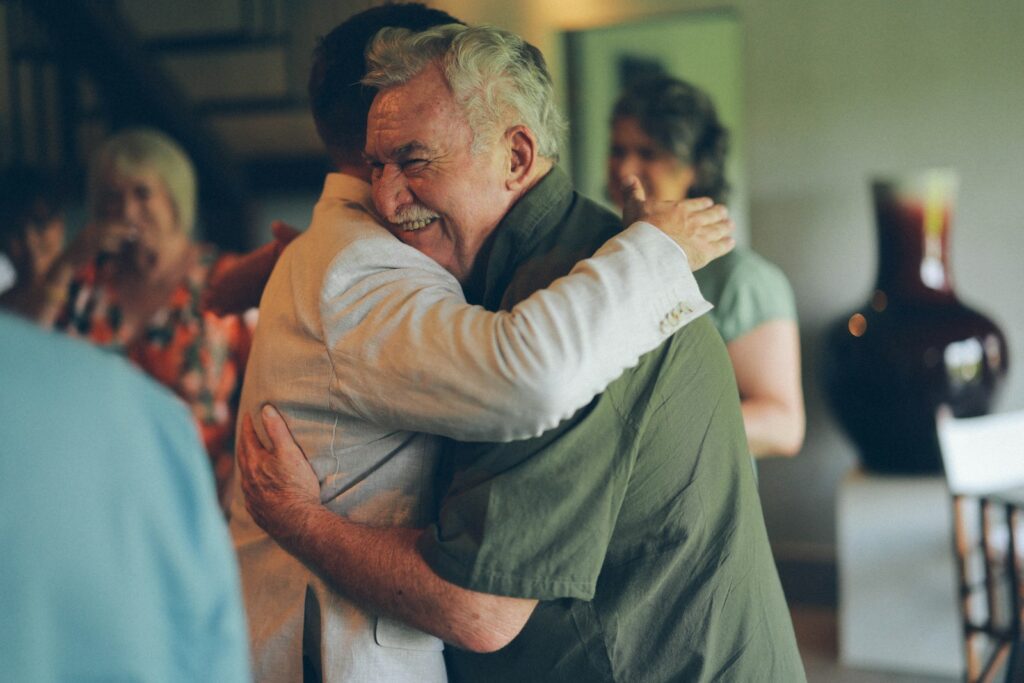
Phone calls and video chats could only go so far, so Jimmy booked a flight to Chile to meet his mother in person. He traveled to Valdivia, the city where she lived, carrying not just luggage but the weight of a lifetime of questions. When they finally met, cameras captured the moment he walked toward her and she reached out, the two of them folding into a hug that had been delayed for 42 years but felt, to both of them, like it had been waiting just offstage the whole time.
Reports describe how, once in Valdivia and after meeting his extended family, there was even a birthday celebration organized so they could reclaim at least one milestone together. One account notes that Once he arrived, the family gathered to mark the occasion, a symbolic reset on all the birthdays they had missed. For his mother, it was the first time she had ever been able to sing to him in person. For Jimmy, it was proof that the abstract idea of a “birth family” was now a room full of people who knew his name and his story.
“A Miracle from God” and a Lawyer’s New Mission
In interviews, Jimmy’s mother has not been shy about how she sees what happened. She has called their reunion “a miracle from God,” a phrase captured in coverage of the moment Man Meets Chilean at Birth. For her, faith and persistence had finally intersected with technology and activism, delivering back a son she had only ever held in her memory. The language of miracle might sound dramatic, but for a woman who had been told to bury her grief and move on, it fits the scale of what she experienced.
Jimmy, now a practicing attorney, has also been changed by what he uncovered. Coverage notes that Mr Thyden is a lawyer with two children of his own, and that personal context matters. Learning that he was taken from his mother without her consent has sharpened his sense of justice and his interest in helping other adoptees and parents who suspect similar wrongdoing. He has spoken about wanting to use his legal skills to push for accountability and to support organizations that are still trying to match families separated by the same system that tore his own apart.
How One Reunion Fits a Much Bigger Pattern
As extraordinary as Jimmy’s story feels, it is not an isolated case. Advocates in Chile have documented a pattern of babies taken from mothers, often in the late twentieth century, and sent abroad under the guise of legitimate adoption. The Nos Buscamos Foundation has been working to reunite thousands of Chilean mothers with children who were taken from them, and Jimmy’s case is one of several that have come to light as DNA testing becomes more accessible and more people start to question the official stories they were given.
International coverage has highlighted how neonatal units and adoption intermediaries played a role in these separations. One report notes that Neonatal intensive care units were sometimes the setting where mothers were told their babies had died, only for those infants to later appear in foreign adoption files. Jimmy’s reunion with his Chilean family, including his mother and extended relatives, has become a kind of case study in how those old abuses can be confronted, even if they cannot be fully undone.
More from Decluttering Mom: