


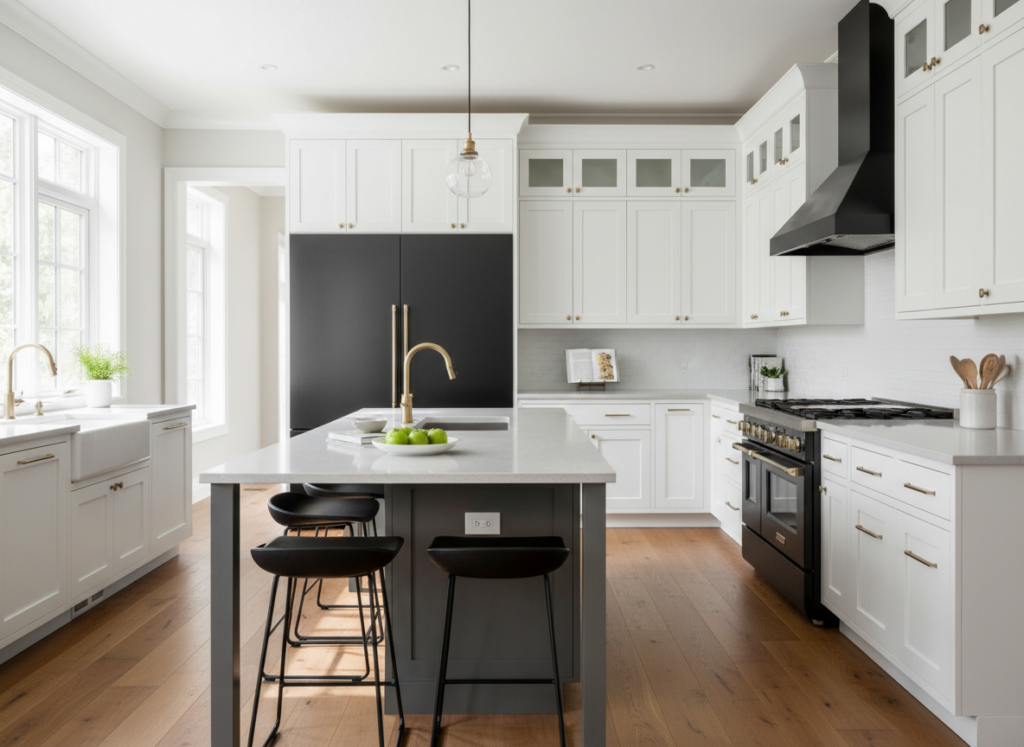
Ask a kitchen appliance retailer what’s moving off the showroom floor and matte black finishes come up almost before stainless steel does. Ask the industry’s own survey data the same question, and stainless is still the runaway favorite — chosen by 74% of homeowners renovating a kitchen in 2025, according to the Houzz U.S. Kitchen Trends Study. Both things are true at once, and untangling them says more about how kitchen trends actually spread than a simple stainless-versus-black scoreboard does.
What the numbers actually say
Houzz’s 2025 data puts appliance finish choices at 74% stainless steel, 7% white, 5% black stainless steel, and 3% standard black — meaning black-toned finishes combined account for about 8% of installs nationally, down slightly from a combined 11% the year before, when stainless steel itself sat at 77%. That is not a finish overtaking stainless steel by volume. It’s a small, fairly steady minority share of a market stainless still dominates by nearly nine to one.
What has shifted is where that minority share shows up. A few years ago, black stainless was mostly a budget-brand alternative marketed as a fingerprint-resistant compromise. Today, matte black has moved upmarket — several major appliance lines now launch premium ranges, wall ovens, and refrigeration in matte black first, treating it as a design statement rather than an afterthought to the stainless version.

Where matte black is genuinely winning
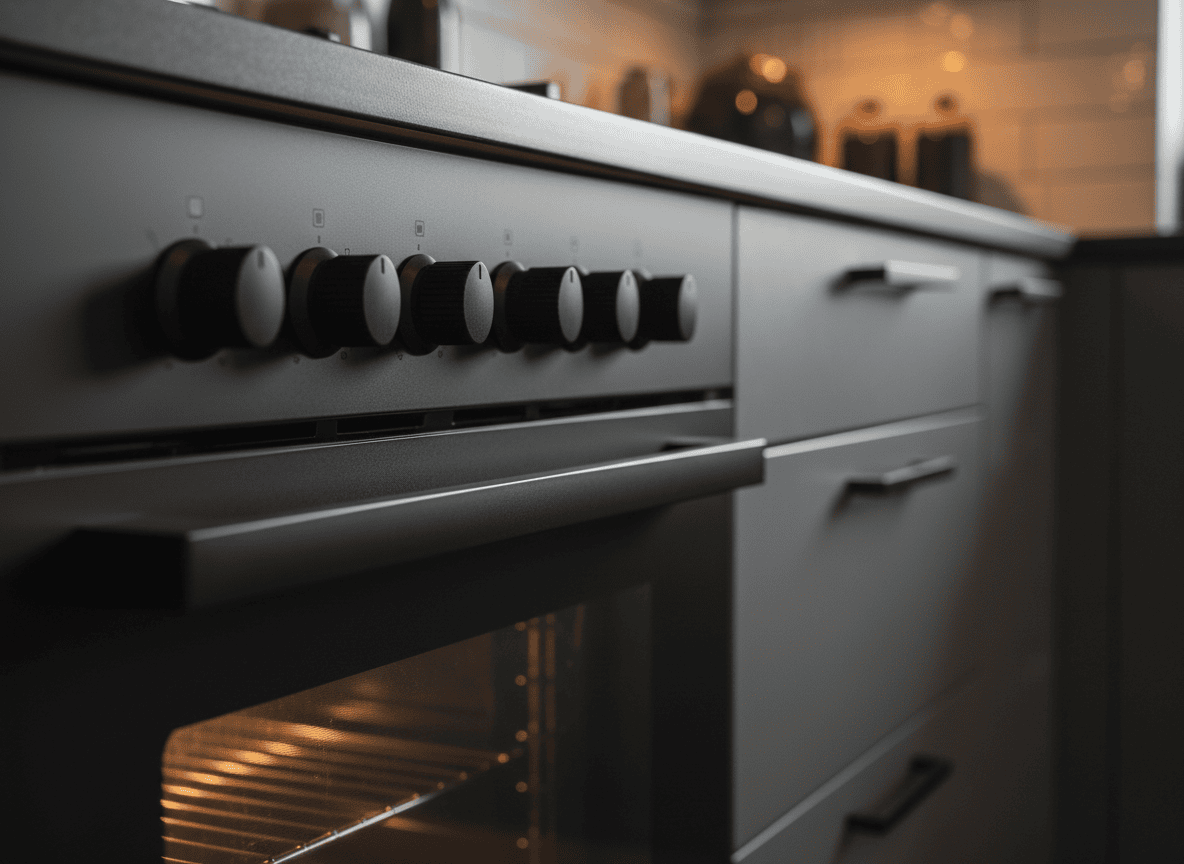
Interior designers describe a real shift in what clients request by name, especially in fully custom kitchens where a homeowner isn’t just accepting whatever came in a builder-grade package. “Stainless steel may have been the only option, or one of very few. Now we have many more choices, and they’re fun,” Drury Design owner Gladys Schanstra told NewHomeSource. “People are opting for colors and carbon or matte finishes.”
That distinction — between what the average national renovation looks like and what a fully custom kitchen looks like — is where matte black is picking up the most real ground. In builder-grade and mid-range renovations, stainless remains the safe, expected default nobody questions. In kitchens where a homeowner is choosing a design language from scratch, black increasingly reads as the intentional pick rather than the safe one.
The fingerprint story is mostly marketing
Fingerprint resistance is the explanation most retailers reach for first, and it isn’t wrong exactly — matte and textured black finishes do hide smudges better than polished stainless. But designers point to a different primary driver: black appliances read as furniture-grade rather than commercial-grade. Stainless steel’s look was borrowed from restaurant kitchens, which is part of why it became the default finish starting in the 2000s. Matte black borrows instead from cabinet hardware, plumbing fixtures, and window frames — the black-hardware trend that has dominated kitchen design for most of the past decade. An appliance in matte black doesn’t stand apart from a room the way stainless does; it matches trim, faucets, and cabinet pulls that were often already black.
Cost and durability, in plain terms
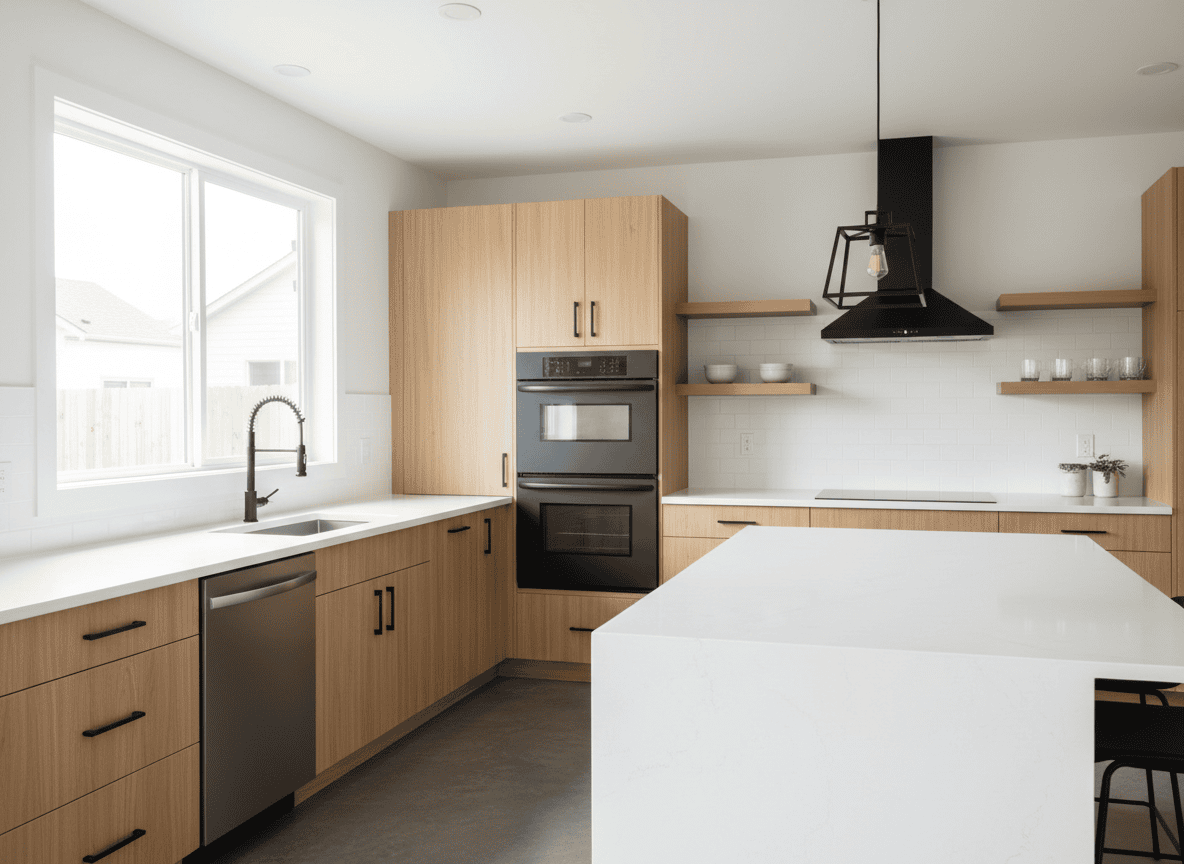
Matte black appliances typically carry a modest premium over an equivalent stainless model, usually a few hundred dollars per appliance, since the finish requires an additional coating step in manufacturing. Early complaints about black stainless scratching more visibly than standard stainless steel pushed several manufacturers toward true matte black powder-coat finishes instead, which show scratches less and have largely addressed that original durability concern.
What this means if you’re renovating
The safest resale bet is still stainless steel, precisely because it remains the default nine out of ten buyers expect, and most appraisers and real estate agents treat it as the neutral, universally acceptable choice. But for anyone renovating a kitchen they plan to live in for years rather than sell next season, matte black is no longer the risky or trend-chasing pick it might have been a decade ago. It has enough of a track record now, and enough options across major brands, to count as a mainstream alternative rather than a gamble. The honest read of the data isn’t that black has quietly won. It’s that a small, design-forward slice of the market has been choosing it consistently and visibly enough — in showrooms, in renovation photos, in the kitchens people actually aspire to — to make it feel far more dominant than the sales numbers back up.