


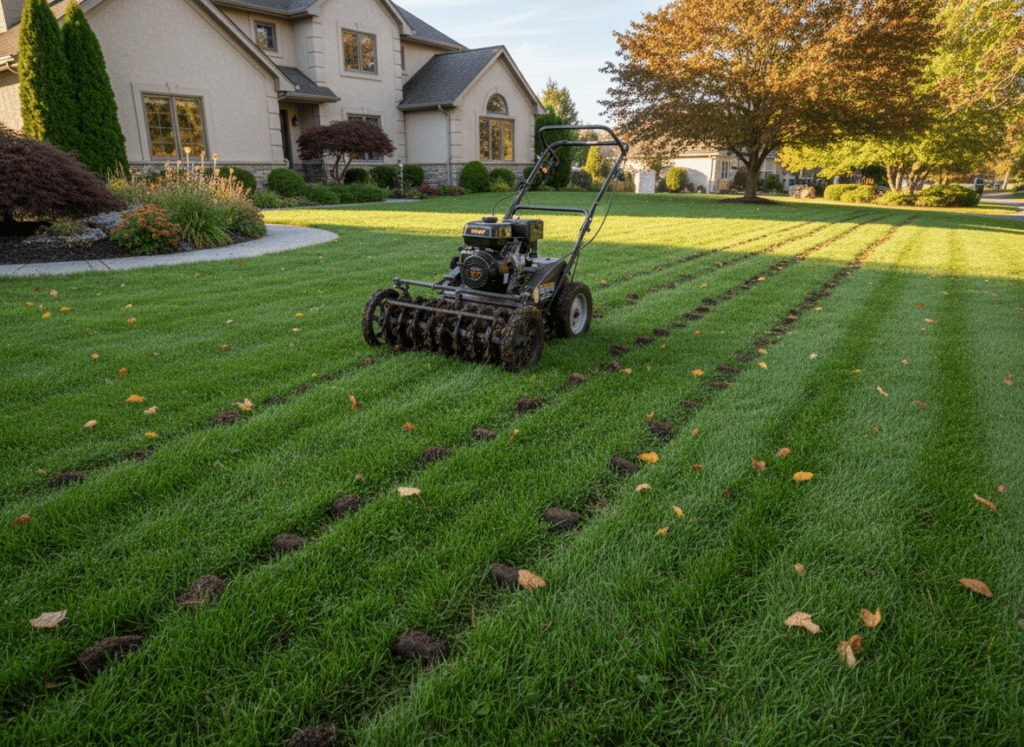
Ask several university extension offices when to aerate a cool-season lawn in fall and the calendar dates won’t match, but the underlying principle will. Iowa State University Extension puts it plainly for its region: early September is the best time to aerate lawns in Iowa. Wait until leaves are dropping in earnest and the ground is closer to its first freeze, and the same job stops helping the lawn and starts working against it.
Why the window is so specific
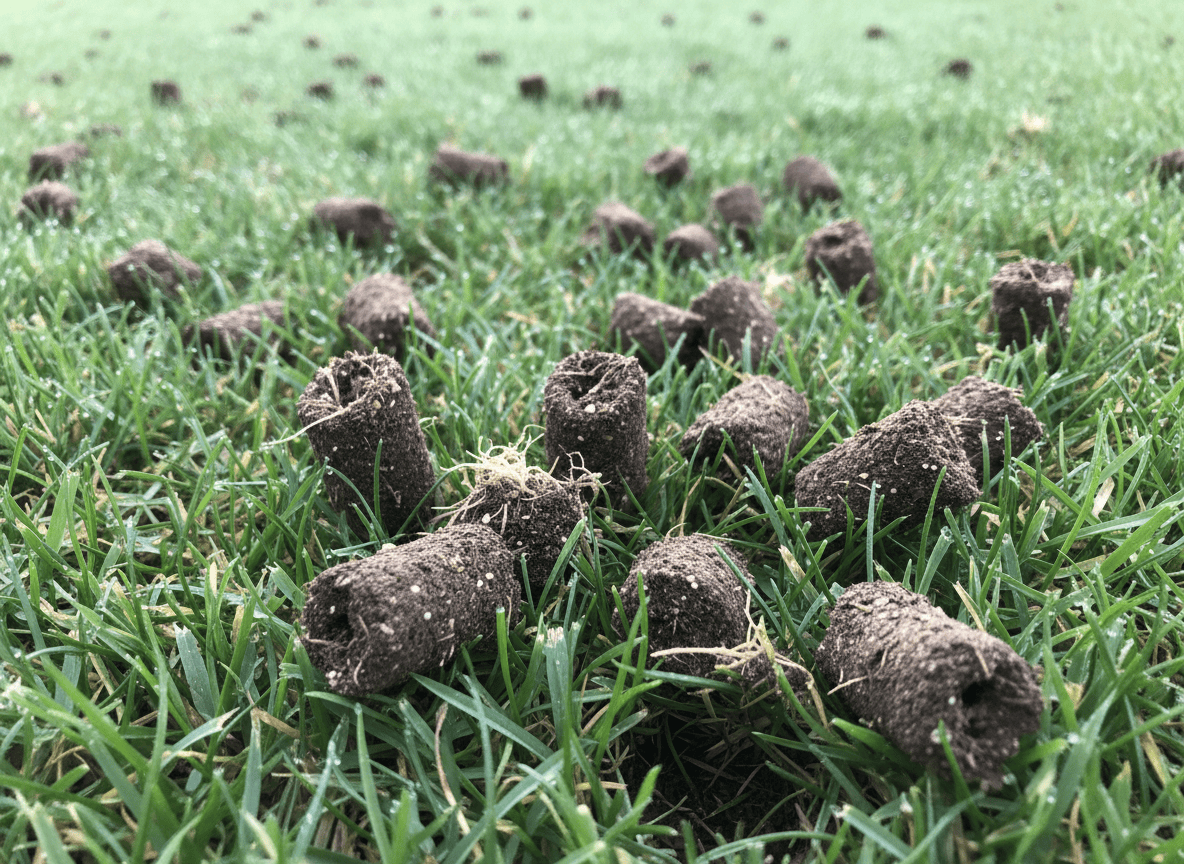
Core aeration works by pulling small plugs of soil out of the lawn, relieving compaction and letting water, air, and nutrients reach grass roots more directly. For that to translate into a thicker lawn next spring, the grass needs enough remaining warm-soil growing season left to actually use that opening — to push new roots into the loosened soil and recover from the physical disruption aeration itself causes. Per Iowa State University Extension, early September is the target specifically because cool-season grasses are shifting out of summer stress and into their strongest natural growth phase, while soil is still warm enough to support fast root development.
Push the same job into late October, after the first hard frosts have already started slowing grass growth, and the plugs pulled from the lawn don’t get filled back in with new turf before winter dormancy sets in. The lawn goes into winter with bare, disrupted patches instead of a denser root system underneath it — the opposite of what aeration is supposed to accomplish.

Why the exact date moves by region
Not every extension office lands on the same weeks, because “early fall” arrives at different points depending on climate. University of Wisconsin–Madison Extension guidance treats the entire month of October as suitable for core aerating in its climate, reflecting a cool-season growing window that runs later there than in Iowa. Other Midwest and transition-zone extension offices generally point to a similar mid-August-through-mid-September stretch for their own regions, with the ideal window sliding later the further north or milder the local climate runs.
The rule extension agronomists come back to, regardless of the exact dates involved, is soil moisture plus remaining growing time: aerate after rain when the ground is workable rather than bone dry, and leave enough weeks of warm soil afterward for the lawn to fully recover before dormancy.
Why homeowners miss it anyway
Fall lawn care tends to get scheduled around visible cues rather than calendar dates. Leaves start falling, the mower comes out less often, and aeration gets lumped into a general “fall cleanup” checklist done whenever a free Saturday shows up. That’s usually mid-to-late October in much of the country, which lands near the tail end of the ideal window in warmer regions and well past it in colder ones. Lawn care companies see a seasonal crunch too — aeration crews and equipment are booked heaviest in early-to-mid September, and homeowners who wait to call in October often end up scheduling around whatever appointment is left rather than the one their lawn actually needed.
Pairing aeration with overseeding matters too
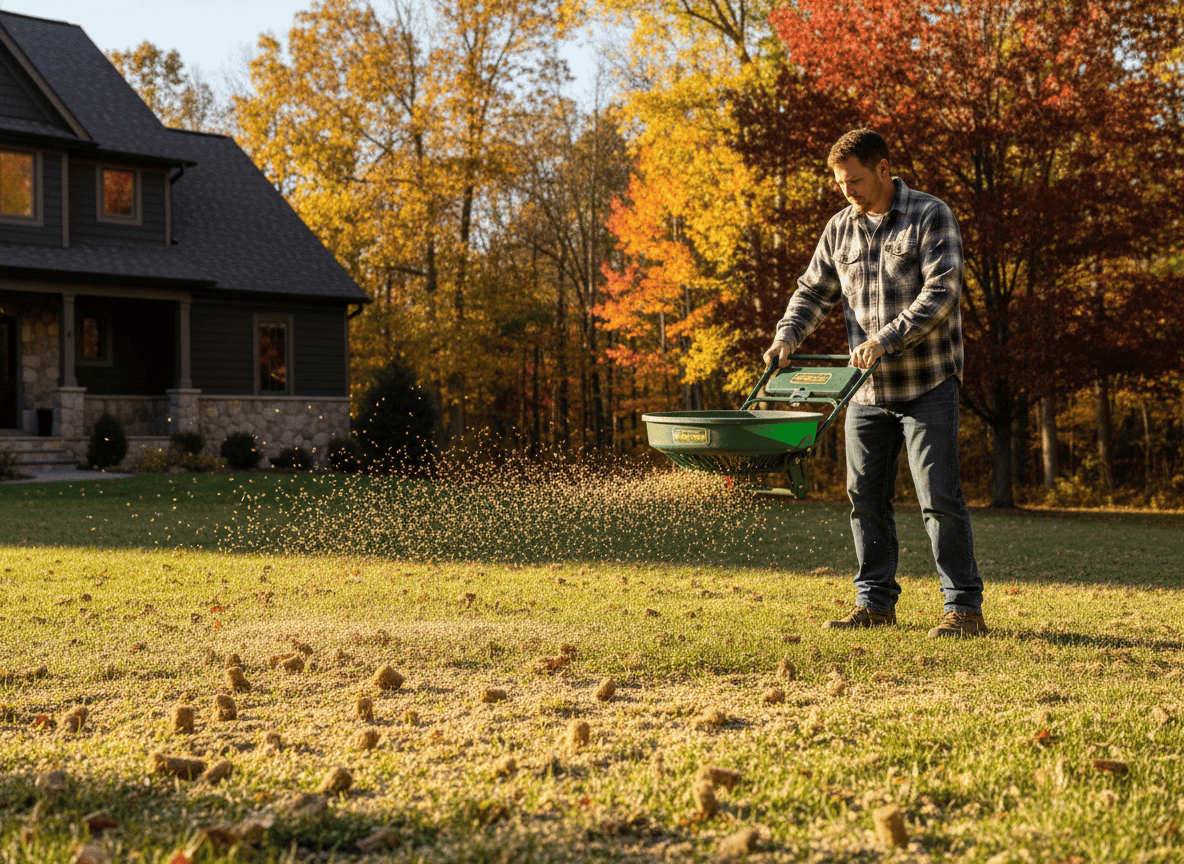
Extension guidance consistently recommends aerating immediately before overseeding, rather than treating them as two separate fall projects spread weeks apart. The holes aeration leaves behind are exactly where grass seed makes the best soil contact and germinates most reliably, so a lawn aerated in early September and overseeded that same week gets a head start that a lawn aerated alone, or seeded without aeration first, doesn’t get.
None of this requires guessing. Most state extension offices publish their own regional fall lawn calendars, searchable by state, and the fix for missing the window is simply checking one before fall cleanup becomes the only thing driving the schedule. A lawn aerated on the calendar’s terms, instead of whenever the to-do list finally gets around to it, is the one that comes back thick instead of thin.
What to check before booking the job
Homeowners unsure which end of the fall window applies to them can look at two things extension agronomists rely on: the local first-frost date and current soil temperature, both of which most state extension websites publish or link to directly. As a general rule, aiming for the stretch that leaves four to six weeks of active growing time before that first frost gives cool-season grass enough runway to root in before winter, whether that lands in early September farther north or later into fall in milder transition-zone climates.