


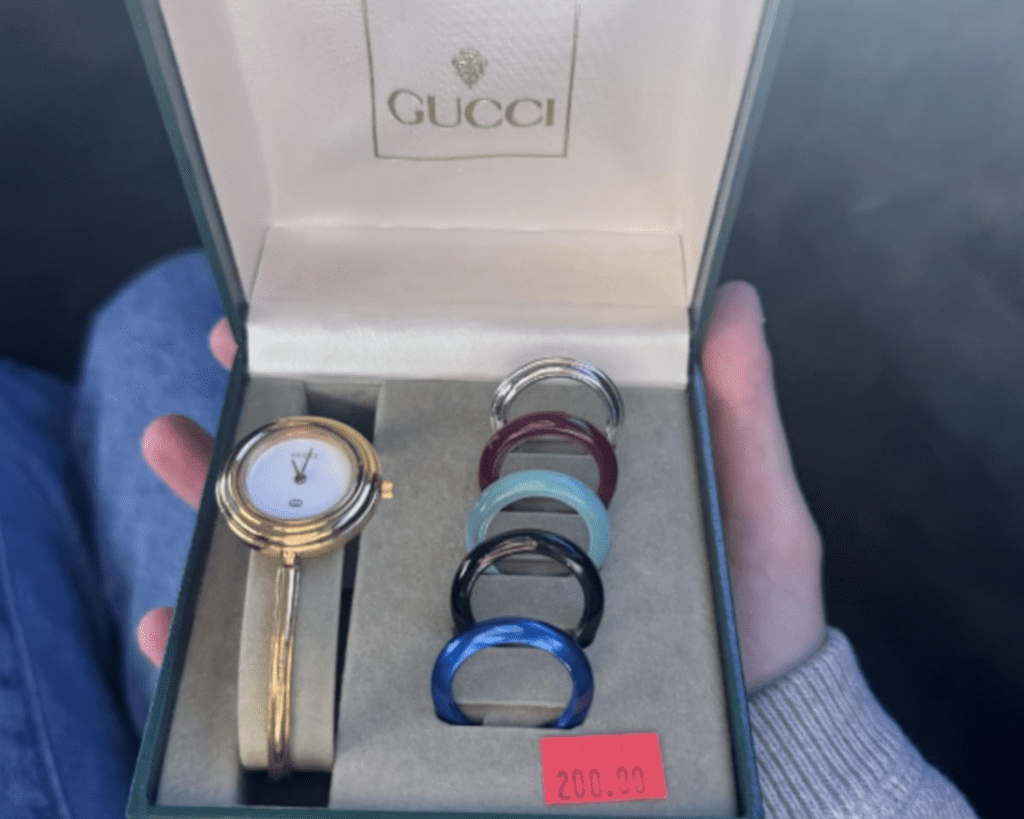
A Missouri thrift shopper thought she was splurging when she dropped $150 on a secondhand watch, only to find out later that she had seriously underpaid. What started as a nervous gamble on a designer-looking timepiece turned into the kind of resale win most bargain hunters only see on TV. Her story has since ricocheted across social media, tapping into the fantasy that the next dusty shelf or glass case might be hiding a small fortune.
The woman, identified in reports as Russina, did not stumble into the deal by accident. She had done her homework on luxury brands, trusted her instincts when she spotted the watch, and then let the internet weigh in on whether she had just made a smart buy or an expensive mistake. The verdict from experts and commenters alike was clear: she had scored big.

The $150 Leap Of Faith
When Russina walked into a Missouri thrift store and saw the watch, she was not just guessing in the dark. She had already seen similar pieces online and knew that certain designer watches were “highly sought after,” so the style and branding immediately grabbed her attention. According to one account, she explained that it “caught my eye because I had seen these watches online before,” a detail that shows she was not simply impulse shopping but drawing on prior research and familiarity with luxury accessories, the kind of knowledge that separates casual browsing from strategic thrifting.
That background made it easier for her to justify paying $150, a price that would stop many secondhand shoppers in their tracks. In the same reporting, she is described as having an inkling that this particular timepiece might sit at the higher end of what such watches usually sell for, especially because it was still in its original packaging and looked well cared for. The combination of a recognizable design, intact presentation, and her own experience with similar listings online helped convince her that the $150 tag was a risk worth taking, even if it meant stretching a typical thrift budget.
From Nervous Purchase To Online Validation
Even with that confidence, Russina did not walk out of the store feeling entirely relaxed. One detailed account notes that she was “nervous” about spending so much in a thrift setting, a reaction that will sound familiar to anyone who has ever talked themselves into a big-ticket secondhand buy and then second-guessed it on the drive home. To settle her nerves, she turned to social media, posting photos and details of the watch so that other collectors and fashion fans could weigh in on whether she had just overpaid or uncovered something special. That decision to crowdsource opinions turned out to be crucial.
In the comments, people quickly recognized the watch as a Gucci design and pointed out that similar models were selling for far more than $150 on resale platforms. One report notes that she had already seen these Gucci watches online and knew they were in demand, and the online feedback essentially confirmed that instinct by highlighting how “highly sought after” the brand and style were among buyers. The chorus of responses did more than just praise her eye, it gave her a rough sense of market value and reassured her that she had not only avoided a mistake but likely landed a serious bargain.
What Made This Gucci Watch Stand Out
The watch itself was not just any fashion accessory, it was a specific Gucci model that collectors recognize for its distinctive design. Reporting on the find notes that the watch was designed in a particular era and came with a recognizable case and branding that helped people online quickly identify it as authentic. Those design cues, along with the fact that it was still in its original box, signaled that this was a legitimate luxury piece rather than a knockoff, which is always a concern when high-end labels show up in secondhand shops. The clear logo placement, overall build quality, and matching packaging all worked together to support the conclusion that she had picked up a real Gucci watch.
Another detail that set this model apart was the way it could be customized. One report describes how the watch came with a selection of interchangeable bezels, allowing the wearer to swap out the colored ring around the face to match different outfits or moods. That kind of modular design is a hallmark of certain Gucci lines and adds both functional and collectible appeal, since complete sets with multiple bezels tend to command higher prices on the resale market. For buyers who care about originality and completeness, having the watch, the bezels, and the branded packaging all together can significantly boost perceived value.
How Much It Was Really Worth
Once the online community had identified the watch and confirmed that it was a Gucci piece, the natural next question was how much it might actually be worth. Commenters began sharing comparable listings from resale sites, showing that similar Gucci watches were selling for several times what Russina had paid. One detailed breakdown of the situation notes that the model she bought had been listed elsewhere for amounts that made her $150 outlay look tiny by comparison, reinforcing the idea that she had stumbled into a serious underpricing at the thrift store. The gap between the thrift tag and the resale numbers is what turned a simple purchase into a viral story.
Later coverage of the episode highlighted that when she eventually explored selling the watch, the offers she received reflected that higher market value rather than the thrift-store price. One report on the Missouri woman’s experience points out that the resale interest quickly climbed well beyond the $150 she had spent, with potential buyers effectively validating the online estimates by putting real money on the table. That spread between what she paid and what others were willing to pay is the clearest measure of just how far off the original pricing had been, and it is the detail that most captured the imagination of other bargain hunters following her story.
Why Stories Like Russina’s Keep Thrifters Hooked
Part of the reason Russina’s Gucci watch has resonated so widely is that it hits every note of the modern thrifting fantasy. She was not a professional appraiser or a full-time reseller, she was a Missouri shopper with a good eye, some prior exposure to designer listings, and the willingness to take a calculated risk on a $150 item. Her experience shows how a mix of basic brand awareness, attention to condition, and a quick online gut check can turn an ordinary trip to a secondhand store into something far more lucrative. It also underlines how social media has become an informal appraisal tool, with strangers effectively acting as a panel of experts for anyone who posts a promising find.
At the same time, her story is a reminder that these wins are the exception, not the rule. Most thrift runs end with a few solid deals on everyday items, not a luxury watch that can be flipped for a hefty profit. Still, the fact that a shopper like Russina could walk into a store, recognize a Gucci design, notice details like original packaging and interchangeable bezels, and then confirm the value through online communities keeps people scanning the shelves a little more carefully. For many, that possibility is enough motivation to keep hunting, even if the next big score is more likely to be a well-made winter coat or a vintage cast-iron pan than a four-figure designer accessory.
More from Decluttering Mom: