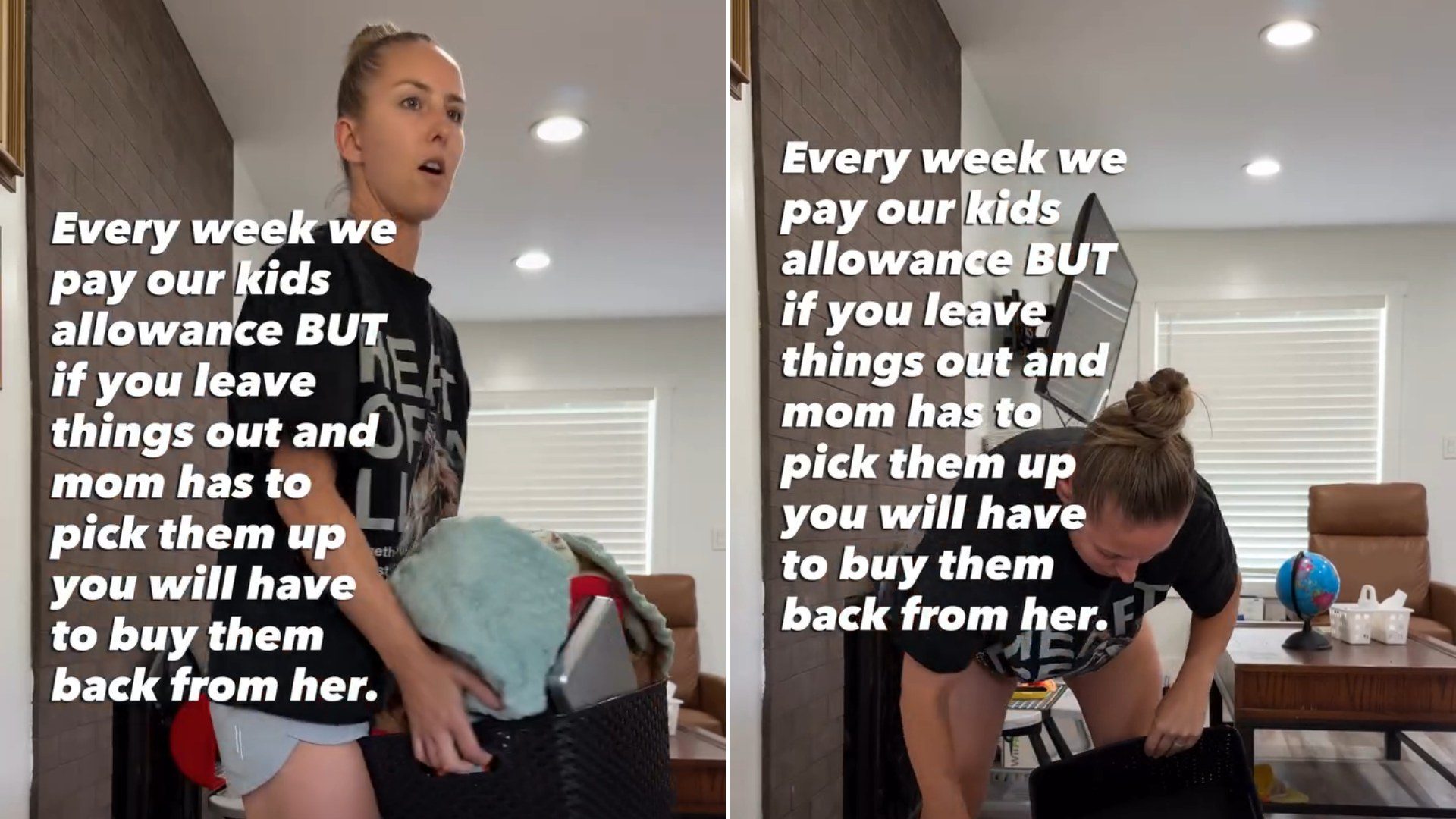
A mom’s demonstration of the 25-cent “buy back” system she uses to stop her kids from leaving toys, shoes, and backpacks scattered through the house has pulled in nearly 9 million views on Instagram, a reach more than 5,600 times what her account typically draws, according to her own Instagram reel. The creator has just 26,000 followers, which is part of what makes the scale of the response unusual. Accounts that size rarely see numbers in the millions. The premise is blunt: anything left out around the house gets collected, and the kids have to pay a quarter to get it back.
What the buy-back system actually charges for
The rule only applies to items left somewhere they don’t belong: a jacket dropped on the floor, shoes stranded in the hallway, a toy abandoned mid-play. Once something is left out, it becomes fair game to be picked up and held. Getting it back costs 25 cents, paid by the child who left it there. It isn’t an allowance deduction tallied up at the end of the week or a mark on a chore chart. The cost is immediate and tied directly to the object, which is a big part of why the video stopped so many parents mid-scroll.
Why a quarter works better than a lecture
Twenty-five cents is small enough that it won’t bankrupt a kid’s allowance, but it’s concrete in a way a verbal reminder never is. Kids grasp the exchange fast: leave it, lose it, pay to get it back. That immediacy is doing most of the work. A consequence that lands the next time a child wants their favorite toy closes the gap between the behavior and the result, rather than arriving three days later during a scheduled allowance conversation nobody remembers the context for. Gaps like that are usually where household rules quietly stop being enforced.
Part of a bigger shift toward pay-to-play tidying
The buy-back jar isn’t a brand-new invention, but it’s having a moment inside family-organization content right now, alongside similar systems like lost-sock fines and toy-rotation boxes that charge a small fee to swap items back in. What ties them together is the same idea: clutter gets treated as a transaction instead of a standoff. Parents post systems like this one specifically because the usual alternatives, nagging, threats to throw things away, confiscation with no path back, tend to escalate rather than actually resolve anything.
The part parents flag as the hard part
A system like this only holds up if it gets applied every time, by whichever parent happens to be home, not just on the days there’s energy for it. A buy-back jar enforced on Monday and forgotten by Thursday teaches the opposite lesson: that the rule is negotiable. It also depends on the parent actually removing the item rather than just threatening to, since the quarter only means anything once the object is genuinely gone from where the child expects to find it.
The versions other parents are trying
Comments under decluttering content like this tend to fill up fast with variations people have tried at home: a communal jar on the kitchen counter instead of individual charges, a rule where the money collected goes toward a family outing rather than back to the parents, or a tiered price where a first offense is free and repeat leave-outs cost more. None of those changes the core mechanic. They’re all still trading a small, immediate cost for the habit of putting things away, which is the part of the original video that made it travel this far past the creator’s normal audience.
Why it hit differently than most decluttering tips
Plenty of organizing content promises a system and delivers a vibe instead: a labeled bin, a color-coded schedule, a Pinterest board’s worth of aspiration. A price tag is different. It’s specific, it’s repeatable, and a kid can test it exactly once before they understand it applies to them personally. That’s likely a bigger driver of the view count than the novelty of the idea itself.
What’s spreading here is less a parenting hack than a small piece of household economics: put a real, immediate cost on the mess, and the mess gets smaller. Nearly 9 million views on a 26,000-follower account suggests a lot of parents recognized the problem in their own hallway before they ever saw what the fix was going to cost.