

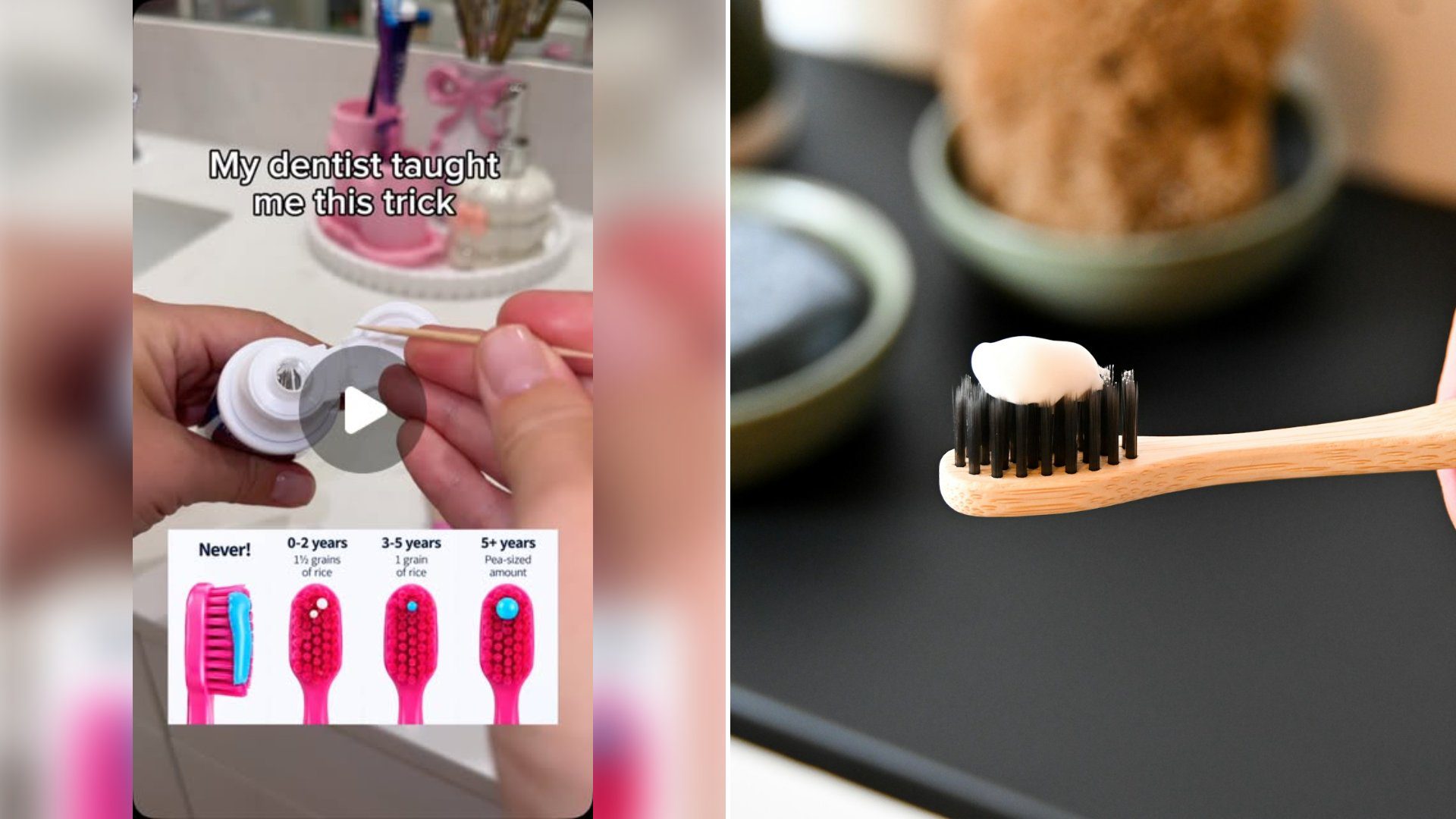
A quick Instagram clip from creator @tsagana_24 is making parents second-guess how much toothpaste they’ve been squeezing onto their kids’ toothbrushes for years. In the video, she walks through the correct amount of toothpaste for children at different ages, a detail she says she picked up from her own personal toothbrushing routine with her kids and that most parents never get told outright at a regular checkup.

It’s the kind of small, practical guidance that gets lost between a six month checkup and the next, which is exactly why it’s resonating so widely.
The amounts she lays out line up closely with what dental organizations have been recommending for years, even though the message rarely makes it home from the pediatric dentist’s office in a memorable way. The American Dental Association and the American Academy of Pediatric Dentistry both recommend starting fluoride toothpaste use the moment a baby’s first tooth comes in, as soon as there’s anything in the mouth to brush. For children younger than three, the guidance is a smear of toothpaste roughly the size of a single grain of rice, which is a far smaller amount than most parents picture when they think of “brushing a kid’s teeth.” That tiny smear is intentional. Toddlers swallow a large percentage of whatever goes in their mouth during brushing because they haven’t fully mastered spitting, and ingesting too much fluoride at that age over time has been linked to a cosmetic condition called fluorosis, which shows up as faint white streaking on the adult teeth later on.
Once a child turns three, the recommended amount increases to a pea-sized dollop, which stays the standard recommendation from age three up through about age six, the point by which most kids have developed a reliable enough spit reflex that swallowing toothpaste becomes far less of a daily event. After that, most dental guidance allows for a normal adult-sized ribbon of toothpaste across the brush, the amount most adults already use without thinking about it. The jump from rice-grain to pea-sized to a full ribbon isn’t arbitrary. It tracks almost exactly with a child’s growing ability to control what happens in their mouth, rinse properly, and understand the instruction to spit rather than swallow.
This matters beyond fluorosis, too. Dentists have pointed out for years that parents either overload the brush out of habit, assuming more toothpaste means a more thorough clean, or under-supervise brushing time once a child is old enough to hold the toothbrush themselves. Neither extreme is ideal. A toddler brushing alone with a loaded brush is swallowing more fluoride than necessary, while an older child brushing unsupervised with too little toothpaste and too little time isn’t getting the cavity protection the fluoride is there to provide in the first place. Pediatric dental guidance generally recommends that an adult supervise or help with brushing until a child is around six or seven, old enough to manage both the amount of toothpaste and the brushing technique without guidance.
None of this requires a special product or a dentist visit to implement. It’s a free adjustment that most parents can make the next time they’re standing at the bathroom sink, and it addresses a gap that tends to open up simply because nobody explains the rice-grain-to-pea-sized progression out loud unless a parent happens to ask. The viral spread of this particular video suggests a lot of parents never did ask, and have been eyeballing toothpaste amounts based on habit rather than any actual age-based guideline.
It’s a small correction with an easy fix: check the age, check the amount, and adjust the dollop on the brush accordingly. For a task that happens twice a day in nearly every household with young kids, getting the amount right is one of those tiny wins that adds up without costing anything or taking any extra time.
More from Decluttering Mom
- Pediatrician Says These Are the Mistakes Parents Make When a Child Has a Virus and Explains What She Would Do Instead While Speaking From Her Car
- Parent Lists the Signs of Childhood Anxiety That Moms Often Miss and Explains When It Is Time To Bring Concerns To Your Child’s Pediatrician
- Healthcare Worker Says Parents Should Stop Feeding Kids Hot Cheetos and Takis and Explains the Health Consequences He Sees Behind the Snack Craze