


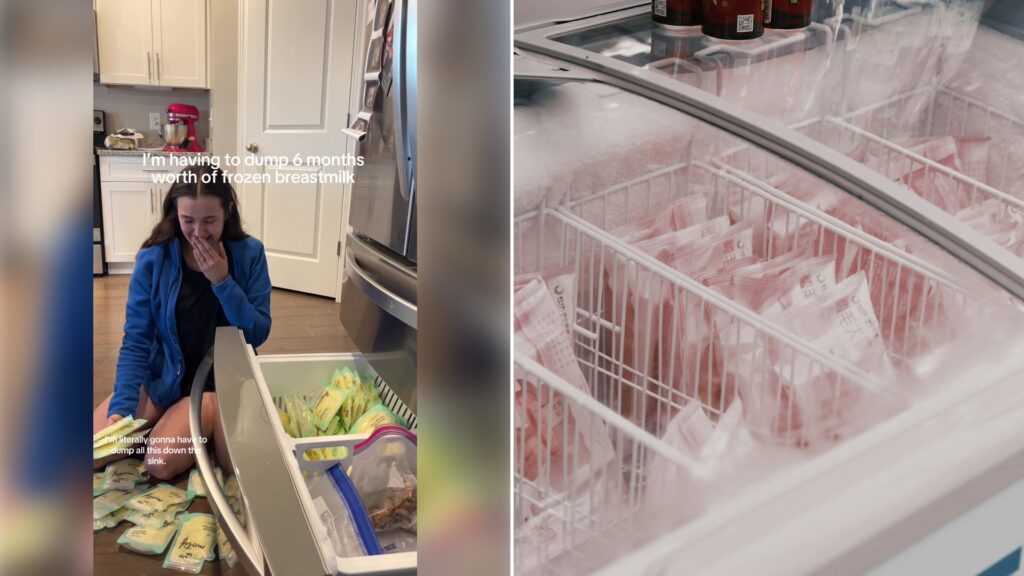
A video from the account Sage shows her kneeling in front of an open chest freezer drawer packed with bags of frozen breastmilk, on-screen text reading “I’m having to dump 6 months worth of frozen breastmilk,” followed by “I’m literally gonna have to dump all this down the sink.” Her caption lays out exactly what went wrong: “Please please PLEASE check your milk for being high lipase and more importantly DONT mix temperatures!!! I heard it was fine, so I figured for MY baby I felt fine giving her milk that I mixed temperatures. I wish I would have had a future mindset and stored all my milk AS IF it were all being donated from the get go. I’m kicking myself that I took the lazy route.” Tagged #pitchermethod, #highlipasemilk, #breastmilkstorage, and #firsttimemomtips, the video pulled in 129,600 likes, 2,021 comments, 3,318 saves, and 957 shares.
@sageantha Please please PLEASE check your milk for being high lipase and more importantly DONT mix temperatures!!! #pitchermethod #highlipasemilk #breastmilkstorage #milkdonation #firsttimemomtips
The two issues named in this video are actually separate problems that compounded each other. High lipase milk comes from a naturally occurring enzyme that breaks down the fat in breast milk, and that breakdown speeds up the longer milk sits in storage. Lipase levels tend to rise over time, often peaking months into a feeding journey, and when a particular mom’s milk runs high in it, frozen or stored milk can develop a soapy or metallic smell and taste. That change doesn’t make the milk unsafe, but it’s common enough for babies to simply refuse milk once it smells different, which is exactly the outcome that can turn a freezer full of stored milk into something no longer usable for that baby.
Mixing temperatures, combining freshly pumped warm milk directly with milk that’s already been chilled or frozen, is treated differently depending on which guidance a parent finds first, which is part of why this trips up so many first-time moms. Current guidance from the CDC and the Academy of Breastfeeding Medicine has actually moved toward saying this practice is lower-risk than older advice suggested, the main caution being that adding warm milk can gently rewarm the already-stored portion rather than that it creates an outright safety hazard. The bigger practical issue in a situation like this one is usually the lipase problem compounding on top of it, not the temperature mixing itself causing spoilage.
For a parent dealing with high lipase milk specifically, the standard workaround is scalding fresh milk before it goes into long-term storage, heating it to just below boiling, generally cited around 180°F, cooling it, and then freezing it. Scalding deactivates the lipase enzyme before it has a chance to break down the fat over months of freezer storage, which prevents the smell change from developing in the first place rather than discovering it only once a six-month supply has already gone bad. It’s an extra step at each pumping session, but it’s considerably less painful than the alternative this video documents.
More from Decluttering Mom
- Mom of Two Opens Her Three Car Garage on a Doom Pile of Boxes, Finds Diapers From a Subscription Still Running and a Sauna Boxed for a Year, Then Clears Enough to Park Inside
- Woman Says She Came Home From a Cleaning Service Visit to a Gas Burner Left On With No Flame, Then Found Her Purse, Tax Documents and Real Silverware in Two Garbage Bags Downstairs
- Homeowner Whose Husband Said He Could Not See the Garage Floor Hauls Out Four Years of Stuff, Patches and Paints One Wall White, Then Hangs Bikes, Helmets and a Vacuum on Rails