

Most kid artwork ends up stuck to a fridge with a magnet for a week before it quietly disappears into a recycling bin. One mom decided her toddler’s drawings deserved better, so she started framing them on the living room wall like real gallery pieces — crayon scribbles, marker swirls and all, matted and hung with the same care most people reserve for actual art. She says the moment her kid looked up and saw their own drawing framed on the wall for the first time made every bit of the effort worth it.

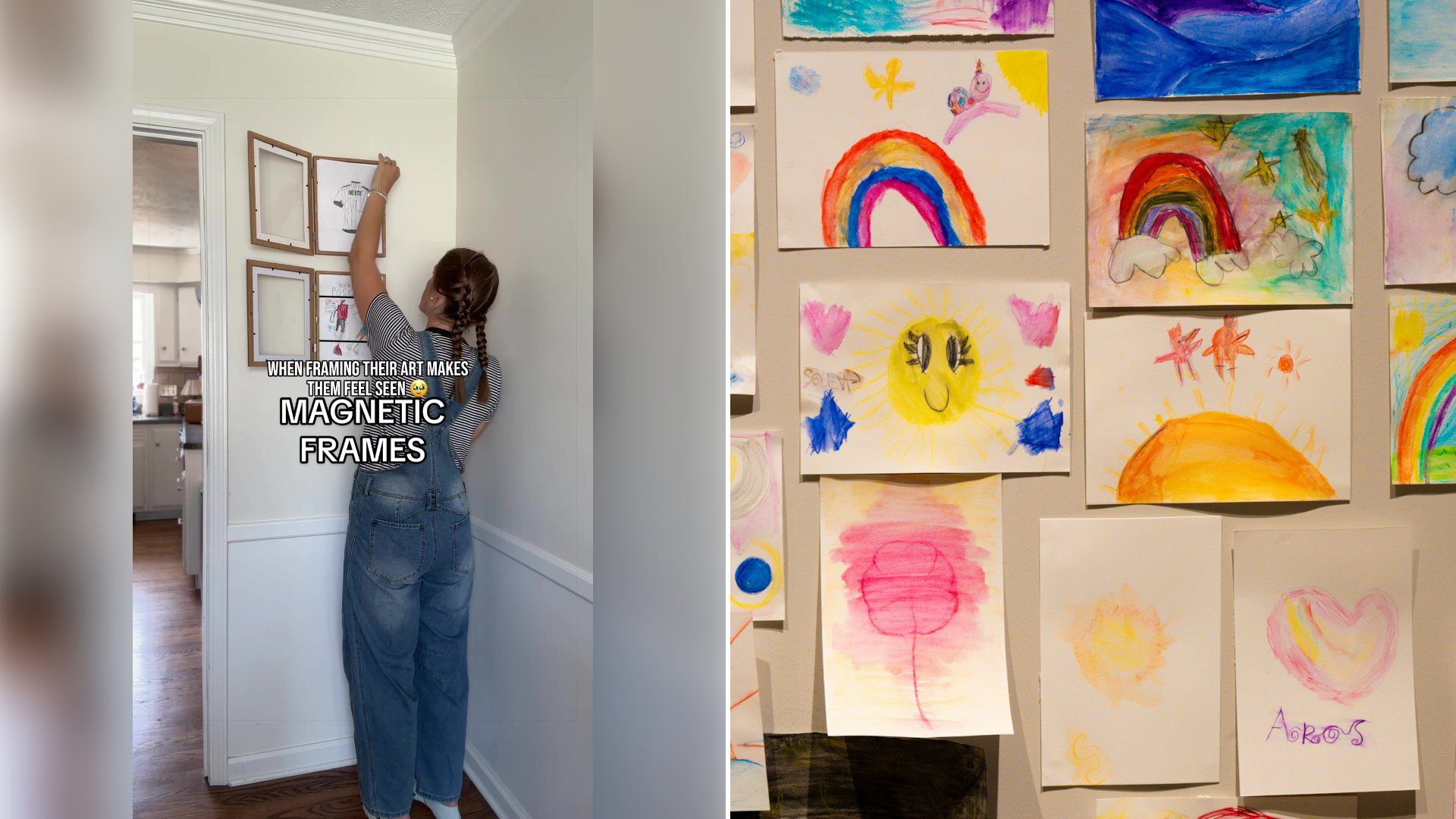
The creator, @ashleehardin, built the whole setup around magnetic frames specifically so new art can swap in without having to re-hang or re-hammer anything. A fresh scribble comes home from daycare or the kitchen table, the old one slides out, the new one slides in, and the wall stays current without ever needing a new nail.
@ashleehardin
There’s real developmental weight behind what looks like a simple decor choice. Child development researchers consistently point to displayed artwork as a visible, concrete signal to a young child that their effort and creativity matter to the people they love most. For a toddler who doesn’t yet have the language to process abstract praise, seeing an actual drawing hung at eye level in a shared family space is a far more tangible form of validation than a verbal “good job” — it’s proof, every time they walk past it, that someone thought what they made was worth keeping and showing.
That kind of consistent, visible affirmation is linked to a child’s sense of competence and self-worth during a developmental stage when kids are actively forming their first ideas about whether they’re capable, creative or valued. Early childhood specialists often note that praise tied to effort and process, rather than only to a finished product’s quality, builds more durable confidence than praise reserved for only the “best” drawings — which is part of why displaying everything, scribbles included, rather than curating only the most polished pieces, tends to land better with very young kids.
Practically, the system this mom uses solves a problem almost every parent of a young artist eventually runs into: the sheer volume of paper a kid produces versus how much wall space and storage any household actually has. Magnetic or clip-style frames let the display rotate constantly instead of becoming a static gallery that never changes, which keeps the wall feeling current rather than stale. For parents who want to keep older pieces without permanently committing wall space to them, photographing each drawing before it’s swapped out, or keeping a small bin of favorites, preserves the sentimental value without the paper pileup.
What makes the video stick isn’t really the frames, which are a cheap and simple hack on their own. It’s the reaction she captured — the specific moment a small kid realizes their work is hanging in the same kind of frame as anything else in the house, treated with the same seriousness as any other art on the wall. That’s a two dollar frame doing the emotional work of a much bigger gesture.
More from Decluttering Mom
- Creator Shows How To Make a Bed Look Like a Hotel Showroom With a Few Specific Folding Techniques and Explains Where She Picked Them Up and Why It Matters
- Mom Behind the Tiffany Plate Shows the Lunch Her Daughter Made Her, From a Dragon Fruit She Says Got Glitter to a Skull Drawn in Mustard on Top of the Cottage Cheese
- Mom Films the Butterfly Garden Her Daughter Grew From Seed as Orange Butterflies Finally Land on the Pink Zinnias and the Little Gardener Reaches Up Toward the Sky