


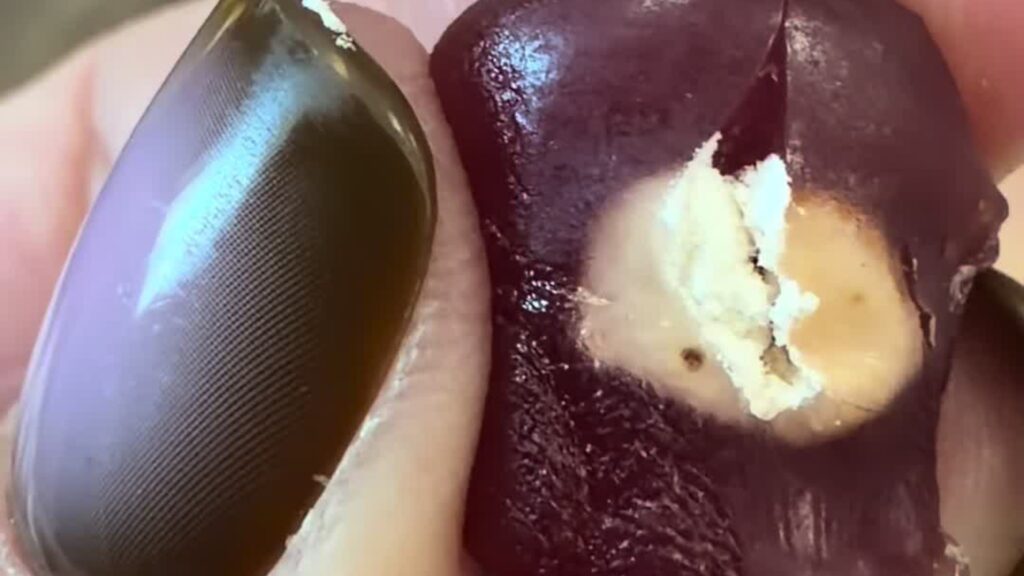
A close-up clip from the account @3feralgremlins has pulled in more than 112,000 views this week after the mom running it paused her daughter’s snack time to zoom in on a Mott’s fruit snack, showing what she describes as something inside the gummy that had no business being there. The video, posted to her TikTok account, is built around a single close-up shot of the torn-open gummy, and it has traveled far past her account’s normal reach this week. Food-and-kids content tends to do that, because almost everyone who has ever packed a lunch or handed over a snack cup has checked a label twice.
@3feralgremlins I was giving my daughter her Mott’s gummies when I noticed THIS inside one of them. 😳🤢 I genuinely have no idea what it is, but needless to say, she did NOT eat it. Now I’m over here inspecting every single gummy like a forensic investigator. 🔎😂 Has anyone else ever found something like this in fruit snacks?! #Motts #MottsGummies #FruitSnacks #MomTok #ParentTok
What the Video Actually Shows
The clip centers on the moment the mom notices the object mid-bite and stops to record it before her daughter can eat any more of the piece. She does not make a diagnosis on camera about what the material is, and neither the video nor any public statement from Mott’s parent company confirms what it was through lab testing. That gap between “something visibly inside a piece of candy that shouldn’t be there” and “confirmed contaminant” is normal in the first hours after a discovery like this goes online, and it is worth being upfront about rather than filling in with a guess.
How Often This Actually Happens
Foreign objects turning up in packaged food are more common than most shoppers realize, even at large manufacturers with modern detection lines. In 2022, foreign materials triggered nine USDA-regulated recalls covering more than 477,000 pounds of food, three times the number of recalls caused by E. coli that year, according to CBS News’s reporting on the issue. A single 2019 recall of nearly 12 million pounds of Tyson chicken strips, contaminated with metal pieces, accounted for most of that year’s 16 million pounds of foreign-material recalls. Typical culprits include plastic shed from worn conveyor belts, wood fragments from produce pallets, and metal shavings from processing machinery, plus natural materials like rocks and insect fragments that travel from field to factory. Even with magnets, metal detectors and X-ray scanning now standard on most lines, CBS News reported that food-safety researchers acknowledge the systems still miss things, which is part of why federal regulators treat a small number of foreign-object complaints as statistically unavoidable rather than proof of a systemic breakdown.
What Happens After a Parent Reports It
Mott’s fruit snacks are made by Mott’s LLC, a subsidiary of Keurig Dr Pepper, and like most large food companies, the brand has a customer-relations line that fields exactly this type of complaint. The standard process asks the person who found the object to hold onto the remaining product, the packaging, and any lot or batch code printed on it, since that code is what lets a manufacturer trace the issue back to a specific production run and shift. Consumers can also file a report directly with the government through the FDA’s own Safety Reporting Portal, which exists specifically to log complaints like foreign objects, illness, or allergic reactions tied to a food product. That report becomes part of the federal record regulators use to decide whether an isolated complaint is a one-off manufacturing miss or the first sign of a wider batch problem.
What This Means for Grandparents Stocking Snacks, Too
Fruit snacks are a staple in the kind of snack drawer grandparents keep filled for visits, precisely because they feel like a safe, shelf-stable, kid-approved option that does not require refrigeration or much thought. That is exactly why a video like this one travels so widely outside the usual parenting audience: it reads as generically useful information rather than a niche caregiving tip. The practical takeaway holds regardless of who is doing the snack-cabinet stocking. Check anything unusual in a packaged snack before assuming it is harmless, keep the packaging and lot code if something looks off, and report it through the company or the FDA’s portal rather than only posting about it.
A viral clip like this one does not settle what was inside that gummy, and it should not be treated as if it does. What it does is turn a packaging code most people ignore into something a parent, or a grandparent restocking a visit-ready pantry, might actually glance at twice.