


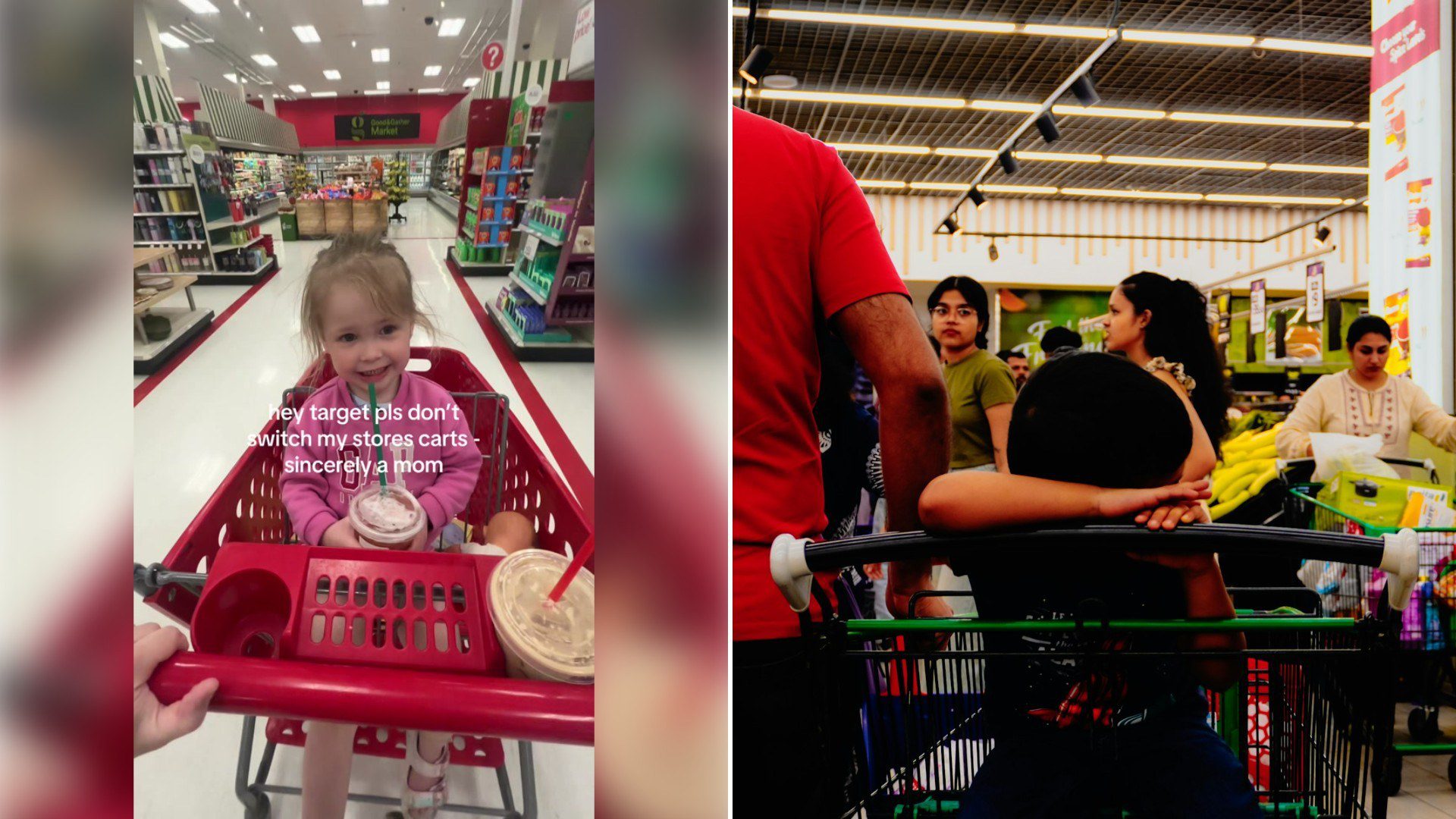
Shopping cart design might seem like an unlikely subject for a viral parenting video, but a mom posting under the handle emilyawheeler proved otherwise with a clip that captured her pushing her toddler through a store while jokingly venting about a redesigned cup holder that had completely stopped making sense to her.
In the video, she walks through the frustration in real time, holding her toddler’s drink herself because the cart’s newly redesigned holder simply doesn’t accommodate it the way the old version did — a small but genuinely disruptive change for any parent who relies on that exact feature during a routine shopping trip. Her caption leans into the humor with real affection for the retailer even amid the complaint, joking that she loves the store but that the new design makes no sense, tagging the brand directly alongside hashtags like #momsoftiktok, #motherhood, and #targetcarts.
@emilyawheeler I love you but like the new design makes no sense 🤣🥲 @target #momsoftiktok #motherhood #targetcarts #momlife #target
The video resonated well beyond her typical audience, pulling in approximately 3.1 million views from an account with about 9,100 followers — a massive jump in reach that suggests plenty of other parents have quietly run into the exact same cup holder frustration during their own shopping trips.
Shopping with a toddler in tow is already a logistical puzzle under the best of circumstances, and small design details that seem trivial to anyone without kids — a cup holder placement, a seatbelt buckle, a basket’s depth — can make an enormous practical difference to a parent managing a squirming child while also trying to get through a grocery list. When a redesign removes or alters one of those small conveniences, the ripple effect on an actual shopping trip can be surprisingly significant, even if the change looks minor on paper.
What makes this kind of content so relatable is the specific, mundane nature of the complaint. It’s not a dramatic parenting crisis — it’s a small, everyday annoyance that almost every parent who shops with young kids has experienced in some form, whether it’s a cart redesign, a stroller that doesn’t fold the way the old model did, or a product change that seemed harmless to the company that made it but genuinely complicates a parent’s routine.
For parents navigating similar frustrations, there’s a small but real value in simply voicing them, the way emilyawheeler did. Public feedback — delivered with humor rather than hostility — has a real track record of reaching retailers and occasionally prompting adjustments, especially when enough parents chime in with the same specific complaint. Even when it doesn’t change anything, though, there’s value in the simple act of naming a frustration out loud and finding out, often within minutes, that thousands of other parents have been quietly annoyed by the exact same thing.
In the end, the video works because it captures something small but true about parenting in public spaces: the tools designed to make shopping with kids easier don’t always get it right on the first try, and there’s a strange comfort in watching another parent call that out with humor instead of simply gritting her teeth and pushing the cart along anyway.
Retail design decisions that seem minor from a corporate perspective can carry outsized consequences for the customers who actually use a product daily, and parents represent one of the most vocal, engaged groups when it comes to flagging exactly those kinds of disconnects. A shopping cart isn’t just a retail fixture to a parent pushing a toddler through weekly errands — it’s a piece of functional equipment that either makes the trip manageable or adds an unnecessary layer of difficulty to an already demanding task.
Social media has meaningfully changed how quickly this kind of feedback reaches decision-makers. What once might have been a passing complaint mentioned to a store employee now becomes a piece of public, searchable feedback viewed by millions, occasionally catching the attention of a brand’s own social team and prompting a public response or eventual design tweak.
For parents dealing with their own version of an inconvenient product redesign, documenting the specific, practical impact — rather than a vague complaint — tends to be far more effective at prompting change, both because it’s more persuasive to a company and because it resonates more clearly with other parents experiencing the exact same friction point.
It’s also worth noting how these small product-design complaints tend to snowball once enough parents recognize a shared frustration, occasionally prompting genuine design reviews at a company level even when no single post is responsible on its own. Retailers increasingly monitor this kind of organic feedback specifically because it surfaces real usability issues that internal testing, conducted without the chaos of an actual toddler in tow, might never catch on its own.
There’s also a reminder here about the value of humor as a form of feedback. A complaint delivered with a laugh and genuine affection for the brand, the way emilyawheeler’s was, tends to land far better with both a company and a broader audience than an angry, accusatory version of the same critique ever could, while still making the underlying point just as clearly.
Whatever the outcome, the video is a small but telling snapshot of how closely parents scrutinize the everyday tools built for their routines, and how quickly a shared frustration can turn into a moment of collective, laughing recognition online.