


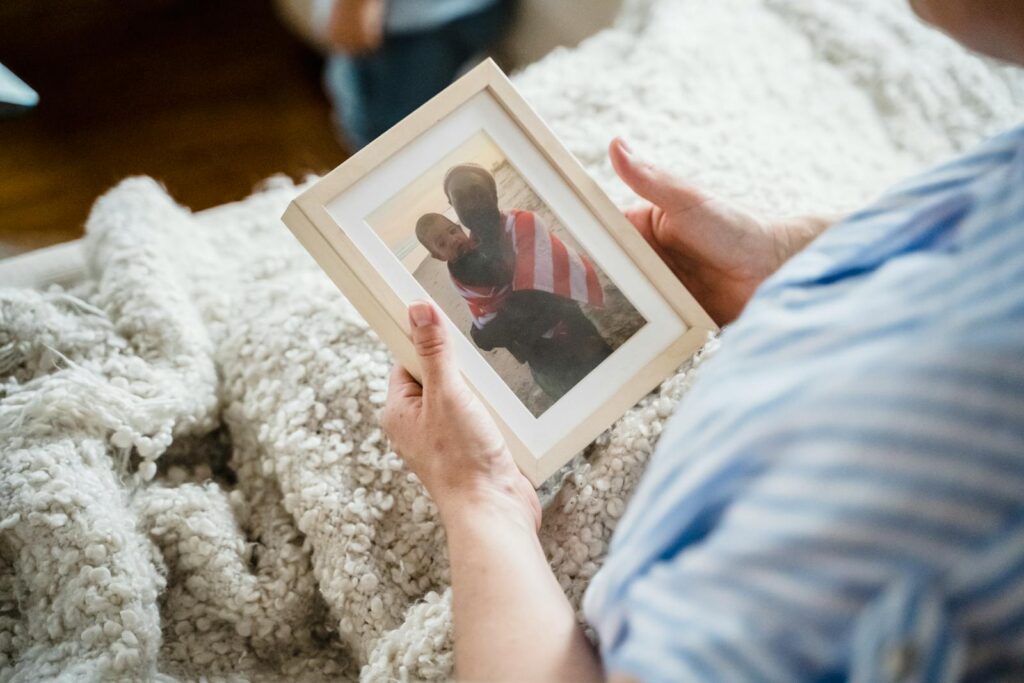
A mother who has just buried her teenage son is not supposed to be thinking about logistics, invoices, or online forms. Yet again and again, parents in that position find themselves opening crowdfunding pages, writing through tears, and asking strangers for help. The story of a mom launching a fundraiser after losing her teen is heartbreaking, but it is also part of a much bigger pattern of grief, survival, and community response.
Across different towns and even different countries, parents are turning to public fundraisers to cover funeral costs, buy time off work, or chase one last, unlikely hope. Their choices, from traditional memorials to experimental science, reveal how far love will stretch when there is nothing left to fix and everything left to remember.
When Grief Meets a Payment Screen


In the first days after a teen dies, families are hit with a collision of shock and paperwork. Funeral homes want decisions, employers want timelines, and bills do not pause just because a life has. That is the moment when many parents, still reeling, decide to set up a fundraiser or accept one on their behalf. For a mom who has just lost her child, the choice is rarely about comfort, it is about survival, whether that means paying for a burial, keeping the lights on, or simply buying a few weeks to breathe.
Some parents, like an Australian actress whose son died by suicide after relentless bullying, go even further and try to fund something as extreme as cryogenic preservation, turning to online donors to support a plan that would have been unthinkable before tragedy hit. In her case, the campaign to cryogenically preserve his body came directly out of that raw, early grief. The emotional logic is simple even if the science is not: when you cannot save your child, you look for any path, however slim, that feels like it might keep a part of them safe.
A Mother’s Unusual Hope: Cryogenic Preservation
The Australian actress at the center of that story did not just want a dignified funeral, she wanted a future in which her son might, somehow, live again. Her teenager had died by suicide after being tormented once he started high school, and she has said that from that first day he was subjected to bullying that never really let up. In the aftermath, she launched a fundraiser to pay for his body to be stored in liquid nitrogen, a process she framed as a way to hold on to him until medicine, or maybe technology, could catch up.
Her campaign, which described her as an Australian actress and referenced the question of “Should You Leave Assets” for a child who might one day return, quickly drew attention. She spoke about her son’s suffering and her belief that cryonics could offer a second chance, even if that chance was remote. The details, from the specialized storage to the legal and financial planning, underscored how far a grieving parent will go when the usual rituals of goodbye do not feel like enough.
Bullying, Mental Health, and a System That Missed the Signs
Behind that fundraiser sits a familiar and devastating storyline: a teenager pushed to the edge by bullying that adults either did not see or did not stop. The actress has said that once her son entered high school he was targeted, and that the harassment followed him through what should have been ordinary school days. It is the kind of slow, grinding cruelty that rarely makes headlines until it is too late, but in her telling, it was central to his decision to end his life.
In interviews, she described how he was bullied from the moment he started high school in Sydney, and how that pattern continued even as she tried to intervene. Another account of the same case notes that she told a local outlet that he was subjected to bullying from day one and that, Even after his death, she was still trying to piece together how the school environment had become so hostile. Her grief is wrapped up not only in loss but in a sense that the systems meant to protect him failed in ways that cannot be undone.
Turning to Strangers for One Last Chance
For many people, the idea of paying to freeze a loved one’s body sounds like science fiction. For this mother, it became the only thing that made sense. She framed the fundraiser as a way to “Cryogenically Preserve” her “Son” and his “Body After Death,” language that echoed through coverage of the campaign and highlighted just how specific and unusual her request was. The pitch was not for flowers or a memorial bench, it was for a procedure that sits at the edge of mainstream medicine and belief.
Coverage of the campaign described how she, an actress, publicly asked for money to Cryogenically Preserve his remains, leaning on the idea that future technology might one day revive him. A separate write up of the same story repeated that an “Actress Asks for Money To” freeze her child’s body, again using the phrase “Cryogenically Preserve” and stressing that this was a mother so distraught over the death of her “Son” and his “Body After Death” that she was willing to stake everything on a speculative promise. The fundraiser became a kind of public diary of grief, written in the language of invoices and scientific jargon.
More Traditional Fundraisers, Same Raw Grief
Not every parent in this position is chasing experimental science. Many are simply trying to keep their heads above water while they figure out how to live in a house that suddenly feels too quiet. In one case, a woman named Dawn lost her son and found herself unable to work while she tried to process what had happened. A friend, Trish Harris, stepped in and created a fundraiser so Dawn would not have to choose between her paycheck and her grief.
On that campaign page, Trish introduced herself plainly, writing, “Hi, my name is Trish Harris, and I am raising money” for her friend. She explained that Dawn needed support “while she is off work to grieve the loss of her son,” and asked others to donate or at least help spread the word. The language was simple, but the stakes were not: without that safety net, Dawn would have been mourning a child while worrying about rent.
Communities That Refuse To Let Families Grieve Alone
In some towns, the response to a teen’s death spills out of the internet and into storefronts and sidewalks. In Midland, a city that found itself mourning a teenager named Marshall who died by suicide, a local bakery where his brother worked decided to help in the way it knew best. Staff there organized a cupcake sale, using Marshall’s favorite flavor as the centerpiece of a fundraiser that turned frosting into a lifeline.
Coverage of that effort noted that Many people in Midland were heartbroken, and that the bakery, highlighted by WNEM, chose to honor him with a fundraiser built around his favorite cupcake. It was a small, local gesture that still managed to pull in real money for the family, and just as importantly, it gave neighbors a way to show up, to stand in line, and to say with their presence that Marshall’s life mattered.
Honoring Teens Lost to Illness and Accidents
Not every teen fundraiser is tied to suicide or bullying. Some are about kids who fought long, brutal illnesses and left families with both emotional and financial scars. In Mineola, a community rallied around the family of a boy named Benigno Jose Garcia, who died after a battle with brain cancer. His mother, Juana Barrientos, wrote a note on a fundraising page describing him as “a normal boy” who loved his family and whose absence had left a hole that could not be filled.
The campaign for Benigno Jose Garcia was set up to help cover funeral and related expenses, and it quickly became a focal point for neighbors who wanted to support Juana Barrientos and her family. Reporting on the effort emphasized how the Mineola community stepped up, using the online fundraiser as a hub for donations and messages. The page, linked through Mineola community coverage, turned private grief into a shared responsibility, at least when it came to the bills.
When Friends, Colleagues, and Even Strangers Step In
Sometimes the person launching the fundraiser is not a parent at all but a friend, a colleague, or even a local news viewer who cannot shake a story. In one widely shared case, a single mother in Georgia who had only weeks to live decided to plan her own funeral and raise money for her child’s future. Her son, Kayden, became the face of that campaign, his photo circulating across social media as people tried to make sure he would be cared for after she was gone.
As the story spread, People began to share Kayden’s photo and story far beyond their small community in Georgia, turning a local fundraiser into a national conversation about what happens to kids when their parents are gone. In another tragedy, friends and colleagues of a woman named Corinne organized a fundraiser after a storm in Livonia left her family shattered. A post about that effort explained that Friends and coworkers had come together to help cover medical expenses, funeral costs, and other needs for Corinne’s grieving family. In both cases, the fundraiser was less about charity and more about solidarity, a way for people to say, “You are not alone in this.”
Keeping a Teen’s Spirit Alive Through Story
For parents, the money is only part of the equation. The other part is making sure their child is remembered as more than a cause of death. In Wisconsin, the Slinger family started a fundraiser to honor their son Joe, a teenager who loved snowboarding, working outside in landscaping, and hanging out with his family. In a short video about the campaign, a loved one described how “Joe was my biggest fan” and “He was always my bigge…” before emotion cut the sentence short.
The clip, shared as a short, captured how the fundraiser was as much about telling Joe’s story as it was about raising cash. The family talked about his love of snowboarding and landscaping, painting a picture of a kid who was active, outdoorsy, and deeply connected to his relatives. By putting those details front and center, they made sure that anyone who clicked “donate” would see Joe as a whole person, not just a name on a campaign page.
The Emotional Cost of Asking for Help
There is a quiet, often overlooked cost to all of this. For a mom who has just lost her teen, hitting “publish” on a fundraiser can feel like crossing a line she never wanted to approach. It means turning the most painful thing that has ever happened to her into a public narrative, complete with a goal amount, a progress bar, and a share button. Whether she is trying to fund a cryogenic procedure, like the actress who sought to freeze her son, or simply asking for time off work, like Dawn relying on Trish Harris, the emotional math is brutal.
At the same time, these fundraisers reveal something stubbornly hopeful about the way communities respond to loss. Whether it is a bakery in Midland selling cupcakes for Marshall, neighbors in Mineola rallying around Juana Barrientos, or coworkers organizing support for Corinne, the pattern is the same. A family breaks, and then, piece by piece, other people show up to help carry what they can, even if it is only the next bill or the next week off work.
More from Decluttering Mom: