


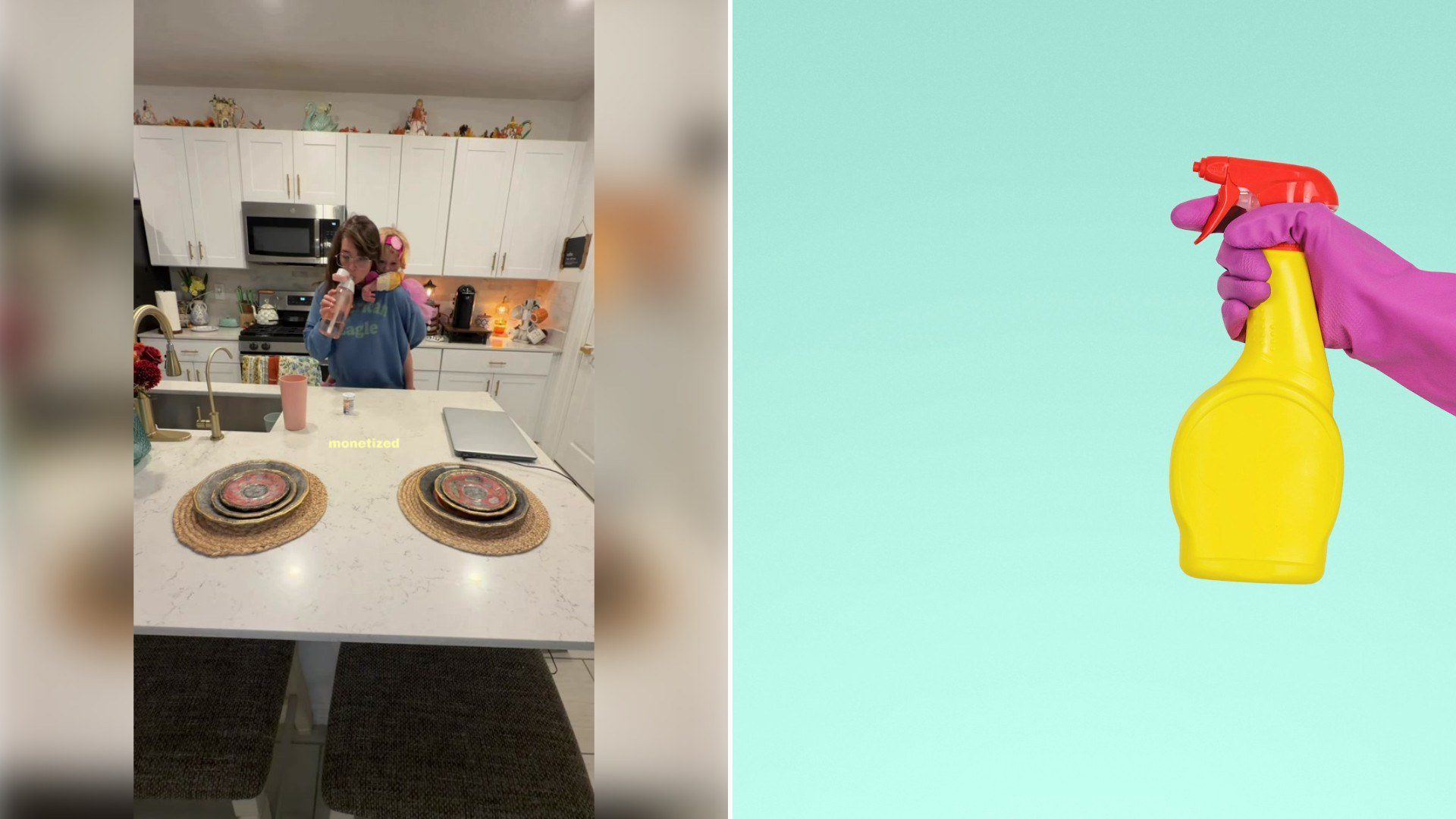
A creator posting under the handle maelexilamb, a mother of four, filmed a real Saturday cleaning reset of her kitchen and living spaces while narrating, in voiceover, the current challenges and thoughts on her mind that week, treating the cleaning less as the point and more as the backdrop for talking through her life.
@maelexilamb THE LAST CLIP… makes me soo happy 🥹🌈 clean with me as a mom of 4 + saturday reset 🦋☁️🧼
She notes that the very last clip of the video ends up making her especially happy, hinting at a small, specific personal payoff tucked into the end of an otherwise ordinary cleaning routine — a detail that rewards actually watching through rather than skimming for the productivity tips.
Pairing a mundane, repetitive task like a weekend reset with an honest voiceover about what’s actually going on in a parent’s head has become its own familiar genre, precisely because it gives space for reflection that a purely narrated to-do list wouldn’t otherwise have room for.
For parents with their own recurring Saturday reset, the format is a reminder that a routine chore doesn’t have to be purely functional — it can double as unstructured thinking time, and occasionally, as this one shows, end on a note that has nothing to do with cleaning at all.
There’s a specific appeal to a “clean with me” format that layers real, honest talk over the footage rather than leaving it silent or set purely to music. Watching someone tidy a kitchen is, on its own, a fairly mundane thing to sit through. What makes it worth stopping to watch is the sense of company — the feeling that the viewer isn’t just observing chores get done, but sitting in on a genuine, unguarded conversation happening alongside them. It turns a solitary task into something closer to companionship, for the person filming and the people watching alike.
A Saturday reset specifically carries its own particular emotional weight for parents of several kids, distinct from cleaning done at any other point in the week. It’s less about maintaining order day to day and more about resetting the whole household back to some baseline before another full week starts — dishes cleared, floors cleared, surfaces wiped, toys returned to wherever they’re supposed to live, all in service of buying a few hours or days of relative calm before the mess inevitably builds back up again. That cyclical, Sisyphean quality is part of why so many parents find this particular ritual both satisfying and a little exhausting at once.
The choice to withhold detail about the final clip, teasing only that it makes her especially happy, does real work here too. It reframes the entire video from a straightforward cleaning routine into something with a small emotional arc, building toward a payoff that has nothing to do with a spotless counter. Viewers who might otherwise skim past a cleaning video are given a reason to actually watch it through, curious what, at the end of an ordinary chore, could land as a genuine highlight of her week.
This kind of pairing, mundane physical task plus honest personal narration, tends to work precisely because most of a parent’s real thinking happens during exactly these kinds of repetitive tasks rather than during quiet, dedicated reflection time that rarely exists in a full household. Wiping counters, loading a dishwasher, straightening a living room — these are the moments where a mind actually has room to wander, process the week, and arrive at whatever thought eventually gets voiced over the footage. The cleaning isn’t incidental to the reflection; it’s often the exact condition that makes the reflection possible in the first place.
For a mother of four specifically, a Saturday reset represents a genuinely large volume of physical labor, multiplied across four kids’ worth of mess, four kids’ worth of dishes, four kids’ worth of scattered belongings needing to be returned to their places. Framing that labor as background to a personal update, rather than as the main event, subtly reframes the labor itself — not as a burden to complain about, but as simply the setting where the real content of her week gets processed and shared.
There’s also something worth noting about how this format resists the more aspirational, hyper-organized cleaning content that often circulates alongside it. Rather than showcasing a color-coded system or an expensive storage solution, the video centers on ordinary tidying paired with ordinary, unscripted talk — a much more attainable and honest version of what a weekend reset actually looks like in most households, mess, thoughts, and all.
By the time the video reaches its teased final clip, whatever specific moment it turns out to be, the format has already done its job: it’s taken an unremarkable Saturday chore and turned it into something worth sharing, not because the kitchen ends up spotless, but because a parent took an ordinary hour of labor and used it to say something true about her actual week.
There’s also a quiet lesson in here for anyone tempted to treat cleaning content purely as productivity inspiration. The value of this particular video clearly isn’t in the cleaning technique on display — nobody’s taking notes on how she wipes a counter. It’s in the willingness to be honest about a full, complicated week while still getting through an ordinary chore, which is a far more useful thing for a viewer to absorb than any specific tidying method could ever be.
Clips like this one tend to build a specific kind of loyal following over time, not because every single video offers something dramatic, but because the format itself promises consistency: a real task, a real voice, and occasionally, as the caption here suggests, a real emotional payoff worth sticking around for. That reliability, more than any individual moment, is often what keeps people coming back to watch someone else clean a kitchen they’ll never set foot in.