


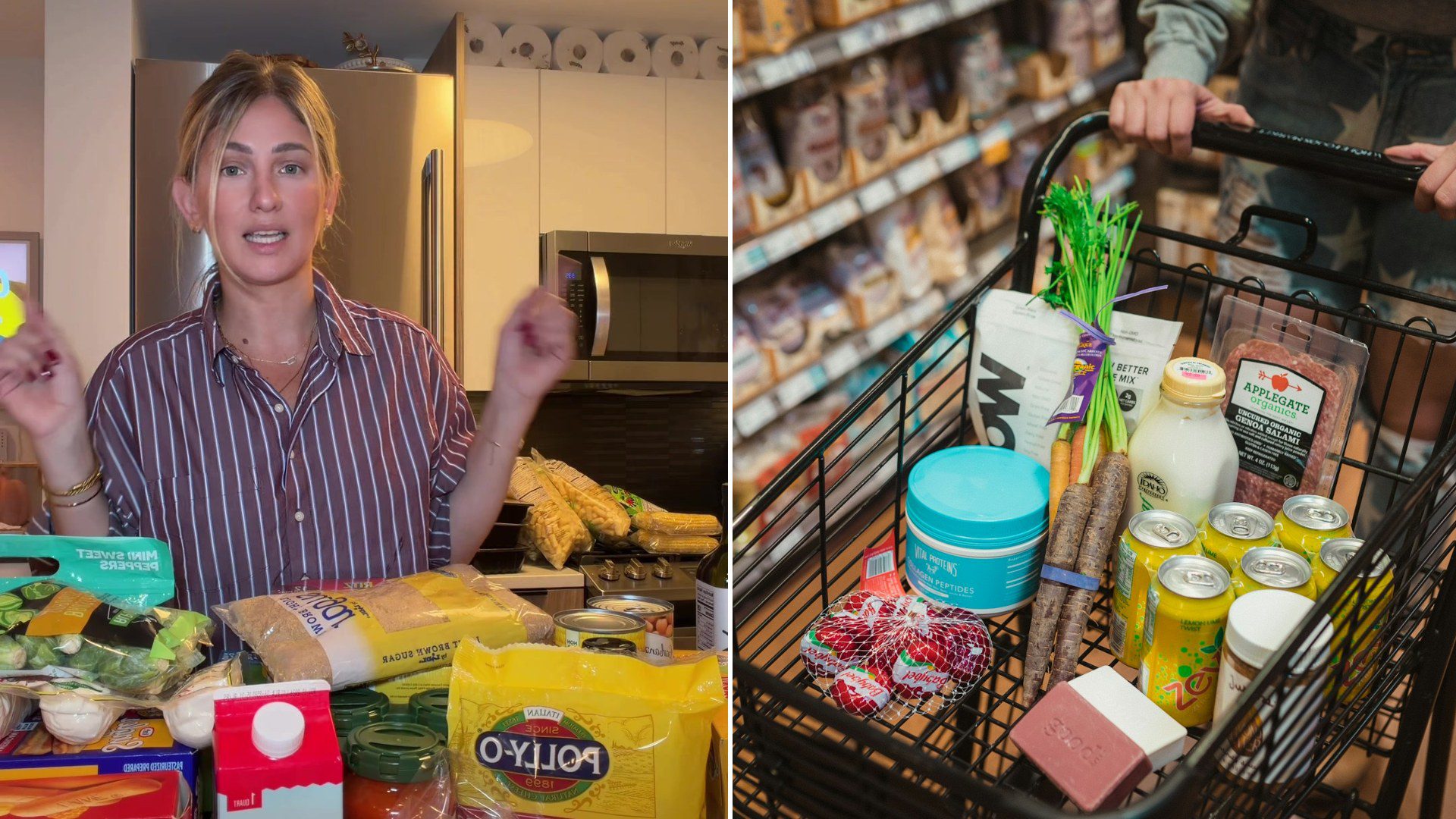
TikTok creator @nurka.lucevic, mom of four Nurka Lucevic, has drawn nearly 200,000 views with a video documenting a massive back-to-school grocery haul that she says costs $1,500 and stretches to feed her family of six for four to five weeks.
@nurka.lucevic This was so well needed ! Now for the pantry & fridge restock🤍 #backtoschoolshopping #groceryhaul #familyof6 #momlifebelike #nycmom @barilla @goldfishsmiles @earthsbestofficial @nutellausa @LesserEvil Snacks @Mott’s @Danimals @Chobani @Uncrustables @Pillsbury @downy @kraftsinglesofficial @@Drizzilicious ♬ original sound – The Lucevic Family
In the video, Lucevic walks through the bulk grocery trip she says she takes to stock her household ahead of the school year, showing the volume of food purchased in a single outing. She says the $1,500 total is meant to cover meals for her family of six, herself, her husband and their four children, for a stretch of roughly four to five weeks rather than a single week or month.
The scale of the haul, and the specificity of the dollar figure and the timeframe, are what appear to have driven engagement, with the video reportedly approaching 200,000 views. Grocery and budgeting content tends to perform well because it gives other households a concrete point of comparison, even when family size, dietary needs and local prices vary widely from one home to another.
It’s worth treating both the $1,500 figure and the four-to-five-week duration as household-specific numbers reported by Lucevic herself, shaped by her family’s particular size, eating habits, and shopping choices, rather than a benchmark that would necessarily hold for other families of the same size. Grocery costs vary enormously based on region, store choice and how much of a family’s diet leans on fresh versus shelf-stable food.
Bulk grocery haul videos have become a dependable subgenre of family finance content, in part because they translate an otherwise abstract idea, feeding a household, into something highly visual: carts, receipts, pantry shelves filling up. Lucevic’s video taps into that same appeal, giving viewers a tangible sense of scale for what “feeding a family of six for a month” actually looks like in cart form, even as the underlying dollar figure will inevitably look different for households with different sizes, appetites and grocery budgets.
Lucevic’s video reportedly includes some explanation of how she stretches the haul that far, though the specific meal-planning strategy behind it is presented here only in general terms, consistent with what has been described about the video’s content. The core appeal for many viewers seems to be less about replicating the exact total and more about seeing how a large family approaches bulk shopping.
Because Lucevic’s figures describe her own household’s shopping pattern rather than a general grocery benchmark, readers comparing the $1,500 total and the four-to-five-week window to their own experience should factor in variables like regional grocery prices, whether the family shops at a bulk retailer versus a standard grocery store, and how much of the haul goes toward staples versus perishable items that might not last the full stretch. None of that undercuts what Lucevic has shared about her own family’s routine; it simply means the number functions best as one household’s real data point rather than a universal formula for feeding a family of six. The near-200,000 views on the video suggest plenty of other parents found the specifics worth watching closely regardless.
Videos that walk through a large grocery haul item by item also tend to double as informal price checks for viewers in different parts of the country, since seeing specific products and quantities laid out gives other shoppers a rough basis for comparison even without a formal receipt breakdown. That comparison element is likely part of why grocery-haul content keeps finding new audiences, well beyond families of a similar size to the one shown.
The near-200,000 views the video has drawn also suggest that grocery and budgeting content continues to be one of the more consistently engaging categories on the platform, likely because food costs are one of the few household expenses nearly every viewer can relate to directly, regardless of family size, income level or location. That built-in relatability, more than any single dramatic detail in Lucevic’s haul, is probably what has kept the video circulating as widely as it has.
Whatever the exact total looks like for other households, the underlying habit Lucevic demonstrates, planning ahead in bulk rather than making frequent smaller trips, is one that plenty of larger families have adopted in some form, even if the specific dollar figures and duration vary from one home to the next.
The Takeaway
Big-batch grocery hauls like this one can be genuinely useful inspiration, but they work best as a starting point rather than a template to copy exactly. What stretches a $1,500 haul across five weeks for one family of six might look completely different for another family with different appetites, allergies or access to bulk retailers.
For families interested in trying a similar approach, the more transferable lesson is the habit itself: buying in bulk on a set cadence, tracking roughly how long a haul lasts, and adjusting the next trip based on what actually got used versus what went to waste. That kind of ongoing calibration tends to matter more than hitting any specific dollar target.
If you’re considering a similar bulk approach, start small: track how long a trial haul actually lasts your household before committing to a bigger budget or a longer stretch between trips, and adjust from there based on your own family’s real consumption rather than someone else’s total.