


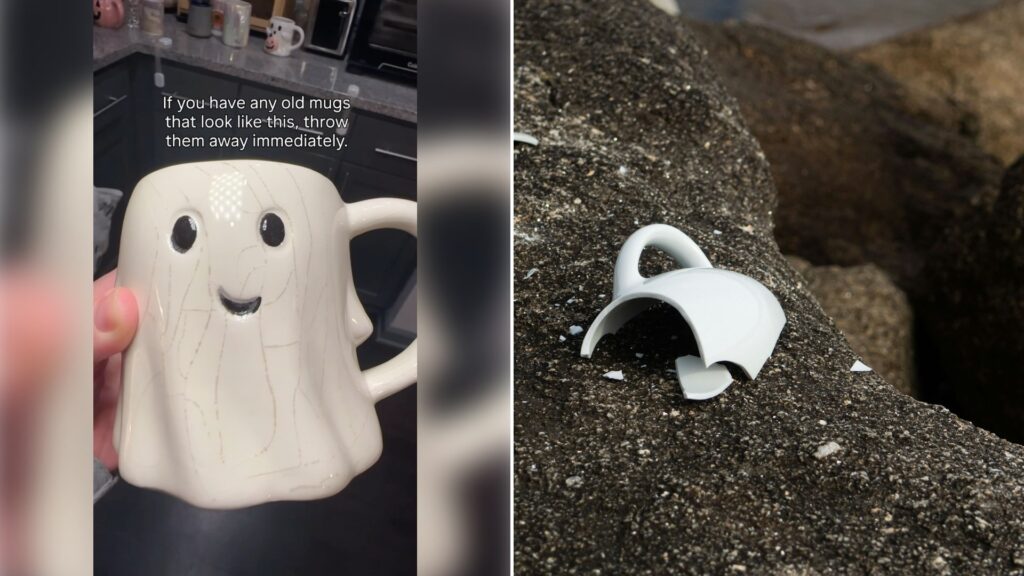
A video from the account icarliie_, posted from Jacksonville, Florida, opens with a confession: “I can honestly say I feel so dumb for not thinking about mold before this, especially as someone who genuinely thinks of worst case scenario mold situations on a regular basis due to living in Florida with high humidity & constant A/C issues.” The discovery that prompted it: her cracked ceramic mugs, the kind most people keep around for years out of habit, had mold growing inside the cracks themselves. The clip, tagged #moldawareness and #jaxmoms, pulled in nearly 68,000 likes, almost 1,000 comments, and more than 2,000 shares.
The mechanism behind this is simpler, and more common, than most people realize. A glazed ceramic mug has a smooth, sealed surface on the outside and inside the cup, but once that glaze cracks, whether from a drop, thermal shock from a dishwasher, or just age, it exposes the porous ceramic body underneath. That porous material behaves completely differently from the glaze: it can absorb moisture and trap it inside tiny channels that never fully dry between uses, which is exactly the damp, dark, organic-residue environment mold needs to take hold. Unlike a visible stain on a countertop, mold growing inside a crack in a mug is largely invisible from the outside, which is part of what made this discovery feel so alarming to the creator and to the people responding to it.
Health guidance on mold generally backs up the instinct to simply discard a contaminated porous item rather than try to clean it. The CDC’s own guidance on mold cleanup has repeatedly emphasized that porous materials colonized by mold are often difficult or impossible to fully remediate, because the mold can grow into the material itself rather than sitting only on the surface where a cleaning product can reach it. That guidance is written mainly for building materials like drywall and carpet, but the same underlying physics applies at kitchen scale: a crack in a mug functions the same way a crack in drywall does, as a reservoir that holds moisture and organic matter where cleaning products and dish soap can’t fully penetrate.
The video also surfaces a second, less obvious culprit: the unglazed ring on the bottom of most ceramic mugs, the ring that actually touches the shelf or cabinet. “I’m also realizing now that most all mugs are made with the bottom ring unsealed,” the creator notes, adding the practical takeaway, “let them dry completely before putting them away.” That unsealed foot ring is a manufacturing standard across most ceramic mugs, there to prevent the glaze from fusing to the kiln shelf during firing, but it also means that ring is porous on every single mug in a cabinet, cracked or not, and it will absorb residual moisture if a mug goes straight from the dish rack to the shelf while still damp underneath.
The fix here costs nothing and takes under a minute: a quick visual check of any cracked, chipped, or visibly aged mug, especially ones that get used daily and spend plenty of time slightly damp between washes. Anything with a crack reaching down into the ceramic body is a reasonable one to retire rather than keep, no matter how sentimental the mug is. For everything else, letting mugs air-dry completely, bottom ring included, before stacking them back in the cabinet closes the one gap most people never thought to check in the first place.
More from Decluttering Mom
- Homeowner Whose Husband Said He Could Not See the Garage Floor Hauls Out Four Years of Stuff, Patches and Paints One Wall White, Then Hangs Bikes, Helmets and a Vacuum on Rails
- Woman Says She Came Home From a Cleaning Service Visit to a Gas Burner Left On With No Flame, Then Found Her Purse, Tax Documents and Real Silverware in Two Garbage Bags Downstairs
- Mom of Three Counts Out Loud as She Pulls 100 Things From Her Playroom While Her Big Kids Are Out, Keeps Both Toy Shopping Carts for Her Baby and Decides the Couch Is Going