

A TikTok from creator @milania_mi_mi is spreading fast among parents of toddlers for a reason that has nothing to do with aesthetics and everything to do with safety. Before handing over any new toy, she holds it up to an empty toilet paper roll. If the toy, or any piece that could break off of it, fits all the way through that tube, it doesn’t make it into her toddler’s hands. “Before you give this to your toddler,” she says in the video, “do this.”

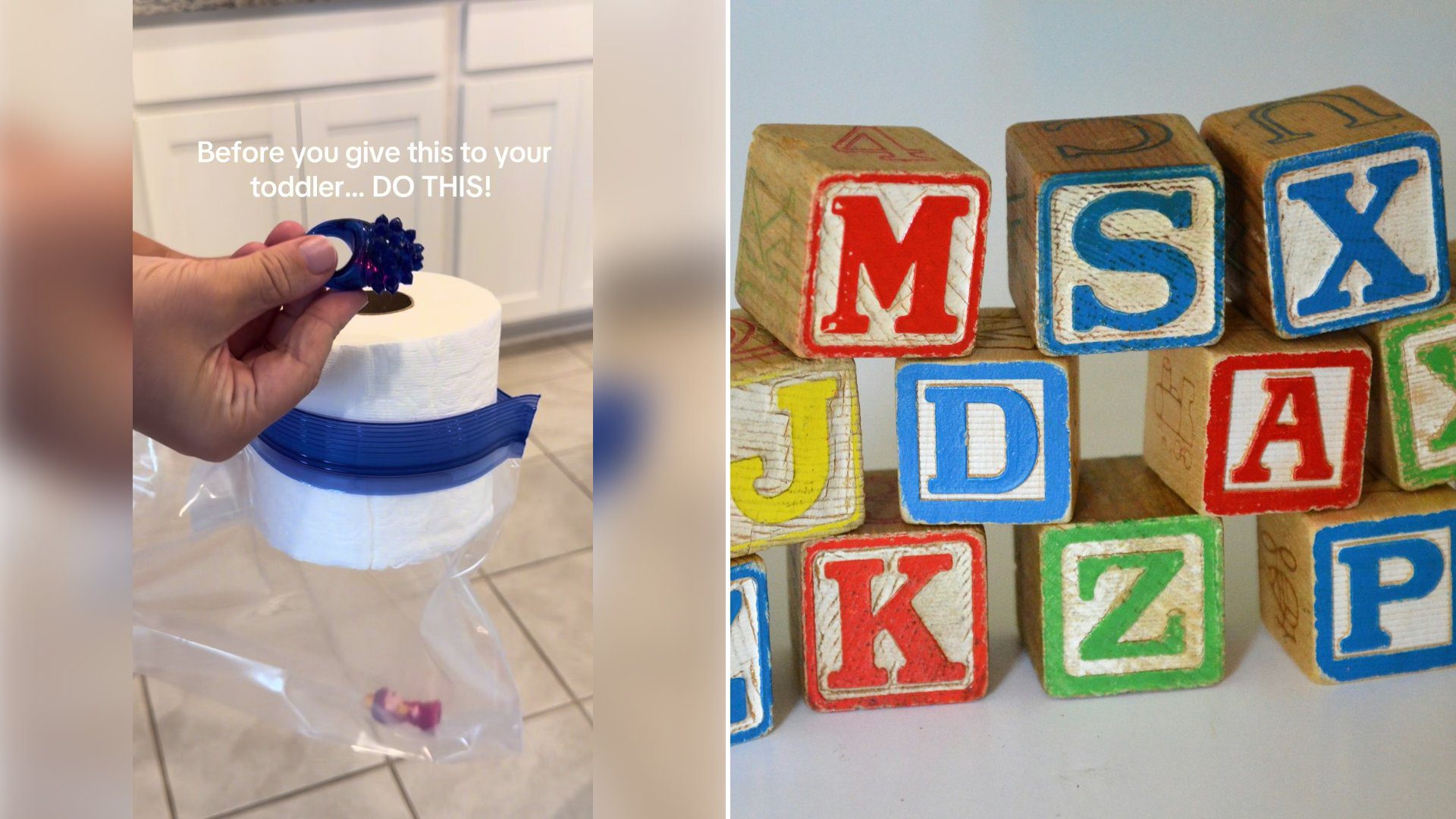
It’s a simple, no-cost check she runs as a personal rule in her own home, and it takes all of five seconds.
@milania_mi_mi
The toilet paper roll trick isn’t just a social media invention. It’s a close approximation of an actual federal safety standard. The U.S. Consumer Product Safety Commission requires toy manufacturers to test small parts and detachable pieces against what’s officially called a small parts cylinder, a test tube roughly 1.25 inches wide and 2.25 inches deep that mimics the size of a young child’s throat. If a piece fits entirely inside that cylinder, it’s considered a choking hazard for children under three and has to be labeled accordingly, or kept off the market for that age group altogether. A standard toilet paper roll measures close to that same 1.6 inch diameter, which is why it works so well as a rough stand-in test parents can do at home without owning any official equipment. It isn’t a perfect substitute for the real small parts cylinder, but it catches most of the same genuinely dangerous pieces.
Choking remains one of the leading causes of injury and death among young children, and small toy parts, along with coins, batteries, and food like grapes or hot dogs, are consistently named among the top hazards pediatric and safety organizations warn about for kids under three. Children in that age range explore objects with their mouths as a normal part of development, which means anything small enough to fit past the back of the tongue is a genuine risk, not a theoretical one. That’s part of why age labels on toy packaging aren’t arbitrary marketing decisions. A “3+” label on a toy with small, detachable pieces is a direct reflection of that same small parts cylinder test, meaning a toy that failed the test for younger children got bumped up to an older recommended age instead.
Where this kind of home test becomes especially useful is with hand-me-down toys, hand-crafted or homemade items, party favor bags, and toys that come without any clear packaging or age label at all, all situations where a parent has no official guidance to lean on. A quick pass through a toilet paper roll gives a fast, physical answer in those exact gray areas, which is likely why this video has resonated with so many parents juggling toddlers and a constant rotation of toys coming into the house from grandparents, siblings, and birthday parties.
It’s worth remembering that this is a supplement to good judgment, not a replacement for checking actual age labels when they’re available, and that safety checks should extend beyond the toy itself to any small parts that could snap off with normal play, like eyes on a stuffed animal or wheels on a toy car. But as a fast, free habit that takes seconds and catches real risks before a new toy ever reaches a toddler’s hands, it’s easy to see why this particular trick has stuck.
More from Decluttering Mom
- Pediatrician Says These Are the Mistakes Parents Make When a Child Has a Virus and Explains What She Would Do Instead While Speaking From Her Car
- Parenting Expert Shows What To Do When a Child Melts Down in a Public Place and Offers the Phrase She Wants Overwhelmed Parents To Try Next Time
- Parent Lists the Signs of Childhood Anxiety That Moms Often Miss and Explains When It Is Time To Bring Concerns To Your Child’s Pediatrician