



Postpartum life has a way of stripping motherhood down to its rawest form. It is messy, exhausting, physical, and rarely glamorous. But for many moms, it is also the season that forces a deeper reckoning with the body: how it changed, what it carried, and whether it still feels worthy after birth.
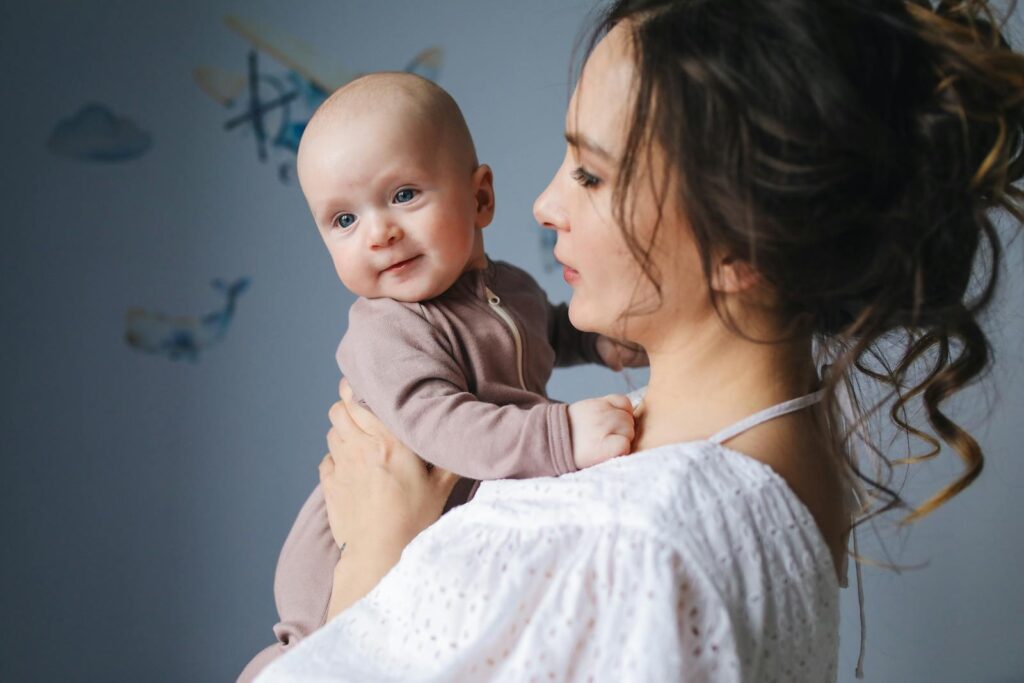
That is what makes one mother’s reaction to an especially messy parenting moment feel bigger than the incident itself. Instead of recoiling in embarrassment after her baby peed on her, she stayed calm and leaned into a truth many postpartum women struggle to believe: the body that created a child does not lose its value just because it looks or feels different now.

The Real Story Is Not the Mess. It Is What the Moment Meant.
Early motherhood is full of bodily messes that quickly erase any illusion of control. Spit-up, leaking milk, diaper blowouts, and surprise pee all become part of daily life. Most parents get used to that reality fast, but that does not mean it is easy to feel at home in your body while living through it.
That is why this moment stands out. It is not simply that a mom got peed on and laughed it off. It is that she framed the experience through acceptance instead of shame.
@monica__murphy She’s completely unbothered. So am I. Because the body that built her will always be enough for me. 🤍 #postpartumjourney #postpartumbody #motherhoodunfiltered #fourthtrimester #realmotherhood
In a post from Monica (@monica__murphy), she paired the moment with a line that gave it much more weight: the body that built her child would always be enough for her. That sentiment shifts the focus away from appearance and back to function, strength, and love.
Postpartum Body Image Can Be Harder Than People Admit
For many women, the hardest part of postpartum recovery is not just the exhaustion. It is learning how to exist in a body that may feel unfamiliar. Weight changes, loose skin, swelling, soreness, scars, and hormonal shifts can all change how someone sees themselves after birth.
That can make even ordinary moments feel emotionally loaded. A body that just did something extraordinary is often judged harshly almost immediately, whether by outside pressure, internal criticism, or both.
That is part of why messages like this resonate. They push back against the idea that a postpartum body has to “bounce back” in order to be worthy of love or respect. They remind mothers that the body does not become less beautiful because it now carries visible evidence of what it has done.
“Her First Home” Says More Than Any Body-Positive Slogan
The most powerful part of this story is the way the mother reframed her postpartum body as her child’s first home.
That idea lands because it is concrete and deeply emotional. It takes the conversation out of the usual language of insecurity and self-criticism and replaces it with something much harder to dismiss. A baby’s first home is not something to mock, hide, or resent. It is something sacred.
That does not mean every mother instantly feels confident after birth. Many do not. But it does offer a gentler lens through which to see the body after pregnancy — not as something ruined, but as something that carried, protected, and grew a new life.
Why So Many Mothers Connected With It
A lot of moms saw themselves in this story because postpartum life often creates a strange emotional split. On one hand, there is deep love for the child. On the other, there can be grief, discomfort, or insecurity about what motherhood has physically changed.
That tension is rarely talked about honestly enough.
This moment resonated because it did not pretend postpartum life is polished. It embraced the mess while still insisting on dignity. It showed that self-worth does not have to disappear just because motherhood gets chaotic, unclean, or physically uncomfortable.
For many parents, that honesty feels more healing than any perfectly curated message ever could.
A Better Way to Think About the Postpartum Body
The takeaway here is not that moms should ignore how hard postpartum recovery can be. It is that they deserve more softness while living through it.
A body that carried a baby, gave birth, and continues to care for that child every day is not something to belittle. It is not failing because it looks different. It is not less valuable because it is messy. And it does not need to earn back respect after doing one of the hardest things the human body can do.
That is why this story works. Underneath the chaos of motherhood, it makes a much bigger point: postpartum bodies are not problems to fix. They are evidence of life, care, endurance, and love.
More from Decluttering Mom: