


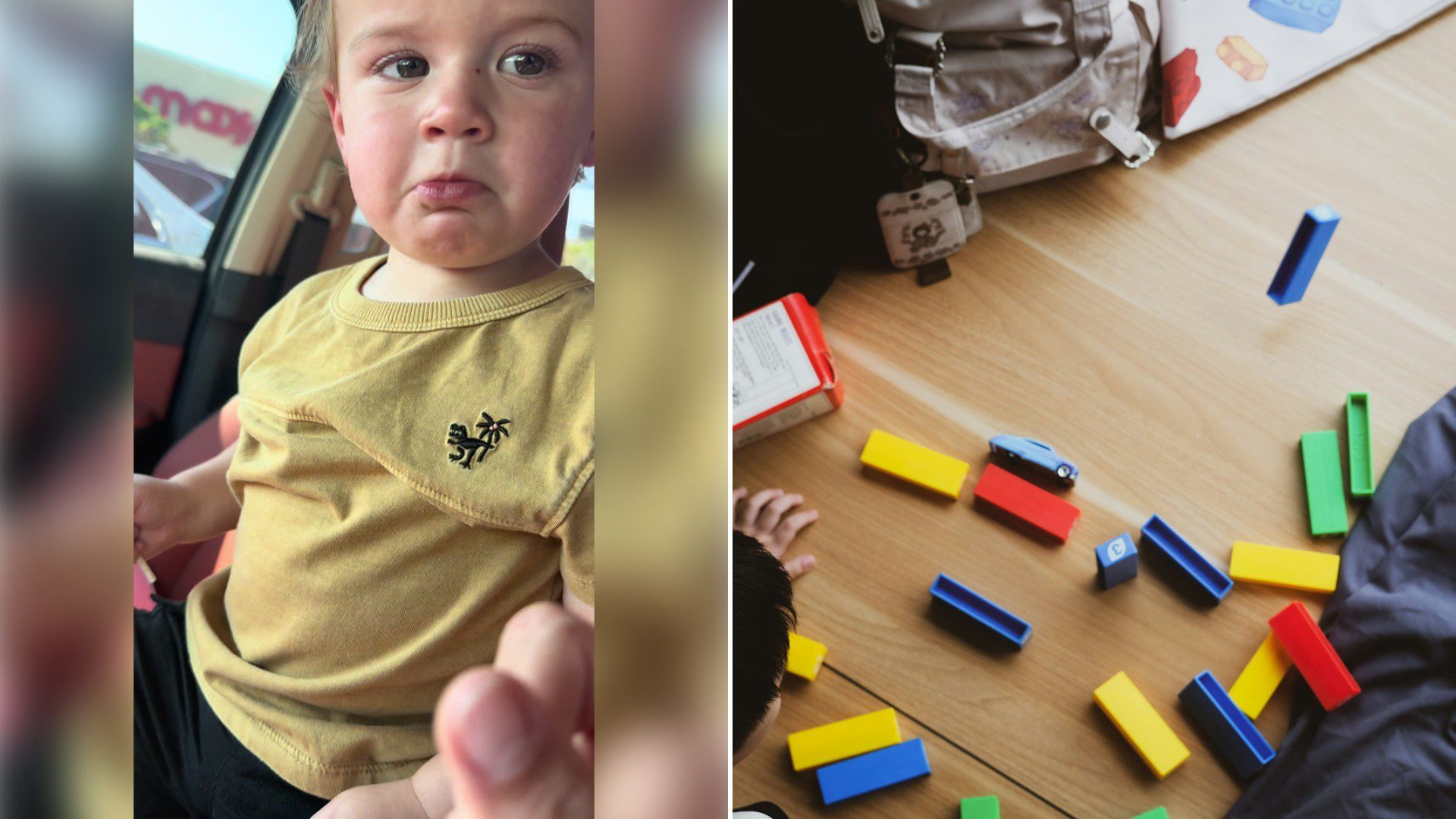
A creator posting under the handle vicdorough shared a real, unpolished moment from her own parenting: firmly asking her toddler, mid-lollipop and visibly upset, “do you understand me?” after he threw something he shouldn’t have — followed by an honest admission in the caption that she regretted how sternly she handled it almost immediately afterward.
@vicdorough That one time I got on to my son & learned real quick to never do it again! 🥹🥹 that baby got so much love after. #fyp #foryoupage
She notes she quickly learned never to correct him that firmly again, and that he needed extra comfort in the moments after. Rather than editing that part out to present a cleaner parenting highlight, she left the self-reflection in, which is exactly what makes the clip feel honest rather than performative.
Second-guessing a disciplinary moment right after it happens is an experience most parents know well, even if they don’t often show it. The gap between how a correction felt necessary in the heat of the moment and how it looks back on ten minutes later is a real, common part of parenting that rarely gets captured on camera.
Sharing that gap openly, including the part where she went back to comfort him, offers a more complete and forgiving picture of parenting than only showing the disciplinary moment itself — a reminder that getting it slightly wrong and course-correcting quickly is a normal, even healthy, part of raising a kid.
There’s something genuinely rare about a parent posting the version of themselves that felt too stern, rather than only the polished, patient moments that tend to dominate most parenting content online. Most of what circulates publicly skews toward the calm, well-regulated parent handling a tantrum with textbook composure. Showing the other side — a firmer tone than intended, a quick internal reckoning with it, and a course correction — paints a far more accurate picture of what parenting actually looks like on an average day, mistakes included.
The specific detail of the toddler holding a lollipop while getting corrected adds an odd, almost comic texture to the moment, the kind of small incongruous detail real life tends to produce that a scripted scenario never would. A kid mid-treat, upset, still processing a firm correction — it’s exactly the sort of unglamorous, oddly specific detail that makes a clip feel unmistakably real rather than staged for an audience.
Parents wrestling with how firm to be in the moment face a genuinely difficult calibration problem that doesn’t get easier with experience so much as it gets more familiar. Too soft, and a genuinely unsafe or disruptive behavior might not register as seriously as it needs to; too firm, and a small child who doesn’t yet have the emotional tools to process a stern tone can end up more rattled than the situation actually called for. There’s no universal right answer, which is part of why moments like this one — visible doubt included — resonate so widely with other parents navigating the exact same uncertainty in real time.
What stands out about this particular admission is the speed of the regret. She didn’t wait days or weeks to reconsider how she handled it; the doubt arrived almost immediately, while the moment was still fresh, prompting a quick pivot toward comfort rather than doubling down on the correction. That responsiveness — noticing quickly that a reaction landed harder than intended and adjusting course right away — is arguably a more useful parenting skill than getting the initial tone perfectly right every single time, since perfect calibration in the moment simply isn’t realistic for anyone.
There’s also something worth noting about how differently kids process correction compared to adults, which is part of why a tone that feels entirely proportionate to a parent can land as much more intense from a toddler’s perspective. A firm “do you understand me?” might register, in an adult’s mind, as a completely ordinary and even mild response to a genuinely unsafe or disruptive action. For a young child without the context or experience to calibrate that reaction, the same tone can feel much bigger and scarier than intended, which is exactly the gap this parent seems to have caught herself bridging in real time.
For other parents replaying their own version of this exact scenario — a correction that felt necessary in the moment and uncomfortable in hindsight — there’s a real comfort in seeing someone else admit to the same pattern openly rather than pretending it never happens. Parenting guilt over a single stern moment can spiral disproportionately if a parent assumes everyone else handles these situations with flawless calm; seeing an honest admission normalizes the much more common reality, where good parents occasionally overcorrect and then quietly, quickly make it right.
By the end of the clip, the specific disciplinary moment has already resolved itself — comfort given, tension defused, the toddler presumably back to whatever he was doing before the lollipop incident. What lingers isn’t really the correction itself, but the honesty of admitting it wasn’t handled perfectly, which tends to be a far more useful thing for other parents to see than a highlight reel of flawless composure they’d have no real way of living up to anyway.
There’s also a broader takeaway here for parents worried that a single sharp moment might do lasting damage to a young child. Kids, especially toddlers, tend to be more resilient to an isolated stern moment than parents fear in the anxious aftermath, particularly when that moment is quickly followed by reassurance and affection rather than being left to sit unresolved. It’s less about achieving a flawless tone every time and more about the overall pattern — correction balanced by comfort, firmness followed by warmth — that a child actually absorbs over the long run.