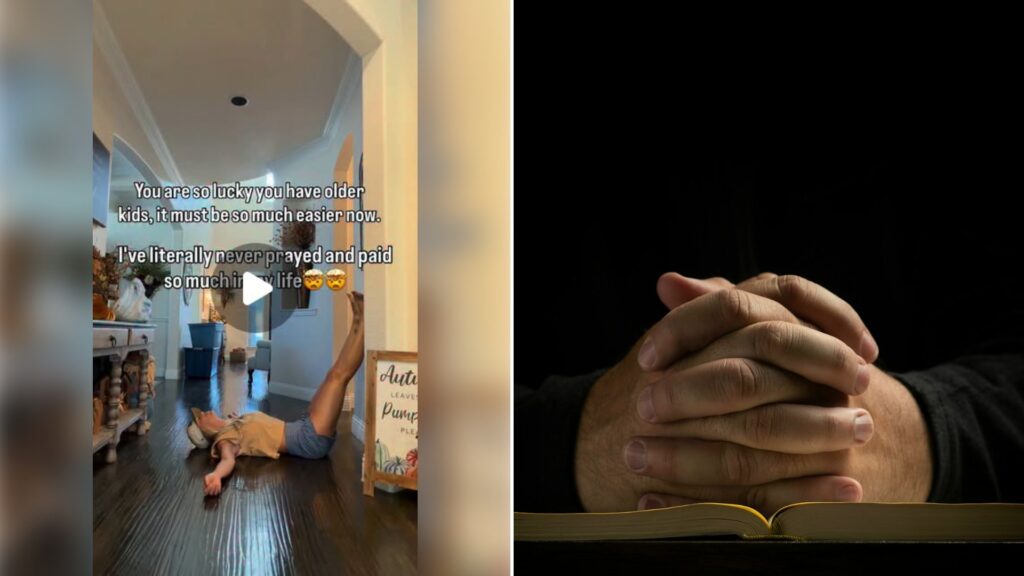
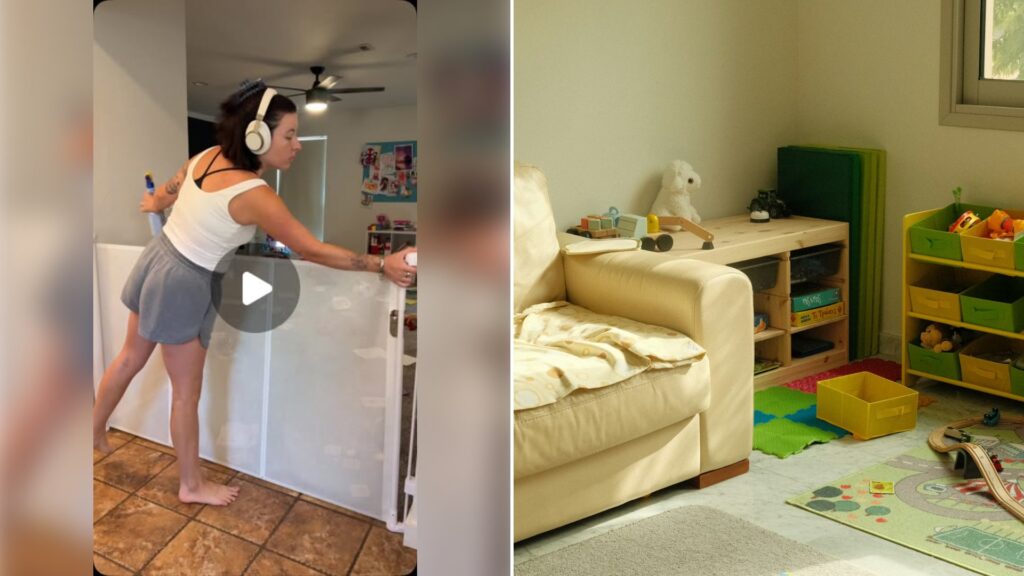
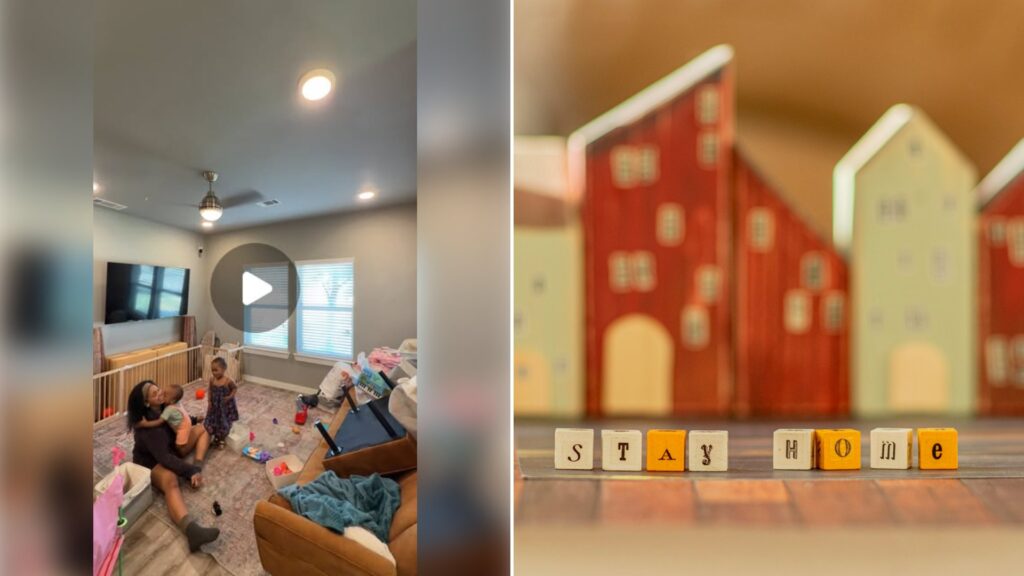
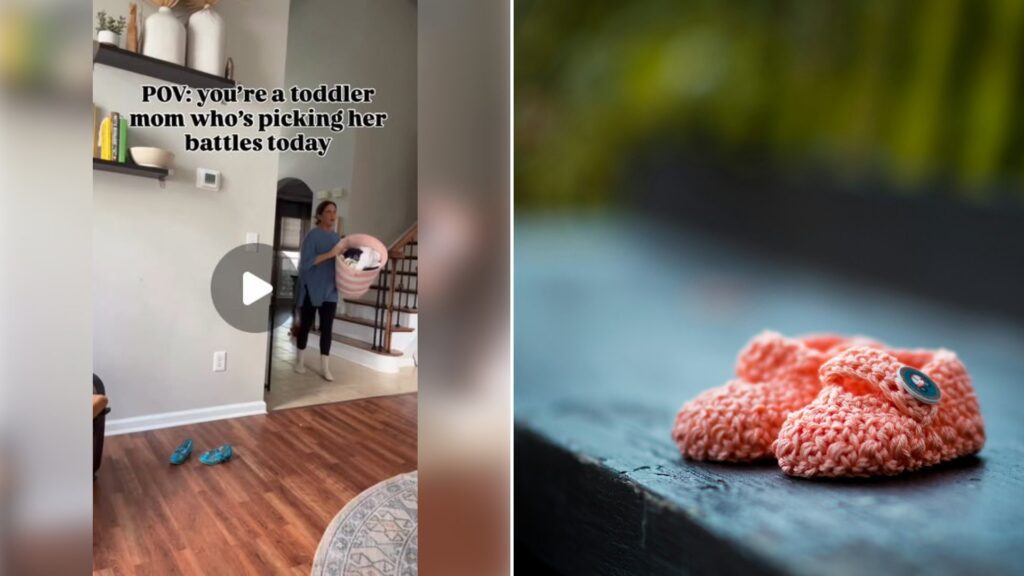
Every parent who has ever opened a parenting app mid-meltdown knows the exact gap mom and creator @annalee15 is poking fun at. In her latest reel, she splits the screen in two: on one side is calm, composed “theory mom,” reciting the gentle parenting script she picked up from a podcast or an Instagram carousel. On the other side is “reality mom,” crouched on a kitchen floor trying to survive an actual toddler tantrum that is in no mood to cooperate with anyone’s script.
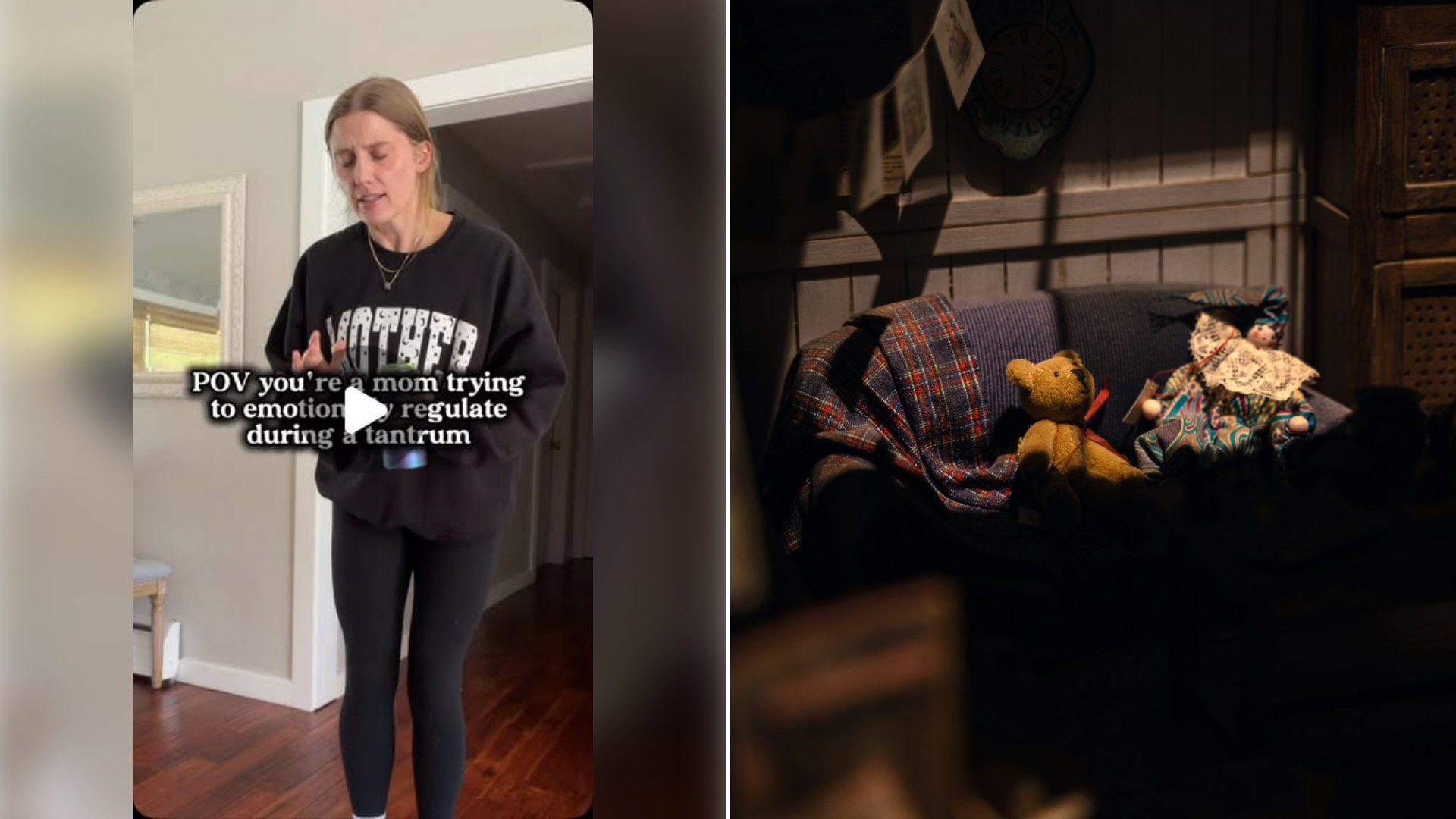
The bit works because it refuses to pick a side. “Theory mom” isn’t wrong, exactly; she knows the lines about validating feelings and getting down to eye level. But “reality mom” is the one actually dodging a flying shoe while a toddler screams about the wrong color cup. The split screen format lets both truths exist on the same stage at once, which is exactly why thousands of parents have seen themselves in it within seconds of hitting play.
That gap between parenting theory and parenting in real time is not a personal failure, it is a well-documented feature of how toddler brains and adult nervous systems interact. Tantrums peak developmentally between ages one and three, a stretch when a child’s emotional reactions regularly outpace their ability to self-regulate or communicate what they actually need. The prefrontal cortex, the part of the brain responsible for impulse control and reasoning through frustration, is nowhere near fully developed at that age. A toddler mid-tantrum is not being manipulative; their brain is, quite literally, overloaded.
Gentle parenting strategies like naming a feeling, offering a calm presence, or waiting out a meltdown before problem-solving are built around that developmental reality. The strategies work, but they were never designed to be executed with the clean, unhurried energy of a how-to video. Child development researchers who study emotional co-regulation note that a parent’s own nervous system state matters as much as the words they choose; a calm tone can help a child de-escalate faster than any specific scripted phrase. That is precisely the pressure the skit captures: it is hard to sound calm when you are also running on no sleep, holding groceries, and watching a sibling edge toward the chaos.
What makes the format land with so many parents is that it does not shame either version of the mom on screen. It simply shows the honest distance between reading good advice and living it out in a kitchen at 5 p.m. on a Tuesday. Parenting educators generally agree that progress is not measured by never losing your composure, but by how often a parent can return to connection after a hard moment. The goal was never a flawless gentle parenting performance; it was a toddler who, eventually, feels safe enough to calm down, and a parent who gives themselves room to be human while getting there.
More from Decluttering Mom
- Parenting Expert Shows What To Do When a Child Melts Down in a Public Place and Offers the Phrase She Wants Overwhelmed Parents To Try Next Time
- Mom Says Toddler Tantrums Calm Down When Parents Say No Once and Stick to It and Explains Why Giving In Teaches Kids To Scream Louder Next Time
- Mom Says She Got Defensive About Parenting Advice Years Ago and Explains How Her Mind Changed As Her Children Grew and the Lessons She Now Passes On