


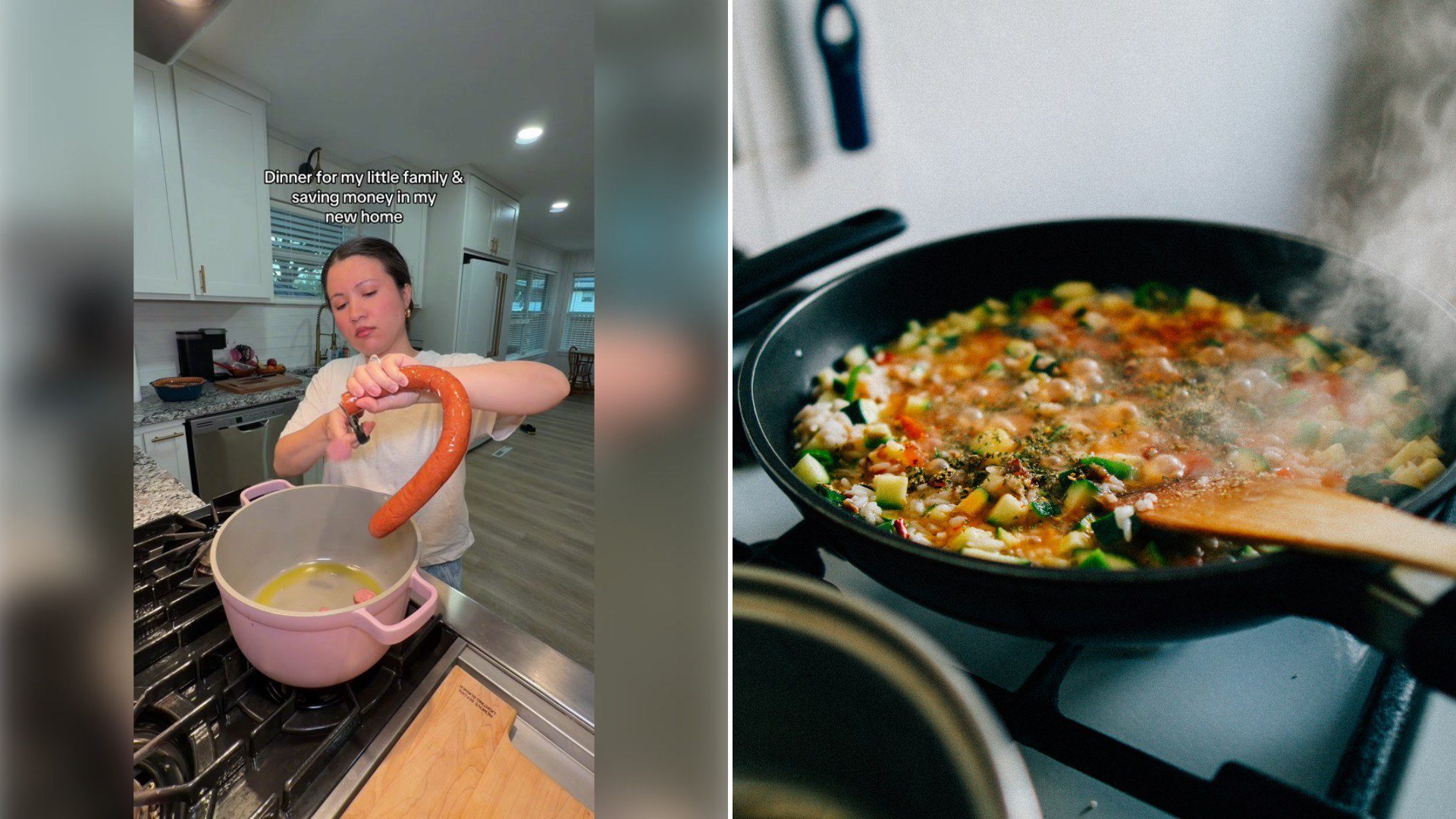
Moving into a new house is supposed to feel like a fresh start, but anyone who has actually lived through the first few weeks knows the reality is messier than the highlight reel suggests. Boxes stacked in corners, furniture still in transit, and rooms that echo because there’s simply nothing in them yet to absorb the sound. That in-between phase — home, but not quite settled — is exactly what one mother captured while doing something completely ordinary: making dinner for her kids.
The video shows her preparing a simple meal in a kitchen that’s still clearly in transition, the kind of sparse, half-furnished space that anyone who has recently relocated will instantly recognize. There’s no elaborate spread, no perfectly styled table, just a mom doing what moms do — getting food on the table for her children, regardless of how unfinished the house around her still looks. It’s a quiet, unglamorous moment, and that’s precisely what made it feel so real.
@ayomadelyn We found our chairs ❤️ this is an older video #dinner #dinnerformyfamily #cooking #momsoftiktok #ayomadelyn
Her caption added a small but meaningful detail: “We found our chairs ❤️ this is an older video.” That single line reframes the whole clip — this wasn’t a fresh update but a callback to an earlier, harder stretch of the move, shared again now that a small milestone, actual chairs to sit on, had finally been reached. It’s a tiny detail, but it speaks volumes about how moving really unfolds: not as one dramatic reveal, but as a string of small victories strung together over weeks or even months. The video drew roughly 1.8 million views on an account with an already substantial following of about 841,700 people, a clear sign that even for a creator with serious reach, this particular moment struck an unusually strong chord.
As @ayomadelyn shared in her post, there’s something deeply relatable about the specific combination of a new house and an old, familiar routine. Dinner still has to happen. Kids still need to eat, sit somewhere, and go through the motions of a normal evening, even when the walls around them are bare and the boxes haven’t all been unpacked. That contrast between domestic normalcy and physical upheaval is part of what makes moving with children so uniquely exhausting — there’s no pause button on parenting duties just because the environment is in flux.
There’s also a practical honesty in choosing to post a video from earlier in the move rather than waiting for a fully furnished, camera-ready home. It suggests a comfort with showing the messier, less finished chapters of a life update rather than only the polished final result, which tends to build more trust with an audience than curated perfection ever could.
This kind of “in-progress” home content has become increasingly popular, partly as a counterbalance to years of polished, fully-furnished home tours dominating social feeds. Watching someone navigate daily life in a house that clearly isn’t finished yet offers a kind of reassurance that a lot of viewers seem to crave: proof that a home doesn’t need to be complete to function, and that the mess of moving in is a universal, temporary phase rather than a personal shortcoming. For anyone currently living out of boxes themselves, seeing another family manage dinner, bath time, and bedtime in a similarly unfinished space can feel oddly comforting.
For families in the thick of a move, there are a few practical lessons buried in this kind of moment. Prioritizing function over form in the earliest weeks tends to save a lot of stress — unpacking the kitchen essentials and a few key seating pieces before worrying about decor or organization systems can make daily routines feel manageable much sooner. Keeping meals simple during this stretch, rather than trying to maintain pre-move cooking standards in an under-equipped kitchen, also takes pressure off parents who are already stretched thin managing logistics, unpacking, and often work or school schedules on top of it all. And perhaps most importantly, treating small milestones — like finally having chairs to sit in — as genuine wins rather than glossing over them can make the transition feel less like an endless slog and more like visible, steady progress.
It’s also worth noting why the “older video, shared again” detail matters so much here. Choosing to revisit an earlier, harder moment only after reaching a small milestone — actual chairs — reflects a very natural instinct: it’s often easier to look back on a difficult stretch with warmth once there’s some distance and visible progress to soften it. That kind of retrospective sharing, rather than posting the struggle in real time, gives the whole moving journey a narrative arc that a lot of viewers clearly appreciated following along with.
There’s also a broader emotional layer here worth acknowledging. Moving is consistently ranked among life’s more stressful transitions, and doing it with young children adds an extra dimension of complexity, since kids need stability and routine even when the physical environment around them is anything but stable. A parent choosing to document and share these unpolished, in-between moments — rather than waiting until everything looks picture-perfect — offers a kind of honesty that resonates precisely because it mirrors what moving actually feels like for most families. Dinner in an empty house isn’t a failure to be hidden; it’s a small act of normalcy in the middle of chaos, and clearly, millions of viewers found that worth watching.