


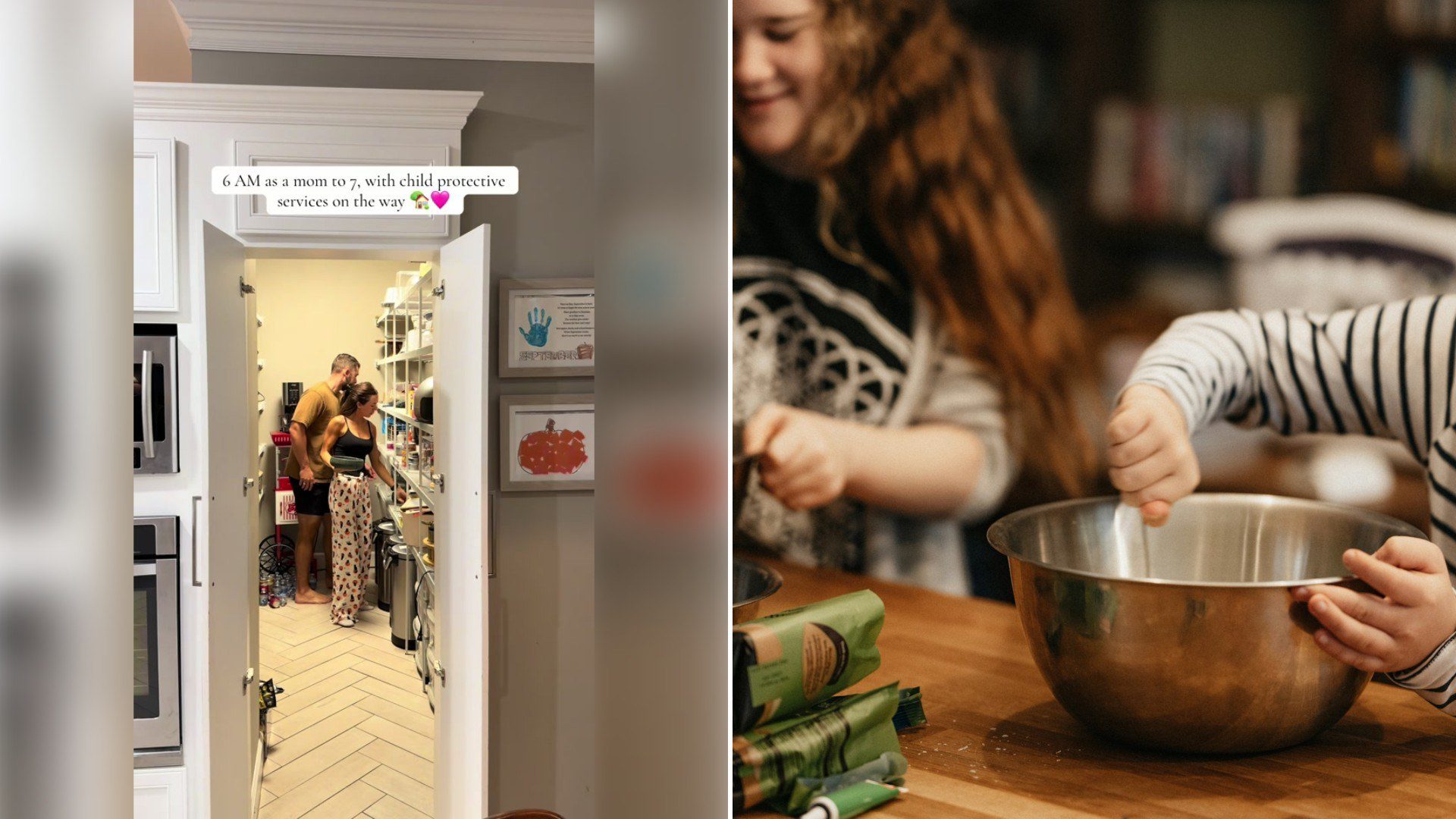
By the time most households are finishing their first cup of coffee, one mother of seven has already been awake for hours, moving through a routine that would exhaust most people before breakfast is even served. Her day-in-the-life video, stamped simply “6:30-10 AM mommin’ 7 littles,” walks viewers through the stretch of morning that sets the tone for everything that follows: breakfast for a house full of kids, chores that never seem to stay finished, and the added responsibilities that come with being a foster and adoptive parent on top of it all.
The caption, tagged with #fostermom #adoptivemom #workingmom, doesn’t oversell the moment. There’s no dramatic music cue or staged crisis, just an honest, almost breathless accounting of what four hours look like when there are seven children counting on one adult to keep the household running. That plainness appears to be exactly what resonated. The clip pulled in roughly 1.1 million views, a striking number even for an account that already commands close to 3 million followers, suggesting the video reached well past her usual audience and into the feeds of people who don’t normally watch family content at all.
@jeannemarievallor 6:30-10 AM mommin’ 7 littles 🏡🩷 #fostermom #adoptivemom #workingmom
Part of what sets this video apart from the flood of “morning routine” content online is the sheer logistical weight underneath it. Most creators in that genre are managing one or two kids, a single school drop-off, maybe a dog. Here, the math is different: seven children, each with their own needs, schedules, and personalities, layered on top of the added responsibilities that come with fostering, which often means navigating additional appointments, paperwork, and the emotional adjustment period that comes with a new child entering the home. As @jeannemarievallor shows in the clip, none of that gets a pause button just because the clock says it’s still morning.
Viewers who spend time in the comments of these kinds of videos often say the same thing in different words: it’s less about being impressed by the scale of the household and more about feeling seen in the chaos of their own smaller one. A parent managing two kids on a rushed weekday morning can watch someone managing seven and feel, paradoxically, less alone rather than more overwhelmed, because the emotional texture of the morning, the negotiating, the multitasking, the constant recalibration, looks familiar even if the numbers are different.
Foster parenting in particular carries a layer of complexity that rarely gets airtime in mainstream media, let alone in short-form video. Families who take in foster children are often working within tight timelines set by courts and agencies, adjusting to a rotating cast of needs that can shift overnight, and doing so while still trying to give their existing children, biological or adopted, a stable and predictable home life. The morning routine shown in this video, however chaotic it looks on the surface, actually represents an enormous amount of behind-the-scenes structure. Households that function well with large or blended families, especially ones that include foster placements, tend to rely heavily on routine precisely because unpredictability is already built into so much of the rest of their lives. A consistent 6:30 wake-up, a repeated sequence of chores, a familiar cadence to breakfast, all of it becomes an anchor that helps children, especially those coming from unstable backgrounds, feel secure.
For any parent watching who feels like their own morning is barely holding together, there’s a genuinely useful takeaway buried in a video like this one: structure doesn’t have to mean perfection, it just has to mean repetition. Family therapists and child development specialists frequently point out that children, particularly those who have experienced disruption, don’t need flawless mornings, they need predictable ones. A morning that runs the same way every day, even if it’s loud and a little frantic, gives children something to hold onto that matters more than a picture-perfect breakfast table.
There’s also a quieter lesson here about visibility. Foster and adoptive parents often describe feeling like their work exists in a kind of blind spot, too specialized to be widely understood, too demanding to be casually explained at a dinner party. Videos like this one, watched over a million times by people who may never have considered what a morning with seven children and an open foster placement actually looks like, do some of that explaining without a single word of lecture. They simply show the thing happening, chore by chore, child by child, and let the scale speak for itself. In an online landscape crowded with curated perfection, a video that shows real effort, unretouched and slightly frantic, ends up standing out simply by being true.
It’s also worth noting how much this particular slice of online content has shifted over the past several years, moving away from tightly edited, aspirational family vlogging and toward something closer to documentary realism. Viewers increasingly gravitate toward creators willing to show the mess alongside the milestones, the sibling squabbles alongside the sweet moments, because that combination reads as trustworthy in a way that a perfectly composed breakfast table never quite manages to. For a mother managing a household of this size, that shift works in her favor: the very chaos that might once have been edited out is now precisely what makes the footage feel worth watching, and worth sharing, to an audience far larger than the one she started the morning expecting to reach.