


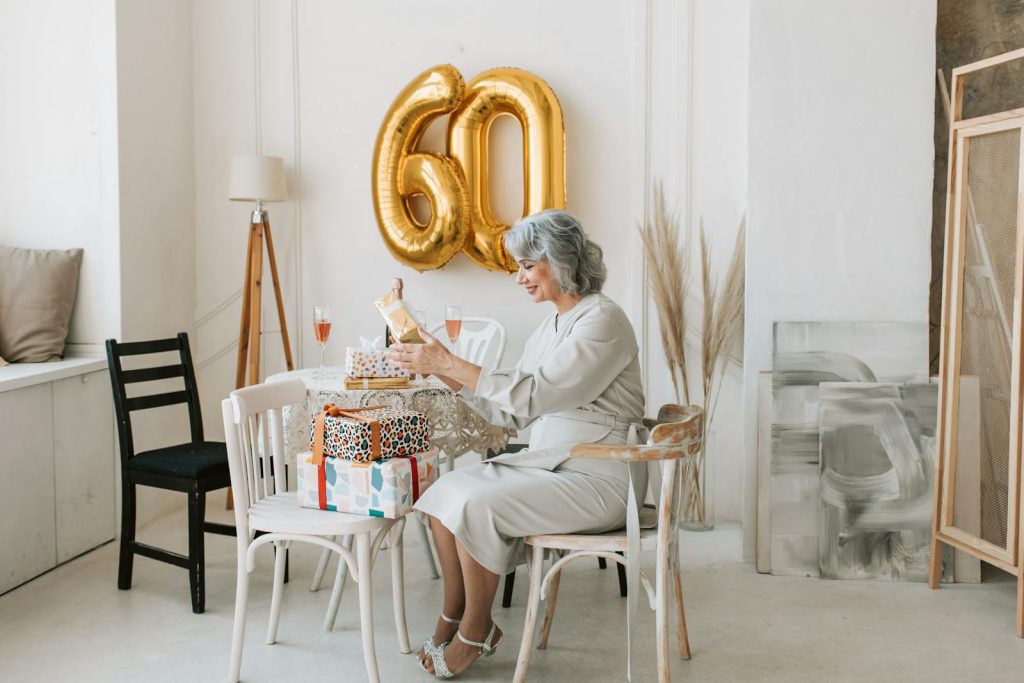
When a long marriage ends at the very moment life was supposed to get easier, the shock can feel almost existential. For women whose husbands walk out at 60 to start again with someone younger, the breakup is not only about betrayal, it is about suddenly being recast as “the older, unwanted one” in a culture that already sidelines aging women. Yet as more of these late‑life splits surface publicly, so do stories of women rebuilding, redefining themselves, and attracting fierce solidarity from strangers who have thoughts of their own.
The story of a husband leaving in his sixties to have a baby with a younger partner has become a touchpoint for debates about aging, gender, and power. It exposes how fragile even decades‑long unions can be, but it also shows how women are learning to protect their finances, reclaim their identities, and push back against the idea that their value expires with youth.
The shock of being left at 60


For many couples, 60 is imagined as the age of shared forgetfulness and gentle routines, the season of asking “have you seen my glasses?” and laughing about leaving the house only to return for the car keys. In one widely discussed account, a woman describes how she and her husband touched each other often, a kind of physical shorthand that meant “I am here,” and she never doubted they would spend their later years holding hands. That sense of security shattered when he announced he was leaving at 60 to pursue fatherhood with a younger woman, turning what had felt like a stable partnership into a story of abrupt abandonment and a newly “unwanted, irrelevant woman” who had to rebuild from the ground up, as she later reflected in a detailed personal essay.
Her husband’s refusal to engage with aging was not incidental, it was central to the rupture. He did not want to talk about getting old and dying, did not want to choose between burial or cremation, and resisted practical conversations about wills or end‑of‑life care. According to her account, he preferred to focus on staying young, while she quietly accepted the realities of growing older. That mismatch came to a head when he left to start a new family, a decision later described in a separate syndicated version of her story as a bid to outrun mortality rather than face it alongside the woman who had shared his life for decades.
Why some older men chase “younger” and what people say about it
Observers often frame these late‑life departures as midlife crises that simply arrived late, but the motivations can be more specific. In online discussions among older adults, commenters describe how some men believe a younger partner will “make them younger,” as if proximity to youth could reverse their own aging. One contributor in a thread about older men dating much younger women argued that these men think a new, younger relationship will reset the clock, even though, as she put it, “they” are still the same age inside, a sentiment echoed in a candid AskOldPeople exchange.
Psychological research on divorce decisions suggests that not all leavers are the same. One framework identifies “Intense Seekers” who feel a powerful pull toward a different life, “Moderate‑Fading Seekers” whose dissatisfaction grows slowly, and other “Types Of People Considering” ending their marriages who weigh emotional, financial, and social costs differently. In that analysis, some older men fit the profile of those who idealize a fresh start and underestimate the fallout, a pattern described in detail by a Psychologist Reveals The taxonomy of divorce‑minded spouses.
Grey divorce and the cultural script of starting over
The phenomenon of long‑term couples splitting later in life has become common enough to earn its own label, “Grey Divorce.” High‑profile separations, including the widely discussed breakup of Bill and Melinda Gates, have pushed the idea of ending a marriage in one’s fifties or sixties into mainstream conversation. Analysts who study these cases note that such divorces raise questions about why this is happening and what the implications are for retirement, adult children, and social expectations, themes unpacked in a video explainer on Bill and Melinda and the broader trend.
For women left behind, the cultural script can feel brutally one‑sided. They are often cast as the discarded spouse while their ex is framed as bravely “starting over.” Yet relationship memoirs and essays increasingly challenge that narrative. Works like Strangers: A Memoir and similar accounts show how women in later life are rewriting their own stories after betrayal, refusing to accept that the end of a marriage must also mean the end of their relevance or romantic future.
Online empathy, anger and “Relevant Comments”
When a woman posts that her husband is leaving her for a younger woman, the internet rarely stays neutral. In one widely shared thread, a wife described how her spouse announced he was moving on, and the responses were immediate. Under a section labeled “Relevant Comments,” strangers urged her to protect herself, with one “Commenter” bluntly warning that if she wanted to keep the house she would need to fight for it in the divorce and start building her case right away, advice preserved in a curated update of the saga.
Another woman who shared that her husband was leaving for a younger partner described how he texted saying he wanted to see the kids, then arrived after they were already asleep, behavior that fueled commenters’ suspicions that he was more focused on appearances than parenting. She later wrote that he seemed primarily concerned with coming out ahead in the divorce, a detail that drew sharp criticism in an update post. These online reactions, a mix of empathy and outrage, show how strongly people respond when they see a long‑term partner apparently traded in for someone younger.
Money, housing and the hard math of late‑life separation
Behind the emotional drama sits a stark financial reality. A divorce at this stage means losing more than a spouse, it often means losing the shared identity and economic structure that framed daily life for many years. Guidance aimed at older adults stresses that a split in later life can upend retirement plans, housing stability, and even social circles, and that it takes deliberate effort to redirect energy toward the future, as one resource on starting over at after divorce explains.
Online advice threads echo that urgency in blunt terms. In a discussion about a 59‑year‑old whose husband left after 22 years, one top response began with a clear directive: “Hire a solicitor and protect your financial assets during the divorce.” The commenter added that there was no need to be vengeful, but also no reason to be a pushover, and urged the woman to act quickly because emotions can shift “within the hour,” guidance captured in a Reddit exchange that has since been widely referenced.
When divorce drama goes public
Not every late‑life breakup plays out quietly. In New York City, an heiress named Belle has described how her cheating ex‑husband downsized to an apartment with no room for their 3 children after relinquishing custody, a detail that underscored, for many readers, how thoroughly he had reorganized his life around his new relationship. She recounted how he told her “I do not want it” when she raised the issue of space for the kids, a moment that became a symbol of his priorities in a widely shared news story about the split.
In a separate account, the same New York City heiress described taunting, vindictive outbursts from her ex after he dumped her for a younger woman. She recalled him sneering “Boo‑hoo. Poor Belle” and allegedly hissing insults in September 2020, behavior that painted a picture of contempt rather than remorse. Those details, reported in another follow‑up piece, show how some men who leave for younger partners do not simply move on quietly but continue to exert emotional pressure on the women they left.
The emotional fallout: contempt, grief and identity loss
Psychologists who study separation note that the emotional tone of a breakup can be as damaging as the event itself. Research on facial expressions during conflict has found that “Expressed emotions” such as anger, contempt, disgust, fear, or sadness can serve as markers of how intensely people are struggling with their separation experience. When contempt dominates, as in the sneering “Boo‑hoo. Poor Belle” remark, it often signals deep relational rupture and can predict more difficult post‑divorce adjustment, according to findings summarized in a peer‑reviewed study.
For spouses left behind at 60, the loss is not only emotional but existential. One guide aimed at older divorcees notes that a split at this stage means losing the shared identity that framed existence for many years, and that it can feel as if the entire map of life has been torn up. The advice there is to acknowledge the grief, then slowly redirect energy toward new roles and routines, a process described in detail in resources on How To Rebuild 60 that emphasize both emotional and practical steps.
Protecting mental health and getting professional help
When a partner leaves late in life, the first instinct may be to withdraw, but experts urge the opposite. Relationship counselors advise newly abandoned spouses to see their GP and consider seeing a counsellor, stressing that everyone needs help occasionally and sometimes needs to be prodded to actually reach out. They recommend asking a trusted friend to make sure you get there, underscoring that practical support can be as important as emotional comfort, guidance laid out clearly in a resource titled “See your GP” on relationship support after a husband leaves.
Academic work on cohabitation and separation also highlights the psychological weight of leaving or being left. In one study of working‑ and middle‑class cohabitors, nearly as many respondents, specifically 46 individuals, expressed concerns about the legal, financial, social, and emotional consequences of leaving a relationship. Those worries were often discussed in tandem with fears about loneliness and stigma, according to the analysis of Nearly half the sample. For someone left at 60, knowing that such anxieties are common can help normalize the urge to seek professional help rather than trying to endure the upheaval alone.
Finding unexpected freedom and a new story
Despite the devastation, some women describe a surprising sense of liberation once the initial shock fades. The 60‑year‑old whose husband left to have a baby with a younger woman wrote that, while she was grieving his departure, a “funny thing” happened. She discovered she really liked living alone, found her own rhythms, and began to enjoy the quiet autonomy of a life no longer organized around someone else’s needs, a transformation she detailed in a reflective follow‑up essay.
Her reflections, later republished with the line “Here’s What It Taught Me,” frame 60 not as the end of possibility but as a pivot point. She writes about learning to trust her own judgment, embracing friendships, and recognizing that her children’s support did not depend on staying married to their father. That perspective, captured in the version headlined with “Here’s What It Taught Me” and the phrase “Sixty was the age” of small forgettings, has been widely shared through a Jan reprint that also pointed readers to an “Also Read” section titled “We Made A Big Mistake When Tr,” underscoring how her story has become part of a broader conversation about regret and reinvention.
What these stories teach about aging, gender and power
When a husband leaves at 60 to start over with someone younger, the public reaction often reveals as much about cultural attitudes as it does about the individuals involved. Some readers see the man as a cliché, others as a cautionary tale about refusing to face aging, and still others focus on the woman’s resilience. Comment threads, advice columns, and even coverage of influencer divorces, such as analyses of how “They” provide a holistic view of personal, legal, financial, and social dimensions in the case of Jeny Bsg’s split, show how late‑life breakups can become highly publicized and scrutinized, as noted in a holistic overview of that case.
More from Decluttering Mom: