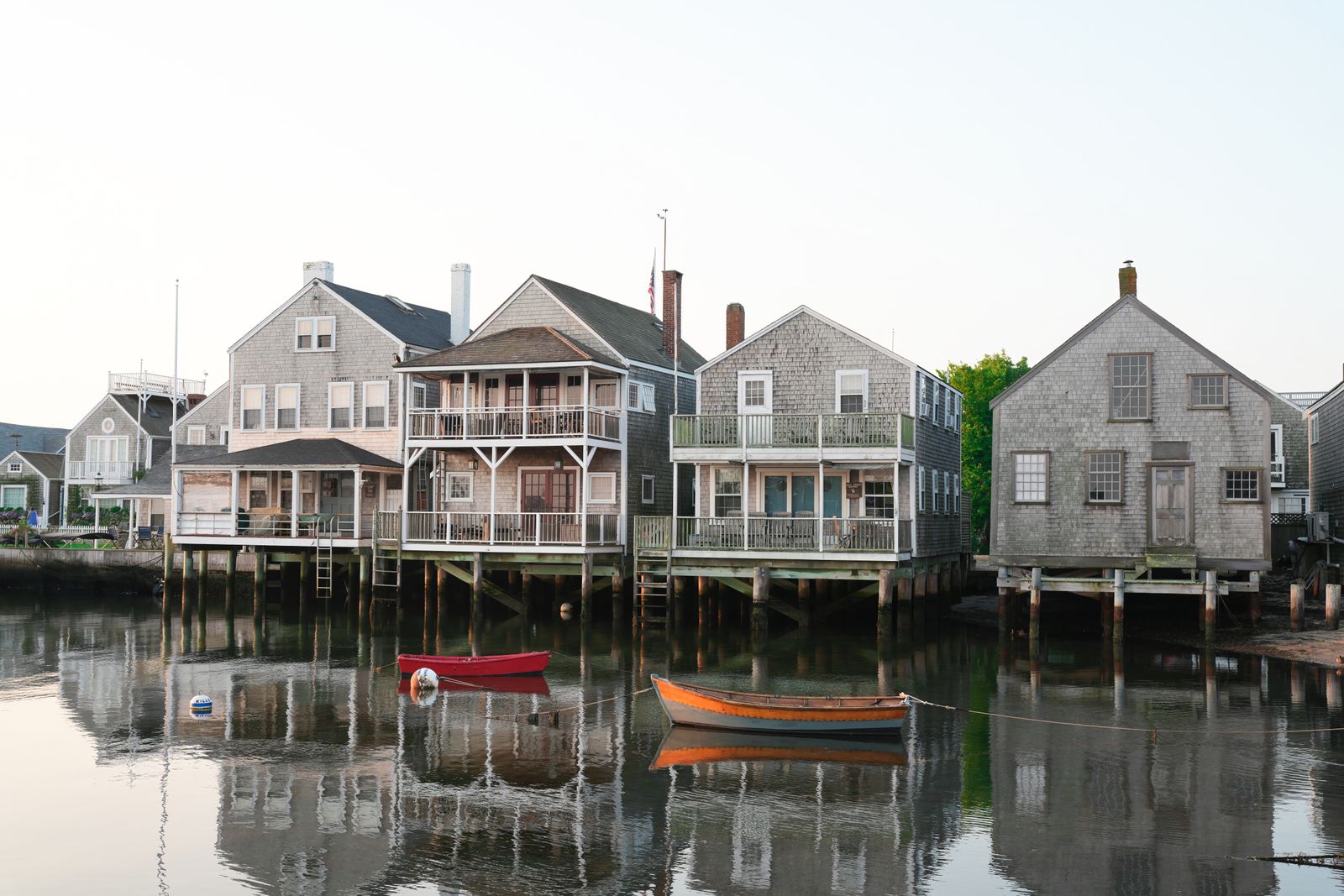
More than half of Nantucket’s housing stock (55%) is now vacation or seasonal property, and the island’s median home listing has climbed to $4,925,000, according to Realtor.com’s June 2026 luxury housing report. That’s more than 16 times the national vacation-home share of 3.3%, and it’s part of a pattern showing up across America’s most desirable resort towns, where second homes and short-term rentals are steadily crowding out the year-round housing stock that once anchored these communities.
Nantucket’s Housing Stock Has Tipped Over the Halfway Mark
Realtor.com’s report found Nantucket has the highest concentration of vacation and seasonal housing of any micropolitan market it tracked, with the island’s top 10% of listings priced at $14,117,250 and median square footage in the $1 million-to-$2 million price band running just 1,011 square feet, a reminder that on Nantucket, price per square foot rather than raw size drives the market. Homes on the island now sit at a median of 63 days on market among top-tier listings, per the report, modest for a market this expensive.
Vineyard Haven and Breckenridge Aren’t Far Behind
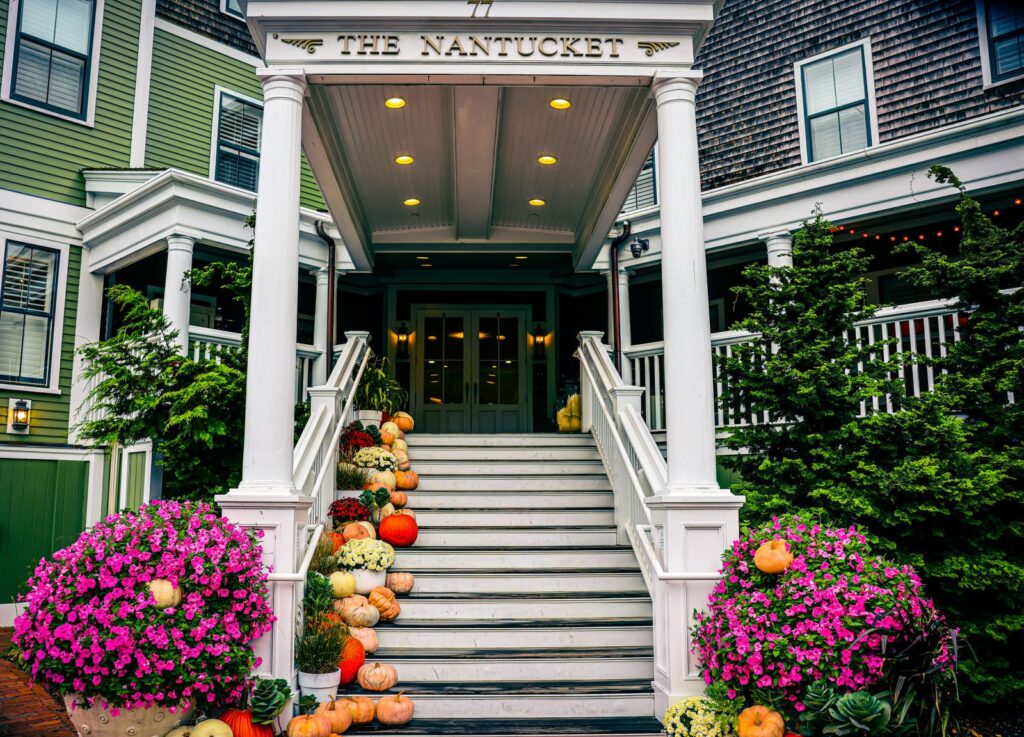
Vineyard Haven, Massachusetts, on neighboring Martha’s Vineyard, has a vacation and seasonal housing share of 54.4%, nearly matching Nantucket’s, with a median listing price of $2,500,000 and a top 10% threshold of $8,235,000, according to the same data. Breckenridge, Colorado rounds out the top three at 45.8% vacation-home share, though its median listing price of $948,500 is a fraction of the New England islands’ figures, showing that vacation-home concentration and raw price don’t always move together: a mountain town can be dominated by seasonal buyers without commanding coastal Massachusetts prices.
Other Resort Towns Show the Same Pull
Beyond the top three, several other markets cross the 25% vacation-home threshold: Heber, Utah at 28%, Hailey, Idaho at 27%, Key West-Key Largo, Florida at 27%, and Naples-Marco Island, Florida at 25%, per Realtor.com’s report. Each represents a different flavor of the same dynamic: ski towns, island communities and Gulf Coast retirement destinations all drawing outside buyers whose primary residence sits elsewhere, competing for a fixed and often shrinking supply of local housing stock.
The common thread across this list is geography that can’t be duplicated: a mountain valley near a ski lift, a barrier island, a stretch of Gulf Coast waterfront. None of these towns can annex more land to build additional starter homes the way a sprawling Sun Belt suburb can, so every vacation buyer who purchases a second home there is, by definition, removing one more property from the pool available to a teacher, nurse or shop owner who actually needs to live in town year-round.
What’s Driving the Divide, According to Realtor.com’s Own Economist
Anthony Smith, senior economist at Realtor.com, framed the appeal of these markets directly in the company’s report: “You can’t manufacture more coastline or more mountain. That’s a different kind of market, built on a different kind of scarcity.” He drew a distinction between resort towns and the country’s other luxury hot spots, noting, “Most of the country’s priciest luxury markets are chasing something different than these vacation towns. Bridgeport, Conn., and Los Angeles are proxies for financial wealth. Meanwhile, Nantucket, Mass., and Breckenridge, Colo., are proxies for escape.” That scarcity (fixed coastline, fixed mountainside) means demand from buyers seeking a second home has nowhere to go but up in price, since supply in these geographically constrained towns simply cannot expand to match it.
A National Backdrop of Cooling Luxury Prices
The vacation-home concentration in these specific towns stands out against a broader national luxury market that’s actually softening. Realtor.com’s national luxury threshold (the price marking the top 10% of listings) fell 1.7% year-over-year to $1,277,907 in June, marking the 27th straight month of annual declines. The high-end 95th-percentile threshold dropped 3.7% to $1,997,691, and the 99th-percentile ultra-luxury threshold fell 2.9% to $5,513,735. In other words, while the broader luxury market has spent more than two years cooling off, the narrow set of true vacation-home destinations has kept climbing, insulated by a kind of scarcity ordinary luxury markets don’t share.
What links Nantucket, Vineyard Haven and Breckenridge isn’t a shared price point or a shared regional economy. It’s that each sits on land that can’t be replicated elsewhere, and each has crossed a threshold where vacation and seasonal buyers now outnumber the year-round households the housing stock was originally built to serve.