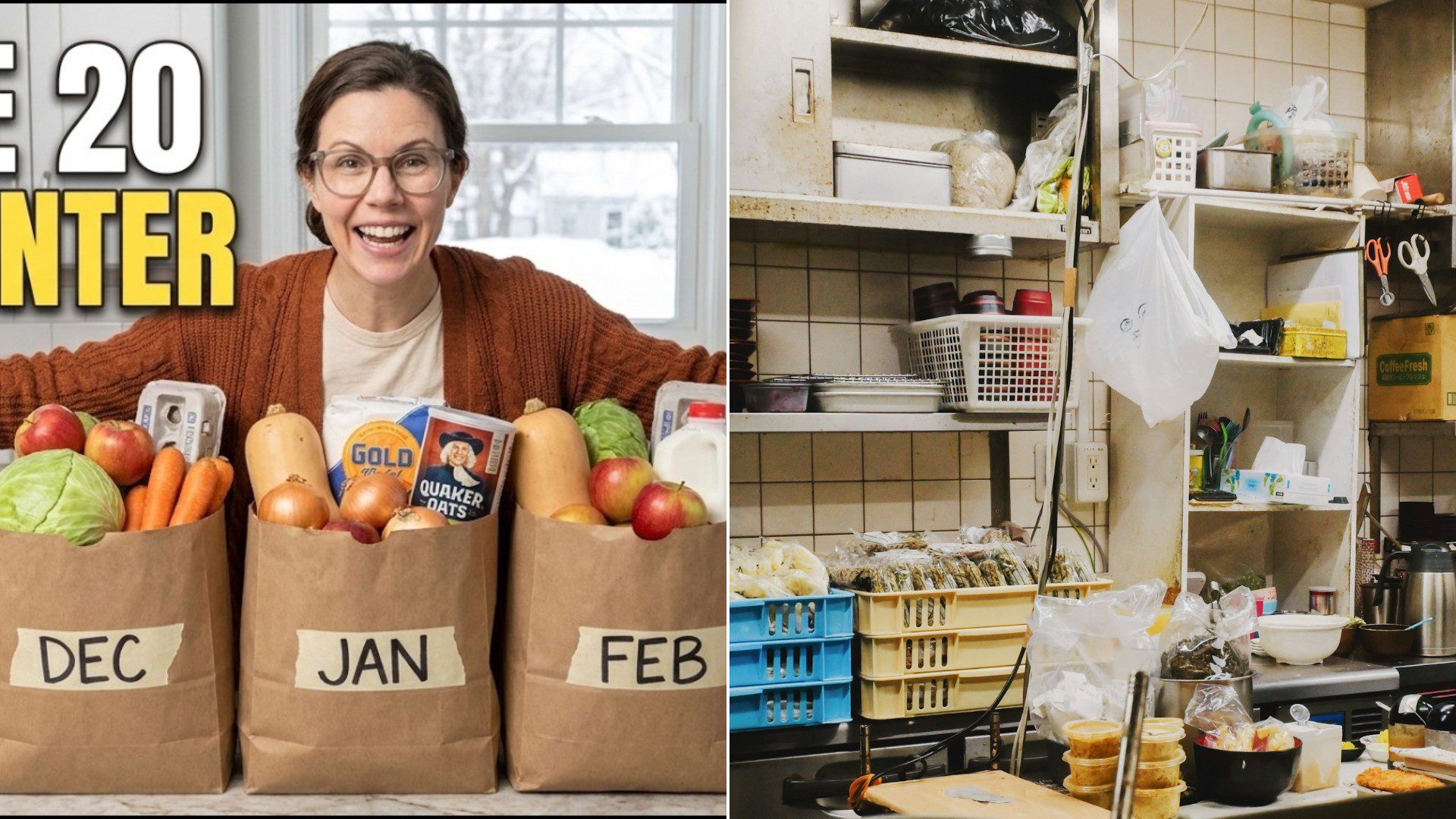
Pull your last grocery receipt out of the bag, the long one, and count the lines. Brenda did exactly that with a neighbor last winter, and the receipt had 63 lines.
Sixty-three different things, and the neighbor still told her, “Brenda, I still don’t have anything to make for supper.”
That, Brenda says, is the whole problem: you are buying more things than ever and have less food than ever. She runs her house on about 20 groceries all winter, and not to make a point. “That’s all it takes.”
Everything else on that receipt, she says, is somebody’s version of one of those 20 items, chopped up, boxed up or mixed with water and marked up for the trouble. She counts them down in a video from the Tried & True channel, with what each costs, what it is for and what it replaces.
Four Cheap Vegetables Make A $10 Floor For The Week
Potatoes come first, a 10-pound bag for $4 or $5 in the back corner of the produce section “where the lights aren’t as nice. That’s where the cheap food lives.” They keep about two months somewhere cool and dark, but not in the fridge and not next to onions.
A 3-pound bag of onions runs a couple of dollars, and whole carrots, not baby carrots, are about 2 pounds for a dollar and change. A head of cabbage is about 3 pounds for $2 and stays good in the fridge for a month. Those four, she says, are the floor, and about $10 will feed you for a week.
A Pound Of Dried Beans Costs A Dollar And A Half, About Four Times Less Than Canned
One pound makes about six cups cooked. A can is a dollar for a cup and a half, so canned beans cost about four times as much for someone else to add water.
Cover them with water with an onion in the pot, add salt and simmer a couple of hours on the back burner. If she could pick one item to get a family through a hard winter, this is it.
Rice, Oats And Flour Do The Heavy Lifting For Pennies
A 20-pound bag of rice is around $15 and makes 200 servings, while little seasoned boxes run $1.50 for two servings. Oats are about $3 for 30 servings, and a pot of oatmeal feeds the whole house for about 20 cents.
A 5-pound bag of flour is $3, and with a jar of yeast, which she says lasts a year in the fridge, a loaf of bread costs maybe 40 cents in flour. The store loaf is $4 now. Cornmeal adds a $2 bag that lasts a season for cornbread, mush and fish dredging.
Winter Squash And Apples Keep Longer Than Anything Else In The Produce Aisle
Butternut or acorn squash usually runs under a dollar a pound this time of year and sits on the counter two or three months. As she puts it, “It’s not a vegetable, it’s a pantry item that happens to be orange.”
Apples are the only fruit she buys in bulk in winter, and a bag lasts six weeks in the fridge drawer. Soft ones cook down into applesauce in 20 minutes, and she says berries last three days and cost what a steak costs.
Eggs, Milk, Butter And A Block Of Cheese Beat The Convenience Versions
Eggs are still the cheapest protein by the serving, and they keep three or four weeks in the fridge. A gallon of plain milk can have half poured off and frozen if it will go bad first, and powdered milk works in biscuits or gravy.
She buys four or five pounds of butter when it goes on sale around the holidays and freezes it for a year. A 2-pound block of cheddar is about $8, while shreds cost almost double per pound and are rolled in powder that keeps them from melting right.
Salt And A Gallon Of Vinegar Make Everything Taste Like Something
A big canister of plain salt is a dollar, and she says half the seasoning aisle is salt with a story on the jar. If your cooking tastes flat, nine times out of 10 it is salt.
A gallon of white vinegar is three or four dollars. A splash makes slaw out of cabbage, brightens beans at the end, becomes dressing with oil and salt, and cleans the coffee pot, the shower and the windows.
A $12 Pork Shoulder Feeds The House For Four Nights
Pork shoulder runs around $2 a pound, so a 6-pound shoulder is $12, her whole meat budget for the week. It is cheap because it is tough, and it is tough because it is full of what turns to gravy when cooked slow.
Salt and brown it, put an onion and a can of tomatoes under it, then cook it with the lid on in a low oven for four or five hours. Night one is roast with potatoes, night two is shredded on rice, night three goes into the beans and night four into the soup. The tenderloin next to it is $9 a pound and gives one meal.
One $8 Whole Chicken Makes Four Suppers And 12 Cups Of Real Broth
A whole bird is $1.50 to $2 a pound, and boneless breasts next to it are four or five dollars. “You’re paying somebody $3 a pound to take the bones out.”
She roasts it whole for an hour and a quarter, pulls the meat for supper two, then simmers the carcass with onion, a carrot and salt all afternoon. That makes 12 cups of broth that sets like jelly when cold, against $3 for four cups in a box. Supper three is soup, and the $8 bird covers four nights.
The Middle Aisles Are Where The Store Makes Its Money
The items on Brenda’s list live on the outside wall and bottom shelf. Cut-up vegetables, boxed broth, seasoning packets, shredded cheese and frozen meals sit in the middle aisles, at eye level and on the end caps.
Every one is one of her 20 with some work done and the price doubled or tripled. “A store makes almost nothing on a bag of potatoes. It makes a lot on a bag of frozen fries.”
Her first step is just one swap: buy the whole chicken instead of the parts, roast it, make broth from the bones, and see how many nights it feeds you. As she says, “shop the bottom shelf. The food’s the same. The price isn’t.”
More Stories You May Like
- About One In Four Americans Pays To Rent A Storage Unit And The Top Reason Is Not Enough Room At Home, So Are You Paying Monthly To Keep Stuff You Never Use
- Mom Pulled Over 100 Things Out Of Her Kitchen Cabinets While Her Husband Took The Kids To The Grocery Store
- BBB Scam Tracker Logged About 146,000 Scam Reports In 2025 And Online Purchase Scams Rank Third Riskiest, So Be Careful Buying And Selling Secondhand Online