


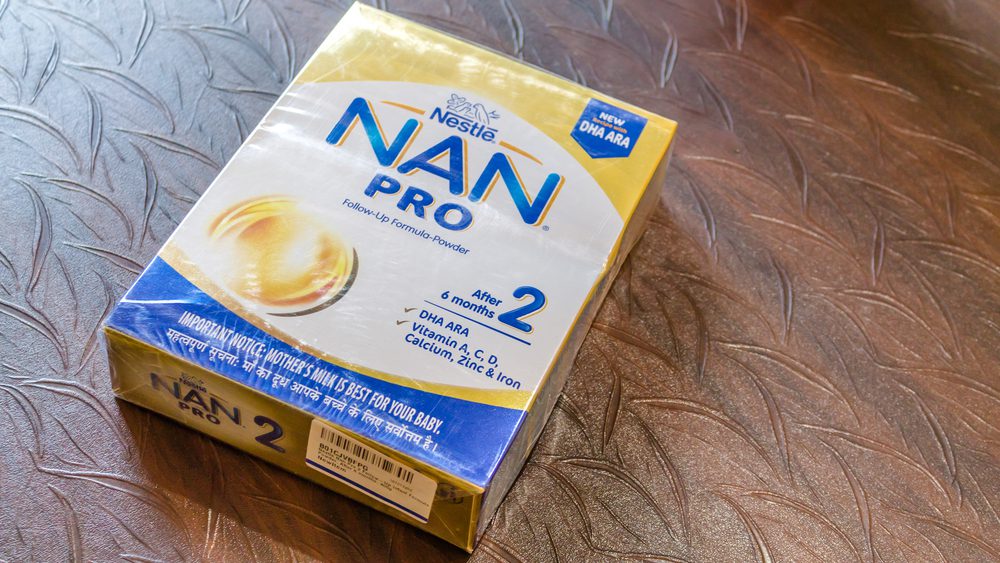
Nestlé has launched a sweeping recall of baby formula products in multiple countries after tests flagged a potential toxin risk in certain batches. The move affects well known infant brands and has triggered urgent guidance from food safety regulators, retailers and pediatric specialists. Parents are being urged to check batch codes, stop using affected tins and seek refunds while authorities investigate how a contaminated ingredient entered the supply chain.

The recall, which Nestlé describes as precautionary, centers on specific infant and follow on formulas that may contain traces of a harmful contaminant. Although no large scale poisoning cases have been confirmed based on available reports, the company and regulators say the threshold for action is far lower when products are designed for newborns and young children, whose bodies are especially vulnerable to toxins.
How the Nestlé baby formula scare unfolded
The current crisis began when internal checks and regulatory testing pointed to a toxin risk in some Nestlé baby formula products, prompting the company to initiate a global recall before a full public health emergency could develop. Nestlé has acknowledged that the issue traces back to an ingredient supplied by one of its partners, a detail that underscores how even a single weak link in a complex food chain can compromise products sold under a trusted brand name. In response, the company has promised that customers who purchased affected tins will receive full refunds and has urged parents of newborns and young children to stop using the implicated products immediately while they verify batch information.
Public statements from Nestlé emphasize that the recall is worldwide in scope and that the company is working with authorities in each affected market to coordinate notifications, withdrawals and consumer advice. The firm has framed the move as a precaution taken out of an abundance of care for infants, while also conceding that the contamination originated with a supplier ingredient rather than a retail handling problem, a point reflected in detailed recall notices that explain how the suspect component entered certain baby formula lines and led to the current global recall.
Which Nestlé products and brands are affected
Regulatory alerts show that the recall is not limited to a single label but instead spans several Nestlé baby nutrition brands, including formulas marketed for different age stages. In the United Kingdom, for example, food safety authorities have confirmed that Nestlé is recalling several SMA Infant Formula and Follow On Formula products, a flagship line that targets both newborns and older babies transitioning to more varied diets. The alerts specify that only particular batch codes and pack sizes are affected, which means some tins of SMA Infant Formula and Follow On Formula remain safe to use while others must be removed from kitchen cupboards and store shelves.
Elsewhere in Europe, Nestlé is also pulling multiple batches of its BEBA infant formula, a brand widely sold in German speaking markets and beyond. Reporting from Austria notes that at least two BEBA products were precautionarily withdrawn in that country as part of a broader effort to remove any tins that might contain the suspect ingredient linked to toxins in baby food. The combination of SMA Infant Formula and Follow On Formula in the UK and BEBA infant formula in Austria and other countries illustrates how the same upstream contamination issue can ripple across different product families, forcing Nestlé to coordinate a patchwork of national recalls that all trace back to the same major recall.
The toxin at the center of the safety warnings
Food safety notices describe the problem as the possible presence of a toxin in certain batches, a risk that regulators say is serious enough to justify a recall even before widespread illness is documented. In the UK, the official alert for Nestlé’s SMA Infant Formula and Follow On Formula explicitly cites the possible presence of a contaminant in the affected products, warning that this could pose a health risk to infants if consumed. While the technical name of the toxin is not spelled out in the summaries available here, the language used by regulators makes clear that the concern is not a minor quality defect but a potential chemical hazard that could harm babies with relatively small exposures.
Because infants have lower body weight and immature detoxification systems, any toxin in baby formula can reach dangerous concentrations more quickly than in adults, which is why authorities tend to act aggressively when contamination is suspected. The UK alert stresses that the recall is precautionary but still urges parents not to feed the affected SMA Infant Formula and Follow On Formula to their children, a stance that reflects the standard risk assessment approach for infant foods where even a low probability of contamination is treated as unacceptable once a credible pathway for toxins has been identified in the official recall notice.
How regulators and Nestlé are coordinating the global response
As the scale of the contamination risk became clear, Nestlé moved to coordinate with food safety agencies and health ministries in each affected country, a step the company says is essential to ensure that the necessary measures are taken quickly. Corporate statements circulated through broadcast and online outlets explain that Nestlé is in contact with authorities in the relevant countries to manage product withdrawals, public warnings and technical investigations into the supplier ingredient that triggered the scare. This coordination is critical because baby formula is often distributed through pharmacies, supermarkets and hospital channels that each have their own recall procedures and notification systems.
Regulators, for their part, have issued consumer facing alerts that mirror Nestlé’s messaging while adding legal obligations for retailers and distributors to remove affected stock. In the UK, the food safety alert for SMA Infant Formula and Follow On Formula instructs businesses to display point of sale notices and to honor refunds, while similar guidance in other markets emphasizes that parents should not use the recalled tins even if they appear visually normal. Nestlé has publicly assured parents and caregivers that it is working hand in hand with these authorities to protect infants, a commitment echoed in coverage that quotes the company saying it is in contact with regulators to make sure the necessary steps are taken as part of the global recall of some baby formula products.
What Nestlé is telling parents and caregivers
Nestlé’s public messaging has focused on reassuring parents while still urging them to act decisively if they have purchased any of the affected products. The company has stressed that it is recalling specific batches out of caution and has encouraged families to check the batch codes printed on the bottom or side of their tins against official recall lists. Parents who discover that they have an affected product are being told to stop using it immediately, even if their child has already consumed some of the formula without obvious symptoms, and to contact Nestlé or their retailer for a refund.
In statements carried by multiple outlets, Nestlé has explicitly assured parents and caregivers that they will receive a refund on the recalled product and that the company is committed to supporting families through the disruption. The firm has also emphasized that it is working with health authorities to provide clear guidance on alternative feeding options, particularly for infants who rely on specialized formulas and cannot easily switch brands. Coverage of the recall quotes Nestlé as saying it wants to give parents confidence that they can return or replace any suspect tins, a message that is central to the company’s effort to maintain trust while it manages the toxin related recall.
National case studies: UK, Austria and beyond
The recall has played out differently across national markets, reflecting variations in product portfolios and regulatory frameworks, but the underlying concern is the same. In the UK, the Food Standards Agency has taken the lead in warning consumers about the affected SMA Infant Formula and Follow On Formula, publishing detailed batch lists and advising retailers to post recall notices at store entrances and on their websites. The UK alert underscores that the recall is precautionary yet firm in its advice that parents should not feed the affected formulas to their babies, a position that aligns with the broader European approach to infant food safety.
Austria offers a parallel example, with authorities confirming that two BEBA infant formula products were withdrawn from the market as a precautionary measure once the toxin risk was identified. Reports from the region describe how Nestlé is recalling several batches of BEBA infant formula worldwide, with Austrian distributors instructed to pull the specified products from shelves and inform customers about refund options. These national case studies, from the UK’s focus on SMA Infant Formula and Follow On Formula to Austria’s action on BEBA, illustrate how a single contamination issue can manifest as a series of country specific recalls that all tie back to the same Nestlé supply chain problem involving toxins in baby food.
Health risks for infants and how doctors are advising families
Pediatricians and public health experts are emphasizing that, while confirmed poisoning cases linked directly to the recalled batches have not been detailed in the available reports, the theoretical risk is serious enough that no level of exposure is acceptable. Infants are uniquely vulnerable to toxins because their organs are still developing and their diets are often dominated by a single product, such as a specific brand of formula, which can magnify the impact of any contamination. Doctors are advising parents who have used the affected formulas to monitor their children for symptoms such as vomiting, diarrhea, unusual lethargy or feeding refusal and to seek medical advice if they have concerns, even if the child appears generally well.
Health services are also using the recall as an opportunity to remind families about safe feeding practices, including the importance of preparing formula according to instructions, storing opened tins correctly and avoiding the use of products past their expiry date. However, clinicians stress that these routine precautions cannot compensate for a toxin that is already present in the powder, which is why the recall and batch code checks are so critical. In countries where Nestlé’s SMA Infant Formula and Follow On Formula or BEBA infant formula are widely used, pediatric clinics and helplines are preparing to answer questions from anxious parents who want to know whether their child’s specific tin is part of the recall of several SMA Infant Formula and Follow On Formula batches.
Supply chain failures and accountability questions
The revelation that the contamination stems from an ingredient supplied to Nestlé has sharpened scrutiny of how global food companies vet and monitor their suppliers. Modern baby formula production relies on a complex web of farms, processing plants and ingredient manufacturers, and a failure at any point can introduce toxins that are difficult to detect once they are blended into finished products. Nestlé’s admission that a supplier ingredient caused the problem raises questions about whether existing audits, testing regimes and contractual safeguards were sufficient, especially given the heightened duty of care associated with infant nutrition.
Consumer advocates are likely to press for more transparency about which supplier was involved, what specific toxin was detected and how long the contaminated ingredient was in circulation before the issue was caught. Regulators may also review whether additional mandatory testing should be required for high risk inputs used in baby formula, such as certain fats, proteins or micronutrient premixes that can carry contaminants if not properly controlled. Nestlé’s cooperation with authorities, including its statement that it is in contact with regulators in the relevant countries to ensure the necessary steps are taken, will be central to how accountability is ultimately assigned in the wake of the global recall of some baby formula products issued due to toxin concerns.
What parents should do now and what comes next for Nestlé
For parents and caregivers, the immediate priority is to identify whether any tins at home are part of the recall and to stop using them if they match the listed batch codes. Families who rely on Nestlé’s SMA Infant Formula and Follow On Formula or BEBA infant formula should consult national food safety websites, retailer notices or Nestlé’s customer service channels to confirm whether their specific product is affected. If it is, they are entitled to a refund and should discuss alternative feeding options with a pediatrician, particularly if the child has special dietary needs that limit the choice of replacement formulas.
For Nestlé, the longer term challenge will be to restore confidence in its baby nutrition brands while demonstrating that it has addressed the root cause of the contamination. That will likely involve tightening supplier oversight, expanding routine toxin testing and communicating more openly about safety protocols so that parents feel comfortable placing their trust in the company’s products again. The global nature of the recall, which spans multiple brands and countries, means that Nestlé’s response will be closely watched by regulators, competitors and families alike as a test of how a major food manufacturer handles a high stakes safety crisis involving the most vulnerable consumers.
More from Decluttering Mom: