


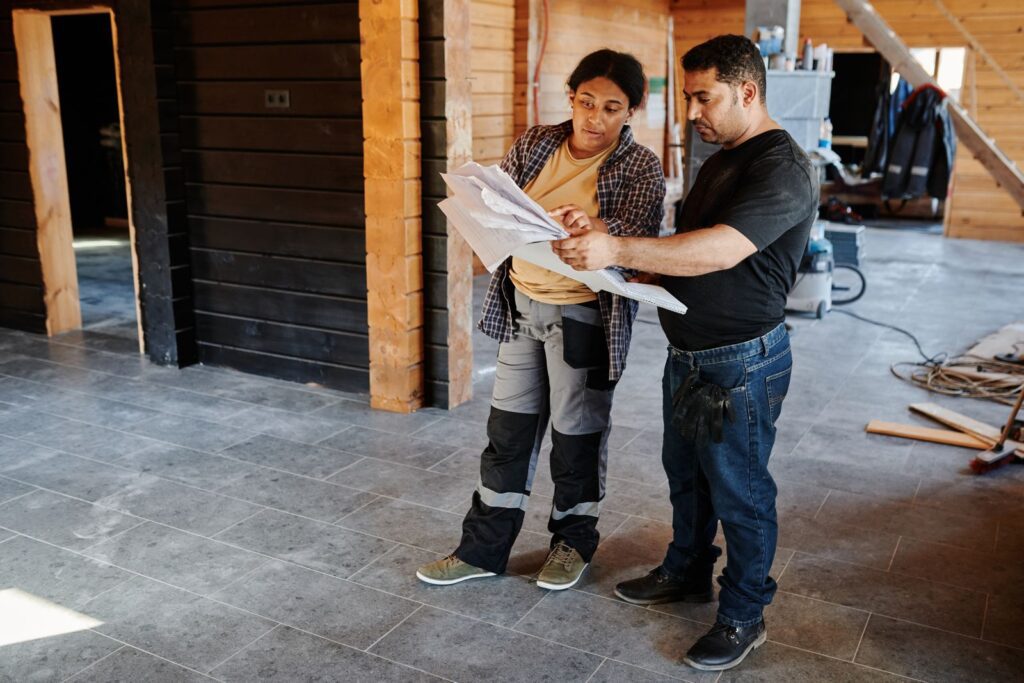
Ninety-two percent of homeowners who hired a professional for a home project this year finished at or above their original budget, according to Angi’s 2026 State of Home Spending Pulse survey. Dig into that number and it gets more uncomfortable: of the homeowners who went over their estimate, 43% blew past what they were originally quoted, and slightly more than a third of that group spent at least 30% more than they’d planned. If you’ve ever budgeted $15,000 for a kitchen and watched it climb toward $20,000, you already know this feeling has a name now, and it isn’t rare.

1. The Standard Contingency Buffer Isn’t Enough Anymore
Contractors and financial planners have long told homeowners to budget an extra 10-15% as a cushion for surprises. Angi’s data shows that cushion is being blown through routinely: homeowners who exceeded their estimate weren’t overshooting by a manageable 8% — more than a third went at least 30% over, roughly triple the standard buffer. If you’re planning a project this fall, that 10% rule of thumb needs an update, not a rounding error.
2. Rising Material and Labor Costs Are the Named Culprit
Angi’s survey points squarely at input costs — materials, labor, and transportation — as the main drivers pushing final bills past initial quotes. That tracks with what’s happening on the supply side of housing more broadly: builders have separately flagged rising fuel and material costs squeezing their own margins, which filters straight down to the subcontractors and suppliers pricing your bathroom remodel.
3. Homeowners Are Already Adjusting What They Take On
The survey found 35% of respondents undertook renovation-style projects this year, while a larger share — 63% — hired pros for maintenance work and 58% for repairs, a pattern Angi frames as homeowners prioritizing essential fixes over discretionary remodels. In other words, people aren’t necessarily skipping home spending altogether; they’re triaging it, choosing the leaking roof over the reimagined primary bath.
4. Cheaper Materials Would Move the Needle More Than Anything Else
When asked what would make them more likely to greenlight a project they’re currently sitting on, 59% of respondents pointed to cheaper materials, ahead of the 54% who cited lower inflation generally. That’s a useful signal for timing: homeowners aren’t waiting on interest rates alone. They’re watching lumber, tile, fixtures and appliance prices specifically, and a real dip there could unlock projects that have been sitting on a wishlist for a year or more.
5. Get Multiple Quotes, in Writing, Before You Start
The gap between a verbal ballpark and a written estimate is exactly where budget overruns tend to start. A quote that isn’t itemized — one line for “kitchen remodel” instead of separate lines for demo, materials, labor, permits and disposal — gives a contractor room to explain a higher final number as scope creep you never agreed to. Get at least two written, itemized bids before signing anything, and ask each contractor directly how they’ve handled material price swings on recent jobs.
6. Build In a Bigger Cushion Than You Think You Need
Given that a third of over-budget projects ran 30% or more past plan, a homeowner budgeting $20,000 for a project should realistically set aside closer to $26,000 before signing a contract, not the $22,000 a standard 10% buffer would suggest. That’s not pessimism, it’s just matching your reserve to what actually happened to a third of the people who did this exact project this year.
Keep that reserve in a separate account you don’t touch for anything else. Angi’s survey data suggests the overrun usually doesn’t show up as one dramatic change order — it shows up as five small ones, a pricier tile here, an unexpected electrical upgrade there, each easy to justify in isolation and devastating in total.
7. Ask About Fixed-Price vs. Time-and-Materials Contracts
Not all overruns come from surprises hiding behind a wall. Some come from the contract structure itself. A time-and-materials agreement leaves the door open for costs to climb with every price increase a supplier passes along mid-project, while a fixed-price contract shifts that risk onto the contractor. It’s worth asking directly which structure you’re signing, because the answer changes who eats the next material price hike.
Budget overruns on home projects aren’t the exception anymore, they’re the baseline — which means the smartest move isn’t hoping to be in the lucky 8% who come in on budget, it’s building a plan sturdy enough to survive not being.